


Tiny Core Linux 16.2 still fits a proper Linux desktop into a 23MB download — but it has grown 1MB since the last time we looked at it
There’s no two ways about it: Windows 11 is absurdly heavy. Writing as someone who has been here since the days of DOS 3.3, it is patently ridiculous how pathetic Windows 11 makes multi-gigahertz multicore machines look. If only there was something smaller. Something like… I mean, yeah, Linux, but the download for Bazzite is like eight gigs, and it wants over fifty gigabytes of space once it’s installed. What about something like the systems of my youth? What about Tiny Core Linux?
Tiny Core Linux is the extreme alternative to Windows 11, a true example of just how small a functional desktop operating system can be, even now in 2025. The latest release, Tiny Core Linux 16.2, which was published at the end of September, comes in at roughly 23MB for the standard “TinyCore” edition. That’s not 23MB of installer data followed by gigabytes of packages, but 23MB for the entire bootable system with a graphical desktop—no Internet required. There’s an even smaller “Core” version if you don’t need a GUI, at just 17 MB.
This isn’t a prank, and it isn’t just a “look how small we made Linux!” gimmick. Tiny Core Linux is a real, maintained distribution with current kernels all the way up to 6.12, modern libraries, system extension repositories, and working support for contemporary hardware. It’s extremely small because the project has a very strict, long-standing philosophy: keep the base minimal, load everything else as modular extensions, and run the whole system in RAM when possible.
Of course, Tiny Core Linux isn’t the only ultra-lightweight distro out there. SliTaz requires a bit more space, but packs more built-in features (including a browser). Meanwhile, Slax is specifically designed to run as a small, live-USB-friendly system aimed at physical portability; it’s larger, but more compatible with mainstream Linux software. Those projects aim to be something more like “small but complete” out of the box.
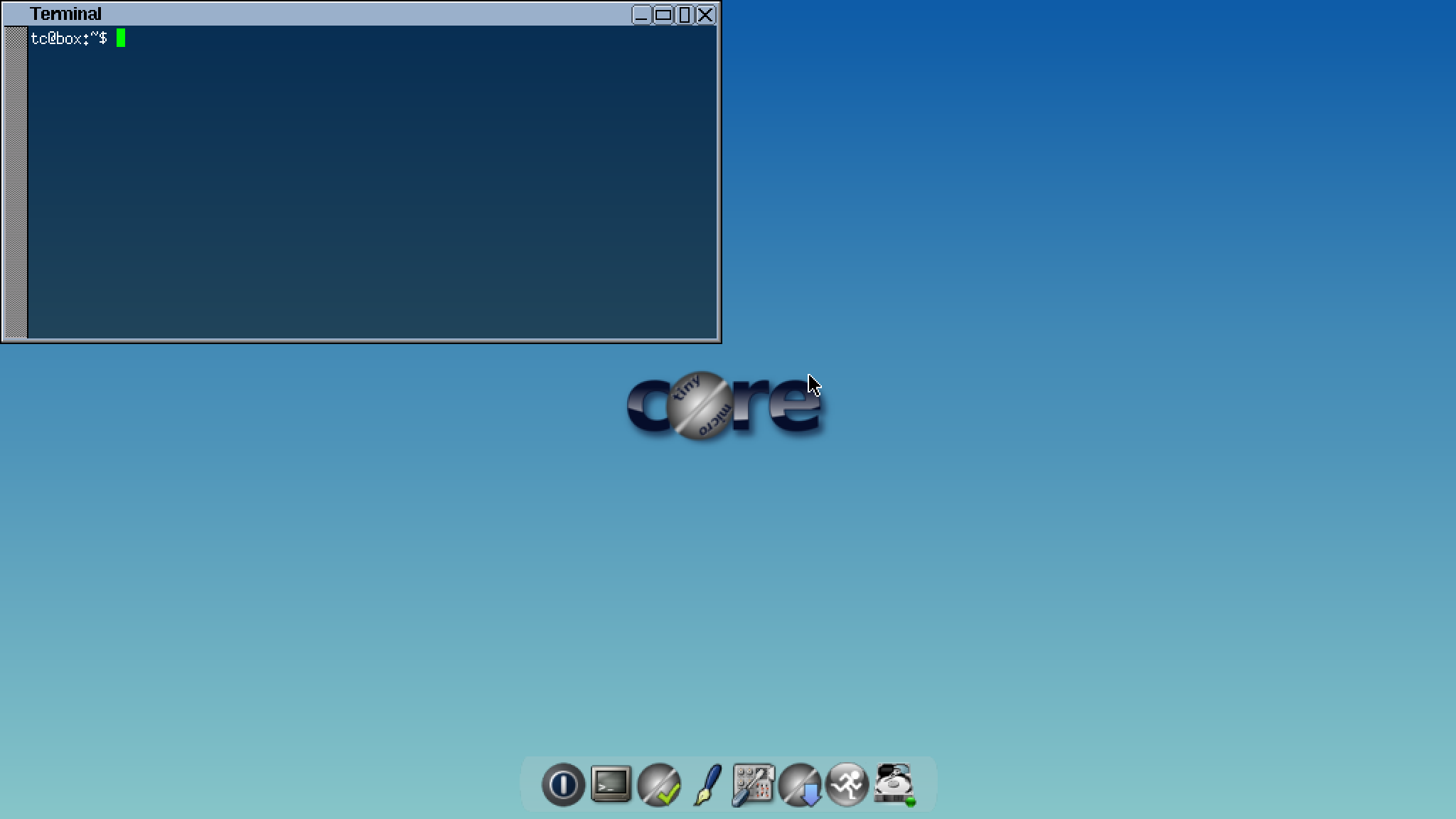
Tiny Core takes a different approach, as its base system is intentionally incomplete. You get the kernel, the BusyBox utility package, a tiny GUI stack based on FLTK/FLWM, and that’s about it. Anything beyond the absolute minimum, including a browser, any multimedia support, extra drivers, et cetera — it all gets installed as an extension through Tiny Core’s repository system, which functions kind of like a minimal app store. Since those extensions aren’t baked into the ISO, the default download stays microscopic.
This modular approach is powerful, but it also means Tiny Core demands a certain level of Linux comfort. Users are expected to know what they want to install, how Linux file systems work, and how to handle system configuration by hand, the old-fashioned way. It’s not a beginner-friendly distro, and doesn’t try to be. If you’re fighting Windows 11 fatigue and looking to leap to Linux, jumping to Tiny Core is a bit like ditching your Ford Edsel for a unicycle.
The fun historical wrinkle is that 23MB used to be a luxury. You could run Windows 3.0 in as little as 1 MB of RAM. Early 90s Linux distributions fit entire operating systems —with the kernel, its drivers, management tools, and X11 — onto a couple of floppy diskettes. The difference is that those systems didn’t have to support modern hardware stacks, wireless networking, USB3 controllers, or graphics acceleration. Once you bring in contemporary kernels and libraries, even the most aggressively stripped-down environment gains weight.
Despite the novelty factor, though, Tiny Core Linux’s diminutive dimensions aren’t just a party trick. Its tiny footprint and RAM-centric design make it useful for resurrecting very old hardware, embedded or appliance-style systems, hyper-minimal rescue environments, extremely fast boot-to-desktop setups, and custom Linux builds where every byte counts. It’s one of the most important Linux distributions, specifically because of its design philosophy.
If you’re comfortable configuring a system from the ground up, Tiny Core Linux remains one of the most flexible, smallest, and fastest ways to get a real desktop Linux environment running on almost anything, right down to that 90s-era beige box gathering dust in your closet. For most Linux users, though, we’d recommend starting with something more user-friendly. Have you tried Linux Mint?

Follow Tom’s Hardware on Google News, or add us as a preferred source, to get our latest news, analysis, & reviews in your feeds.
Source: www.tomshardware.com
Published: 2025-12-07 21:43:00
Tags:
This article was automatically curated from public sources. For full details, visit the original source link above.