


Tech Explained: Here’s a simplified explanation of the latest technology update around Tech Explained: Semicon players’ sops plea; Howard Morgan on AI valuations in Simple Termsand what it means for users..
Also in the letter:
■ Anveshan eyes fresh funding
■ Apple’s China rebound
■ DeepSeek mystery no more
Semicon ecosystem players seek sops to meet chip goals
India’s chip push is entering its next phase with the India Semiconductor Mission (ISM) 2.0, but ecosystem players are asking for stronger financial support to keep pace.
What’s being sought: Companies want capital subsidies, cheaper power, and tax breaks, arguing that current schemes are too focused on fabs and assembly.
For instance: Inox Air Products has called for a dedicated localisation policy for semiconductor materials within six months. “We got zero (support) as of today. Neither on the capital subsidy side, nor on the electricity, nor on the tax rebate side,” said Diganta Kumar Sarma, head of strategy and business development at Inox.
Also Read: Chip firms tap Gujarat govt for free trade zone and shared warehouse
The gap: Existing programmes such as the ISM 1.0 and the Scheme for Promotion of Manufacturing of Electric Components & Semiconductors (SPECS) have largely backed fabs, OSAT units, and design, leaving materials and upstream suppliers underfunded, Sarma added.
Expert view:
- Neil Shah from Counterpoint Research said the next phase (ISM 2.0) will likely strengthen materials, equipment, and R&D around fabs.
- Rajoo Goel of Electronic Industries Association of India (ELCINA) said ISM 1.0 rightly focused on fabs, OSATs, and design to build demand, and that ISM 2.0 is expected to bring better incentives for such units.
Also Read: Govt tracking chip supply snags as units come alive
AI startup valuations are overheated; buy high, sell higher works only in a bubble: Howard Morgan
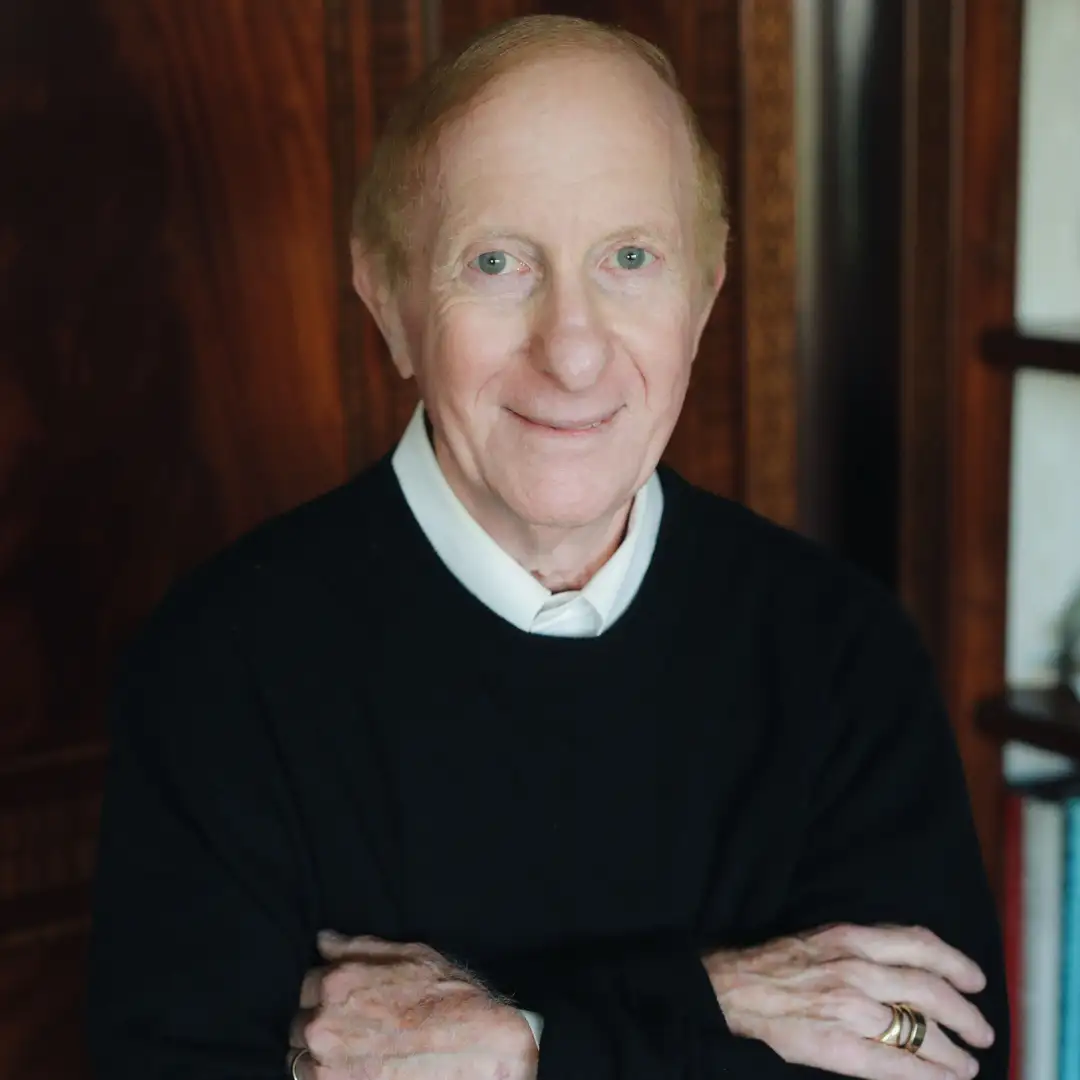
Howard Morgan, chairman, B Capital and cofounder, First Round Capital
Veteran American venture capitalist and B Capital chairman Howard Morgan says artificial intelligence (AI) startup valuations are getting overheated, with many firms priced too high.
On high valuations: Morgan said venture investing generally follows two approaches: buy low and sell high, or buy high and sell even higher. But he warned that the second only works during a bubble.
“In a bubble, everybody thinks buy high, sell higher works forever, but that only works inside the bubble,” said the 80-year-old investor, who cofounded First Round Capital.
OpenAI vs Anthropic: He also raised concerns about leading AI firms, stating that OpenAI is “overvalued.”
“OpenAI is overvalued, more overvalued than some others,” he said. “Anthropic, for example, is somewhat better in terms of focus and valuation because it has been more B2B oriented. To justify some of these prices, you need ten years of earnings, and that is very far out for venture capital.”
Also Read: OpenAI raises $110 billion from Amazon, Nvidia, Softbank at post-money valuation of $840 billion
Technology bubbles: Morgan noted that the large influx of money into AI resembles previous tech booms.
Reflecting on his journey, he said, “I started investing formally in 1982, so that’s more than 40 years. What I’ve learned is that after every bubble ends, a few companies come out much stronger two or three years later.”
Read the full interview here.
D2C food brand Anveshan eyes Rs 150-200 crore funding; valuation may more than double
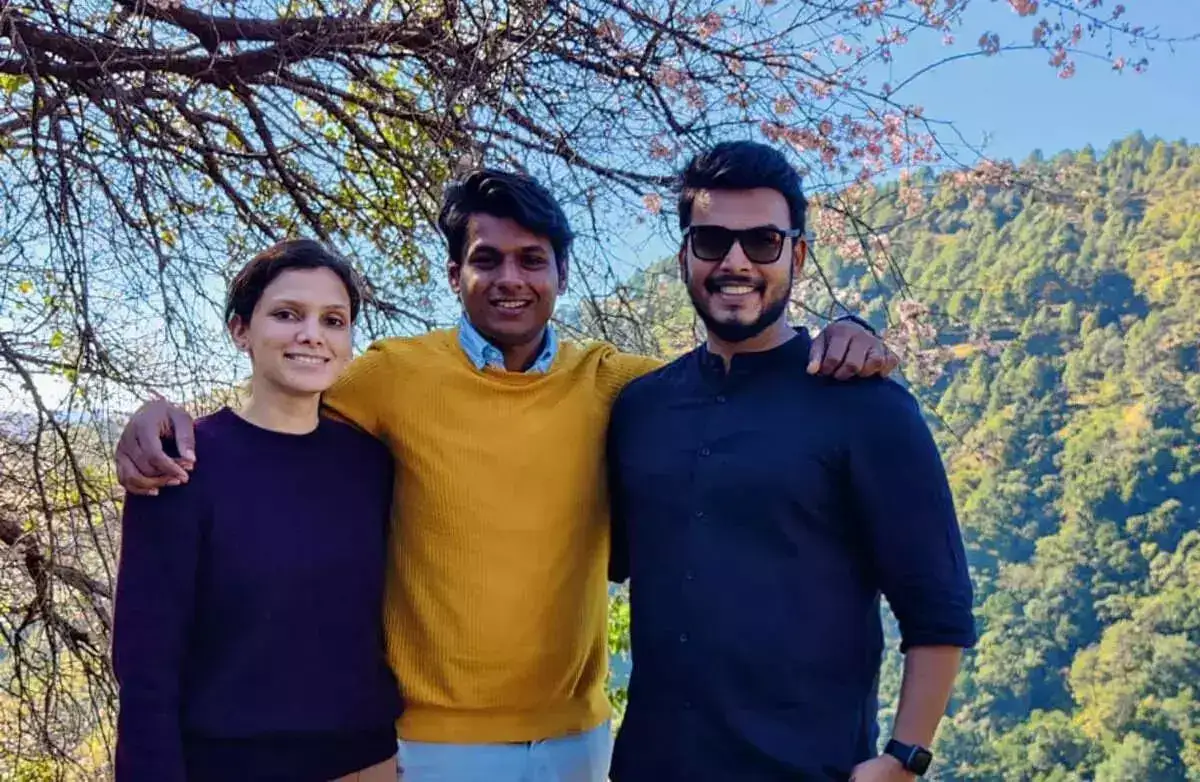
(L-R) Aayushi Khandelwal, Kuldeep Parewa and Akhil Kansal, founders, Anveshan
D2C food brand Anveshan is in advanced talks to raise Rs 150–200 crore from Vertex Ventures and International Finance Corporation, according to sources.
Round details: The funding round could value the company at around Rs 900–1,000 crore, more than double its April 2025 valuation of about Rs 430 crore.
- The sharp jump in valuation stems mainly from strong revenue growth.
- Sources say the company has been riding the quick-commerce channel to expand fast and drive repeat purchases.
This follows Anveshan’s Rs 48 crore funding round last year, backed by Wipro Consumer Care Ventures, DSG Consumer Partners, and Titan Capital.
What else? Investor interest is building across organic and clean-label food brands.
- Organic dairy startup Akshayakalpa Organic is raising Rs 175 crore, led by Singapore-based investor ABC Impact.
- Pune-based Two Brothers Organic Farms raised Rs 110 crore from 360 One Asset, Rainmatter, and the Narotam Sekhsaria family office.
- Clean-label food startup The Whole Truth Foods raised about $51 million in February, led by Belgian investor Sofina and VC firm Sauce VC.
Apple’s China smartphone sales jump 23% to start 2026, bucking industry trend
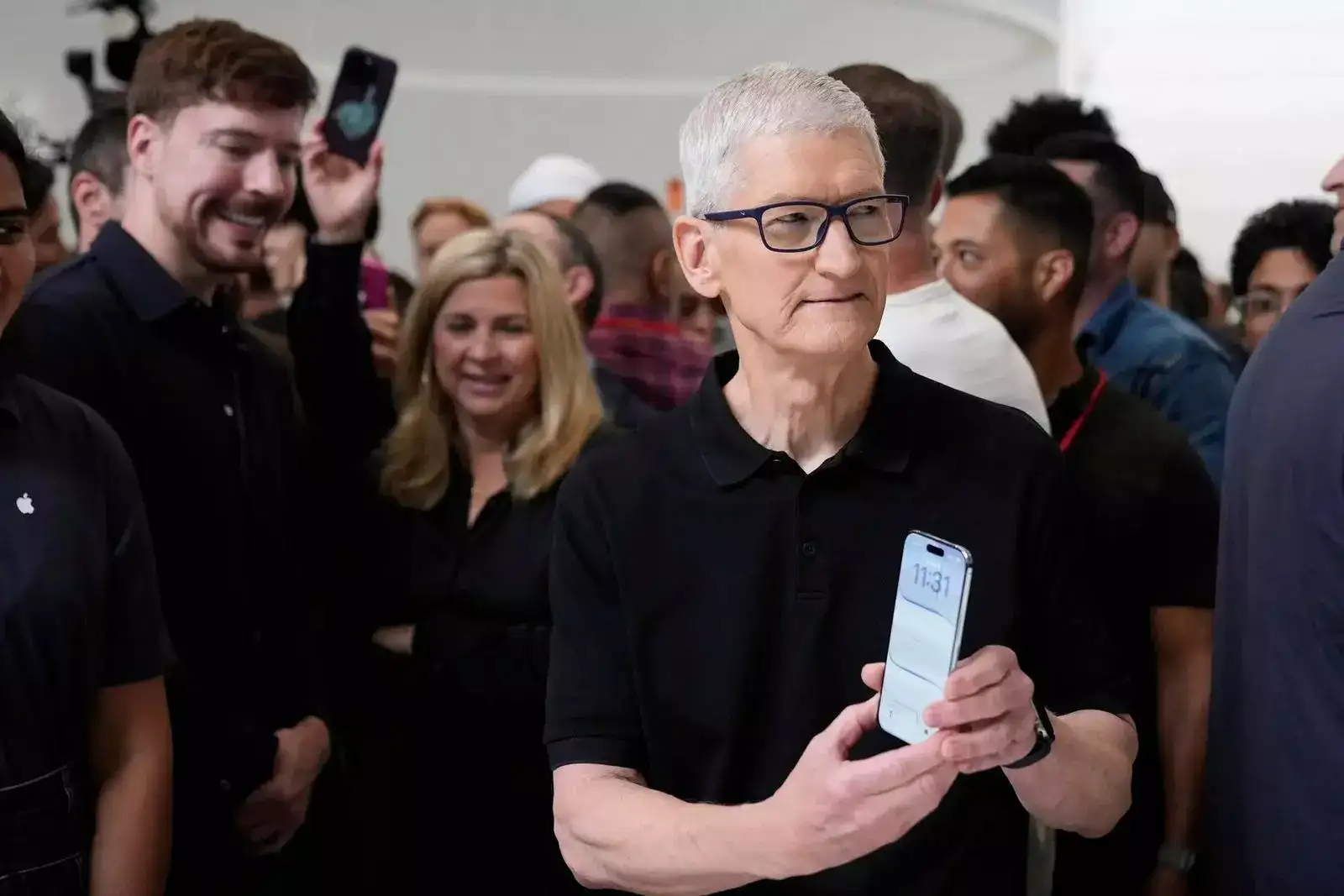
Tim Cook, CEO, Apple
Apple’s smartphone sales in China rose 23% in the first nine weeks of 2026, even as the overall market declined 4% year-on-year, according to Counterpoint Research data.
But why: A surge in memory chip prices has forced Chinese Android brands to raise prices. Apple, with tighter supply-chain control, has absorbed cost pressures and held steady.
- Oppo and Vivo have already increased prices on select models.
- More hikes are likely as brands test demand ahead of new launches.
Yes, and: Apple has also leaned on ecommerce discounts and state subsidies on the base iPhone 17, helping it gain share in a weak demand cycle.
China growth: The momentum builds on a strong January, when Greater China revenue rose 38% year-on-year to $25.5 billion. CEO Tim Cook said iPhone 17 drove record sales and strong switching from Android (double-digit growth).
Outlook: Counterpoint expects demand to stay soft until the June “618” shopping festival, while the memory cost pressures persist through 2026.
Also Read: Everything you need to know about Apple’s ‘big week’ of product launches
Mystery AI model suspected to be DeepSeek V4 is revealed to be from Xiaomi
Chinese tech giant Xiaomi disclosed on Wednesday that Hunter Alpha, a powerful, anonymous 1-trillion-parameter AI model appearing on OpenRouter, was an initial test build of MiMo-V2-Pro, its flagship “brain” for AI agents.
The release fueled speculation that it was DeepSeek-V4 testing, given similar specs and timing.
Agentic push: MiMo-V2-Pro, led by ex-DeepSeek researcher Luo Fuli, will integrate with five agent frameworks, including OpenClaw, offering global developers free access for a week.
Luo called it a “quiet ambush” as China shifts rapidly from chatbots to autonomous task agents, with the model boasting a 1-million-token context window.
Why anonymous? Anonymous model drops on platforms like OpenRouter enable unbiased feedback via logged prompts.