


Tech Explained: Here’s a simplified explanation of the latest technology update around Tech Explained: how the IDF’s ‘digital brain’ uses AI to reshape the battlef in Simple Termsand what it means for users..
There is another new element in this campaign: close cooperation between the IDF and the U.S. military. This is not just coordination of operations as in the past, but the sharing of vast amounts of data accumulated by both forces and full synchronization of operations, creating a joint force that operates together without duplication or misunderstandings. This has been made possible for the first time through integration between the information, command and control systems of both militaries.
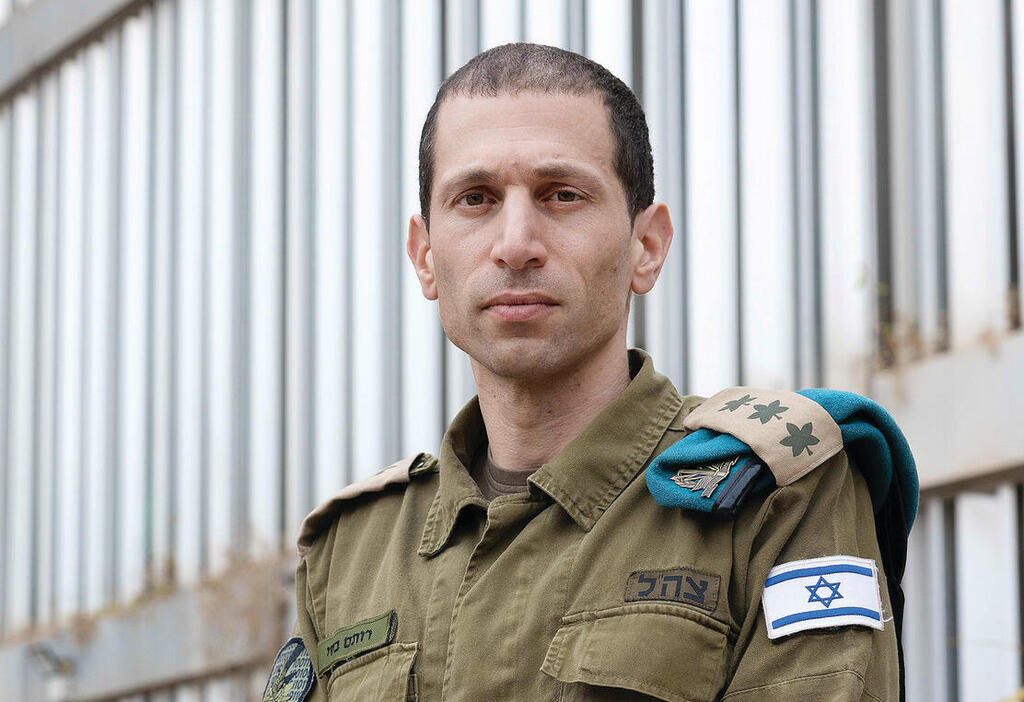
At the center of all this is the Matzpen unit. Some know it as the IDF General Staff’s “software house,” the military’s largest software development unit, but little beyond that. Many units in the IDF develop software, but only one develops General Staff-level command and control systems. Over the past year, the unit has undergone a transformation in how forces are operated based on data, turning the IDF into a fully digital military.
Matzpen — an acronym in Hebrew for Military Systems for Command, Control and Management — operates under the C4I and Cyber Defense Directorate, one of the IDF General Staff branches. The directorate was reorganized at the end of 2025 to prepare for the technological demands of the information and AI era. In its new structure, it includes five divisions, two of them newly established: the “Sphera” division, responsible for spectrum superiority, and the “Bina” (AI) division, tasked with building the IDF’s artificial intelligence and combat robotics capabilities. Matzpen operates within this framework.
“We are the operational digital body,” Bashi said, meaning that Matzpen enables the IDF to move toward a data-driven model of warfare, in which information does not remain stuck in intelligence units or headquarters but flows rapidly to combat forces, enabling faster response, greater precision and fewer errors.
Matzpen focuses on two missions. The first is command and control tools that create a unified operational picture across all branches up to the General Staff. The second, even more innovative mission, is information platforms and AI analysis, part of a broader C4I Directorate initiative known as the “Operational Data and AI Factory.”
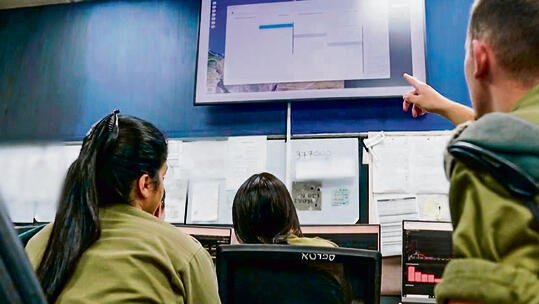
Bashi describes the two missions as “yin and yang,” each containing elements of the other. “Together with the entire IDF, we are building data repositories for operational processes to enable a comprehensive situational picture, and essentially provide tools that answer commanders’ questions in the field and give them the ability to make decisions in areas that are less clear.”
An IDF commander cannot afford even a moment’s lapse — not only because of enemy threats but also due to rapidly evolving technological developments, including those introduced in the short time between the first Iran war and the current one.
One example is the “Events Repository,” an information tool that presents commanders with every relevant event: highly classified operational reports, Home Front Command rescue updates and even open-source intelligence (OSINT) from social media, allowing the operational picture to be supplemented with relevant text, images and video.
When a U.S. radar in the Gulf detects an Iranian launch, the target automatically appears on the screens of Israel’s Patriot or Arrow missile defense systems, sometimes before they detect it themselves
This capability relies in part on “Genie,” the IDF’s internal ChatGPT-like system developed within the Bina division. It allows users to ask questions at the highest classification levels without risk of data leakage outside the military. The system is connected to operational databases and can answer questions about orders and missions, summarize classified documents, transcribe conversations and news reports, and describe events within video footage.
Initially viewed as an administrative aid, Genie has been deployed in the current war and integrated into core command systems. It even advises commanders on how to manage combat.
Other systems include “Tamach” — shorthand for “our forces’ situational picture” — which provides precise, detailed data to support decision-making and prevent errors, and the “Area Grip” system, which displays data from hundreds of sensors and cameras, including real-time video-based detection of events delivered directly to soldiers in the field.
“In the end, this saves lives,” Bashi said, citing an example: “Last Tuesday, an anti-tank alert appeared. Within two seconds it reached the soldier at the edge and saved several troops. Without this capability, or without sensor coverage that could detect that launch, we would likely have been in a much worse situation.”
For the IDF, artificial intelligence is one of the most influential factors in the current war and those to come — both AI embedded in information systems like those developed by Matzpen and physical AI integrated into drones and ground robots.
How important is AI in the systems you develop?
“Conceptually, we integrate AI where we identify potential for efficiency that humans could not achieve at the same scale or outcome. Of course, AI does not replace people entirely. In strike processes, we have tools that help build effective attack plans and tools that support battle damage assessment (BDA). This would not be possible without AI. It involves strong data engineering, building a comprehensive operational picture and integrating AI capabilities — all of which enable commanders to understand the situation and receive data-driven recommendations for action.”
As AI capabilities accelerate, criticism has emerged within the IDF over potential overreliance on such systems. A 2024 Washington Post investigation claimed that AI-generated targeting increased the pace of strikes but led to a loss of focus and a significant rise in casualties. This issue is not unique to Israel. A recent dispute between the U.S. military and AI company Anthropic revealed that the chatbot Claude is being used for large-scale target identification.
The IDF’s response to ethical concerns is that AI does not make decisions to open fire and that a human always makes the final decision.
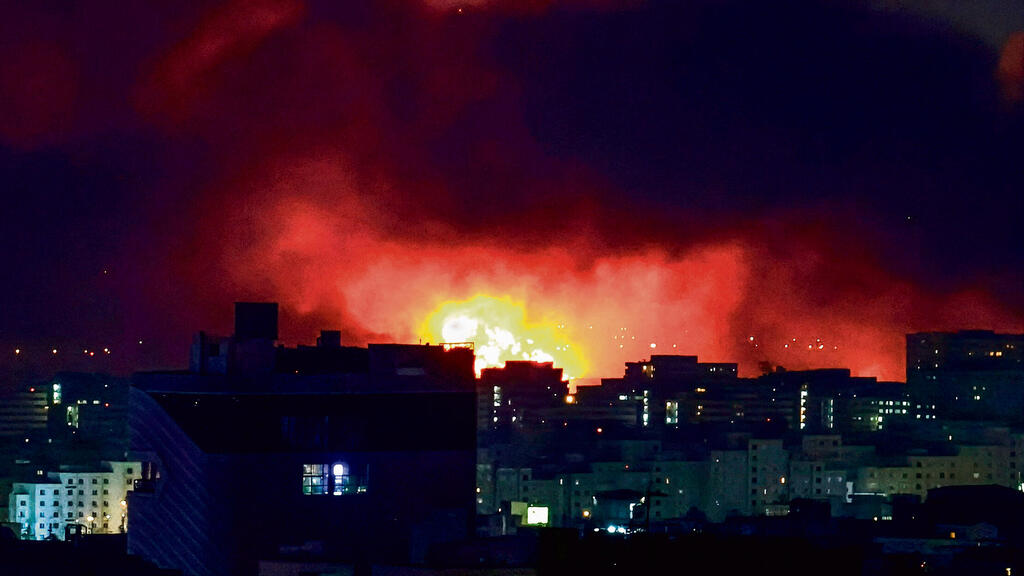
AI capabilities are advancing rapidly. In the months between the previous Iran conflict and the current one, numerous new capabilities have emerged. The target generation enterprise has expanded dramatically. In recent weeks, the pace of strikes has been unprecedented — more than 15,000 targets in 15 days. Language and computer vision models have become part of battlefield management tools, integrated into decision-making processes. Satellite technology has also advanced, enabling direct communication with commanders in the field.
“We began Roaring Lion from a point that had already absorbed lessons from Operation Rising Lion, with systems like ‘Loham’ and ‘Gantt-IT,’ which were less mature at the time and have since evolved,” Bashi said. “As we bring more data into the operational space and integrate these systems into more headquarters, the IDF reduces branch-specific local solutions and gains an integrated, unified picture.”
At what point can you see that all this information is actually producing better results?
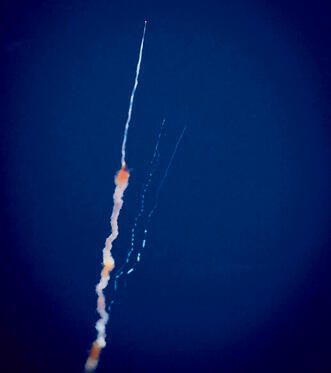
“For example, with our forces’ situational picture, which is far richer. When an event occurs — whether a rocket impact or an incident in the West Bank or the southern sector — we have far more real-time information. That allows for more effective decisions and action. We continue expanding this through more sensors, more tools for threat detection and more distribution channels.”
Since Oct. 7, the IDF has significantly changed its methods of operation, with technology playing an increasingly central role. One key lesson is the need for large volumes of information to make correct decisions and avoid mistakes. This has made Matzpen a critical unit in the new operational framework — a central axis for rapidly developing technological solutions based on needs from headquarters or the field.
The system includes three core platforms along with numerous supporting and specialized systems.
“Maestro” is a multi-branch command system that receives information from all IDF sources and ensures that all entities involved in combat — from the Air Force and intelligence to regional commands and the Operations Directorate — see the same battlefield picture. When the Air Force strikes in Iran or Lebanon, a division commander in the north or an operations officer at General Staff headquarters sees updates in real time. When headquarters plans a mission, it can ensure alignment with forces executing it.
“In recent weeks, we’ve integrated a unified picture displaying the fire plan,” Bashi said. “We connected Maestro with an Intelligence Directorate system called ‘Panorama,’ which holds the intelligence collection picture, creating a comprehensive tool for planning and controlling operations.”
“Loham” is another central system, linking the target bank with available assets — aircraft, munitions, fuel and ground forces — allowing commanders to plan complex strike waves such as those conducted in Iran, synchronizing hundreds of aircraft and intelligence elements while preventing friendly fire.
“Loham is the core system the Air Force relies on for strike planning,” Bashi said. “It became operational for the first time during Rising Lion after years of development. What is planned in the system becomes a strike mission delivered all the way to the pilot. When everyone uses the same system with the same data and can collaborate operationally, it’s a game changer in Roaring Lion The preparation work enables rapid execution of preplanned strike programs, which we saw clearly in the opening days of the operation and again recently.”
The third system, “Gantt-IT,” manages operational timelines and planning across all IDF forces. In strikes in Iran and Lebanon, it feeds data into Maestro to ensure, for example, that an airstrike does not occur while ground forces are present at the target, or that two units do not attack the same objective simultaneously. Complex planning processes that were once conducted by phone are now handled within a single system with AI support.
“Last Tuesday, an anti-tank alert appeared. Within seconds it reached the soldier at the edge and saved several troops. Without sensor coverage capable of detecting that launch, we would have been in a much worse situation”
The IDF’s information portfolio includes many additional systems developed by Matzpen. One is “Pkuda” (Order), used by the Operations Directorate, which integrates data from other systems and uses AI tools to assist in drafting orders, comparing them with historical ones and highlighting insights that might otherwise be missed. Another key system is “Map-IT,” an interactive map displaying all relevant battlefield data.
“In recent months, we’ve focused heavily on integrating layers of data about our forces’ situation, including the disposition of combat units,” Bashi said. “Just last week, we integrated a rich maritime picture in cooperation with the Navy — a very significant step.”
Other systems include “Tashan” — the picture of launches and impacts — providing a full, updated view of detected launches and identified strike sites, and enabling targeting in Lebanon and Iran; “Netz,” which aggregates information for local security coordinators (civilian defense officials in Israeli communities) and Border Police and Israel Police forces; and “Rom,” which manages low-altitude airspace data — including drones and UAVs — and assists in intercepting hostile aircraft.
You’ve essentially built a ‘system of systems,’ the dream of every military commander. It looks like everything is connected
“That’s correct — in the end, everything connects. I operate on two levels: on one end, structured, stable operational processes, and on the other, a jungle of information where you can’t predict what will be asked or what we’ll need to answer. By building data infrastructure and AI capabilities, we enable IDF units to extract value so that any question receives an answer.”
At the same time, this appears to create an enormous information load. How do you ensure that a tank commander or a pilot receives only what is needed without duplication?
“We’re working very hard on this within the C4I Directorate. There’s a program called ‘Organizing the Domains,’ which focuses on connectivity — subject to cybersecurity and network classification — to ensure that end users don’t have duplicate platforms.”
How do you ensure that software and AI developers understand combat operations well enough to meet operational needs?
“By nature, we are an operational-technological directorate. We live the operational need, working in joint task teams with the different branches. During the weeks leading up to Roaring Lion, we worked intensively around the clock with multiple bodies now at the center of the fighting.”
Another defining feature of this war is coordination with the U.S. military at an unprecedented level. The relationship is fundamentally technological and operational. Opposite the IDF is U.S. Central Command (CENTCOM), and the ability to integrate operations has reached a level of coordination rarely seen in military history, even among NATO forces.
Matzpen plays a key role here as well. The unit developed the software layer that enables IDF command and control systems to communicate with U.S. strike systems. This began with coordination of strikes on nuclear facilities in Fordow and Natanz and continues with synchronization of hundreds of strikes by both sides.
Matzpen’s technology ensures that classified information can flow from Israeli networks to U.S. systems without exposing state secrets or enabling cyber breaches.
The U.S. Link 16 data network allows platforms such as Israel’s F-35I “Adir” and the U.S. F-22, missile ships and air defense batteries to share a single air picture. When a U.S. radar in the Gulf detects an Iranian launch, the target can automatically appear on Israeli Patriot or Arrow systems, sometimes before they detect it themselves.
In recent weeks, we have seen an unprecedented pace of strikes — more than 15,000 targets in 15 days. Language and computer vision models have become part of battlefield management tools and are integrated into decision-making processes
Matzpen developed “translators” enabling Israeli systems to pull geolocation data from U.S. systems and vice versa. For example, when a U.S. drone identifies a cell in Iran, the information flows directly to the system of an Israeli UAV operator or pilot in the field.
Another U.S. system is the Integrated Battle Command System (IBCS), which connects sensors such as a U.S. radar deployed in the Negev with various interceptors. The IDF also operates in coordination with Aegis systems on U.S. Sixth Fleet ships and with U.S. THAAD batteries deployed in the region. Israeli and American systems communicate in real time to determine which system will intercept which missile, preventing waste of interceptors.
In 2025, a Joint Coordination Center (CMCC) was established in Israel, where CENTCOM officers sit alongside IDF Operations Directorate and C4I Directorate officers. The center manages air and maritime space to prevent interference between Israeli and U.S. aircraft and coordinates humanitarian and logistical assistance.
Last January, Israel and the United States signed the “Pax Silica” partnership, aimed at advancing technological cooperation in artificial intelligence, energy, advanced computing, space innovation, edge technologies and semiconductors. Both countries reported building a “secure data space” in which their AI models can train on shared operational data to identify Iranian attack patterns more quickly.
The Pax Silica agreement includes not only Israel but also Japan, South Korea, Singapore, the United Kingdom, Australia and, notably, the United Arab Emirates and Qatar. It may be that this agreement, which brings together countries from the Middle East, signals a potential path toward regional peace.