

Tech Explained: Here’s a simplified explanation of the latest technology update around Tech Explained: Ad:tech New Delhi 2026 brings focus on AI, programmatic media, and consumer behaviour in Simple Termsand what it means for users..
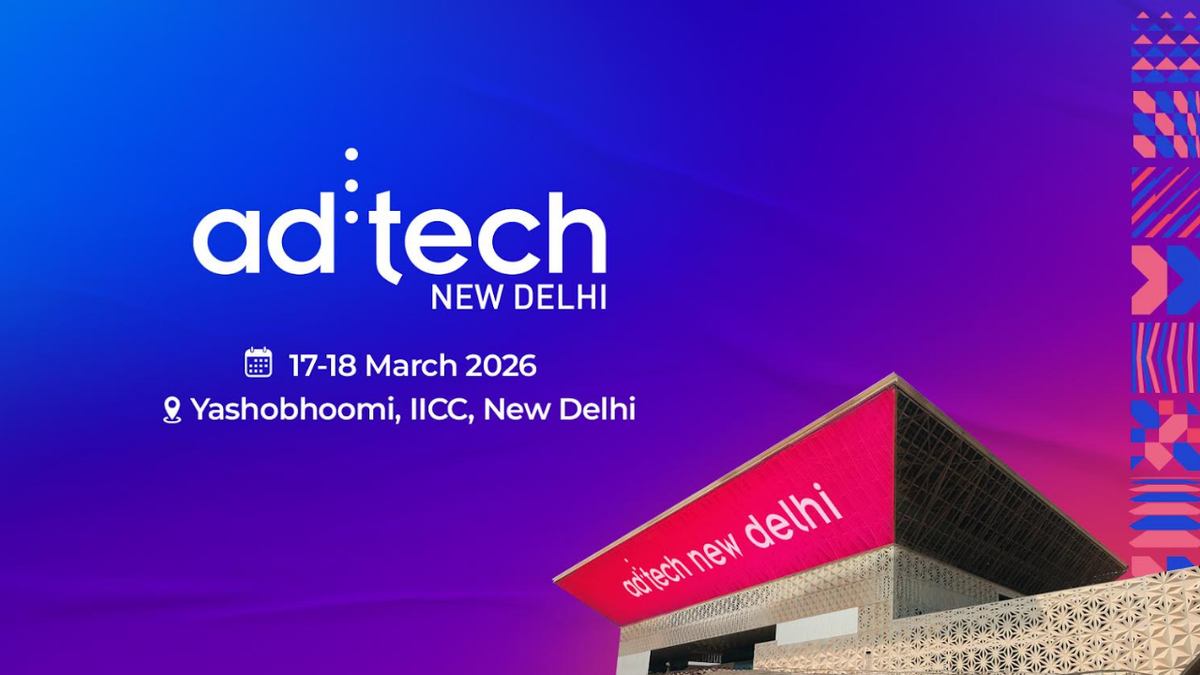
New Delhi: The 15th edition of ad:tech New Delhi opened at Yashobhoomi on Wednesday, convening leaders from marketing, media, advertising, and technology to explore how artificial intelligence, data ecosystems, and changing consumer behaviour are influencing the future of marketing. The event is being held under the theme “The Bold Front,” highlighting the convergence of human creativity and intelligent technology in brand engagement.
Jaswant Singh, Country Managing Director, ad:tech India, reflected on the industry’s strategic shifts, “Consumer expectations are changing faster than ever, and brands must respond with intelligence and agility. At ad:tech New Delhi 2026, we are discussing how AI, data, and programmatic media can help organisations understand audiences more deeply and deliver relevant experiences.”
Singh added, “Success is now defined not only by reach but by the trust and value a brand creates at every touchpoint. Companies are exploring how to combine creativity with insight to foster stronger engagement. Creativity and human judgement remain essential, but technology is amplifying their reach. This is how the industry can build both growth and resilience for the future.”
Over 70 companies demonstrated innovations in AI, programmatic advertising, martech, data intelligence, and digital media. Partner sessions included presentations by Google, Amazon, Magnite, and Click2Commission. Interactive activations such as Jenga, Tetris, and table tennis added a hands-on dimension for attendees, highlighting both creativity and engagement.
Across three stages, VISION, LIVE, and DEEP DIVE, Day 1 explored how marketing leadership is evolving as the industry moves from experimentation with AI toward deeper integration across the marketing stack.
The opening keynote was delivered by Jamie Jouning, Global Head of Advertising, The Economist, who noted, “We’re operating in a world of constant uncertainty, where AI is accelerating, but adoption remains uneven. Success won’t come from moving fastest, but from designing the smartest systems and making sharper choices about what truly matters.”
Speakers addressed AI-powered programmatic advertising, connected TV, search, generative AI in marketing workflows, and the evolving influence of creators and youth culture. Panels explored ethical AI, transparency, and the role of consumer trust in automated systems.
David Shing, also known as Digital Prophet, commented on AI’s effect on creative processes, “Design has continually evolved with technology. From the shift from paper-led creativity to desktop publishing, each disruption has redefined the role of the creator. Today, AI marks the next inflection point, where it almost feels as though technology can anticipate our intent. As we express ideas, systems are increasingly able to translate them into outputs in real time, blurring the line between imagination and execution.”
Discussions covered hybrid operating models where human expertise works alongside AI-driven systems, the growth of connected TV, and quick commerce. Speakers emphasised that effective marketing in 2026 requires balancing speed and scale with intelligence, simplification, and data-driven decision-making.
Prasad Sanagavarapu of Invidi highlighted television’s hybrid evolution, “Television is far from stagnant; it is evolving through a hybrid model that blends the strengths of linear with the precision of digital. This synergy between scale and performance is redefining how marketers approach media investments today.”
Afternoon sessions explored AI-native operating models, content as a core currency, commerce acceleration, and the rise of intelligent search, showing how marketing leaders are translating technological transformation into business growth.
Paul D’Arcy from Moloco emphasised consumer relationships in an AI-driven environment, “Technology is moving faster than ever, and the 2026 AI Disruption Index makes one thing clear: if your value proposition is purely transactional, you are vulnerable. The only true defense against AI disintermediation is the strength of your customer relationship. When disruption is high, trust is the only currency that doesn’t devalue.”
By the end of Day 1, discussions underscored that AI is reshaping marketing’s operational landscape, from programmatic systems and AI-powered creativity to connected TV, quick commerce, and intelligent search. The day concluded with the ad:tech Honours Awards, recognising organisations and innovators exploring new frontiers in marketing technology.