


Explained: This article explains the political background, key decisions, and possible outcomes related to Explained : The Sengar Case and India’s Politics of Protecting Rapists and Its Impact and why it matters right now.
On December 29, following widespread public outrage, the Supreme Court stayed a Delhi High Court order that had suspended the prison sentence and granted bail to former MLA and expelled BJP leader Kuldeep Singh Sengar, who was convicted of the kidnapping and rape of a minor in Unnao, Uttar Pradesh in 2017.
The case had returned to public attention after the survivor protested against the Delhi High Court’s December 23, 2025, order. Stating that the court’s decision left her feeling unsafe and betrayed by the justice system, she held a protest at India Gate, a site associated with the 2012 Nirbhaya protests. There, the police manhandled and detained her, and Uttar Pradesh cabinet minister Om Prakash Rajbhar went on to publicly mock her for protesting in Delhi—further fuelling anger and demonstrations outside the Delhi High Court and at Jantar Mantar.
The Delhi High Court had suspended Sengar’s sentence after overturning the trial court’s finding that the offence amounted to “aggravated penetrative sexual assault” under the POCSO Act. While the trial court had held that the assault was aggravated because it was committed by a public servant in a position of authority, the High Court ruled that an MLA does not fall within the Indian Penal Code’s definition of a public servant. Despite the suspension in the rape case, Sengar remained in jail in a separate case relating to the custodial death of the survivor’s father.
Opposing Sengar’s release, the CBI told the Supreme Court that he exercised overwhelming dominance over the survivor and had already been convicted in connection with her father’s death. Staying the High Court’s order, a bench led by Chief Justice Surya Kant noted that while bail orders are rarely stayed without hearing the accused, Sengar’s case involved “peculiar facts and circumstances”. The matter is now scheduled to be heard on January 20.
A wider pattern of leniency
The Sengar case has reignited a broader debate over the stark inconsistencies in how rape is punished in India. While the convicts in the 2012 Nirbhaya gangrape were sentenced to death, other high-profile rape convicts continue to receive bail, parole, or remission.
Earlier this month, Dera Sacha Sauda chief Gurmeet Ram Rahim Singh, who is serving a 20-year sentence for raping two of his disciples, was granted a 40-day parole—his 15th since his 2017 conviction. In November 2025, the Gujarat High Court granted six months’ bail to Asumal Sirumalani Harpalani, better known as Asaram, in a 2013 rape case in which he is serving a life sentence. The Gujarat High Court order came shortly after the Rajasthan High Court had granted him bail in a separate case. In 2022, the Gujarat government remitted the sentences of the 11 men convicted of gang-raping Bilkis Bano and murdering members of her family during the 2002 Gujarat pogrom; their release was followed by public felicitation.
All India Democratic Women’s Association activists protesting in Delhi against Kuldeep Singh Sengar’s bail.
| Photo Credit:
By Special Arrangement
Activists and legal experts commented that such relief given to convicted rapists is shaped less by legal principle than by political power. While the justice system holds that bail is the rule and jail the exception, the repeated relief given to convicted rapists—often accompanied by public celebration or state protection—raises serious questions about survivor safety and the promise of equal justice under the law.
Punishment for the survivor
For survivors of sexual violence, court orders about bail, parole, and sentence suspension are not abstract questions of law. They decide whether a woman or child can sleep, go to school, leave home, or feel safe in their own neighbourhood. “From the moment a woman tries to register a case, the journey is extremely difficult. Even after all legal reforms, there is fear, pressure to withdraw, and deep shame attached to the process,” said Advocate Audrey D’Mello, director of Majlis Legal Centre, which provides legal aid to women and children who have faced sexual and domestic violence.
Court decisions to provide bail, therefore, become another cause of trauma. D’Mello said courts have long been arbitrary in granting bail and sentencing, but this becomes especially visible in high-profile cases. She said that it depends on who the accused is and who the victim is. “When the accused is ‘someone like us’, someone ‘respectable’, the victim is shamed,” she said. “Look at the (actor) Shiney Ahuja case, the way the woman was vilified. But when the accused is poor, Dalit, Muslim, or from a marginalised background, and the victim is from the majority or upper class, the narrative flips. Courts are unfortunately influenced by these media trials.”
Legally, bail is meant to be the norm because trials take years, but it is conditional on the survivor’s safety. The court has to assess whether the accused is likely to threaten, intimidate, or harm her, or tamper with evidence. That is why the law requires the court to hear the victim before granting bail, D’Mello explained.
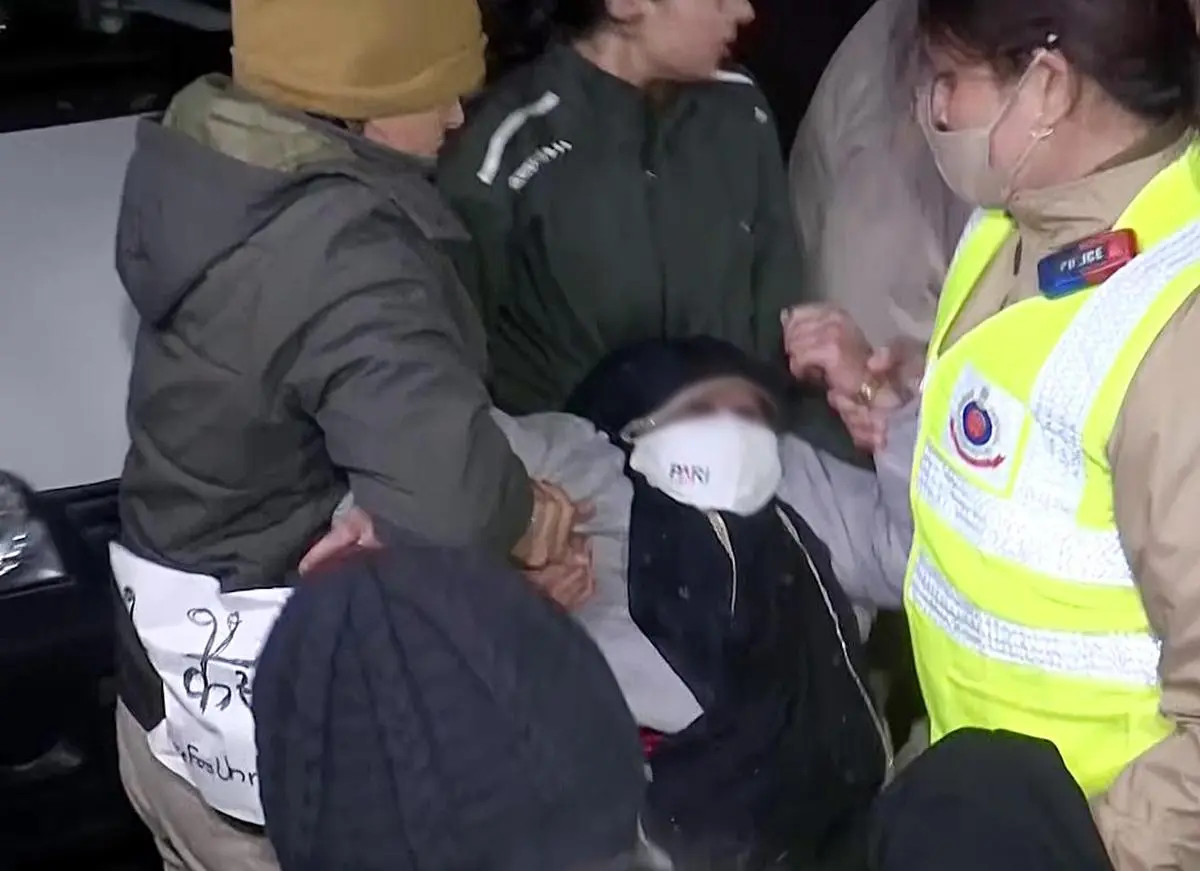
Delhi Police detain the Unnao rape survivor during her protest against the Delhi High Court’s order suspending Kuldeep Singh Sengar’s sentence at India Gate, New Delhi, on December 23, 2025.
| Photo Credit:
ANI VIdeo Grab
In practice, this safeguard is often ignored. There have been cases where even a father who raped his own daughter was granted bail without any protection for the child, despite them living in the same house. “Bail is happening entirely at the judge’s discretion,” she said. Equally arbitrary are sentencing and decisions to grant parole. “Although rape law now has minimum punishments, judges often avoid imposing them, which can translate into lower convictions,” she added. “When they don’t feel comfortable sentencing someone to seven years, they sometimes choose to acquit instead. That is very dangerous; it makes it look like women are lying, when in reality the judge simply did not want to impose the sentence.” Parole, too, is granted unevenly. “If you are Muslim, from a minority community or lower caste, you are far less likely to get it.”
When the accused comes back
Most rape cases reported today are of children because of the mandatory reporting rule under POCSO, which prescribes a punishment of six months imprisonment for non-reporting of a sexual offence against a child. In cases of child sexual abuse, the assaults usually happen in very close quarters: in families, neighbourhoods or workplaces. “When the accused is released, he often returns to the same environment, spreading rumours, maligning her (the survivor), coming near her house. This destroys her mental health. We have also had cases where he has physically harmed her after release,” the activist lawyer said.

Dera Sacha Sauda chief Gurmeet Ram Rahim at the premiere of his film Jattu Engineer in New Delhi on May 17, 2025, after he was granted a 21-day furlough.
| Photo Credit:
PTI
In the Unnao case, the survivor’s sister had told the media that Sengar’s release would place their family in grave danger. “Given what he did to my sister, and what happened to our father and uncle, his release puts our lives at risk. If they have released him, they should put us in jail instead. At least we would be safe there,” she pleaded. Yet, the politician was granted bail. Similar patterns have played out repeatedly. In August 2025, in Delhi, a man out on bail in a rape case tracked down the survivor and shot her.
For survivors, especially minors, bail often sends a message of despair. When an accused is released, the survivor may believe that the accused has been acquitted or that her case has failed. D’Mello said that although the law requires courts to record the survivor’s statement before granting bail to the accused, and to act swiftly if the accused violates bail conditions, it is not being followed. “There must be an institutional mechanism. Otherwise police inaction delays everything, and the message the survivor gets is that she is on her own.”
These failures are most visible in high-profile cases. “Ninety-nine per cent are ordinary women and children, raped by fathers, neighbours, people living across the street. Courts grant bail mechanically, without listening to what it means for the survivor,” she pointed out.
Power, bail, and unequal justice
For feminist activist and writer Kavita Krishnan, the cases of Sengar, Asaram, and Ram Rahim cannot be seen as ordinary exercises of judicial discretion. “In several of these cases, granting bail is not neutral; it functions as a terror tactic against victims when powerful men wield enormous social and political influence,” she said.
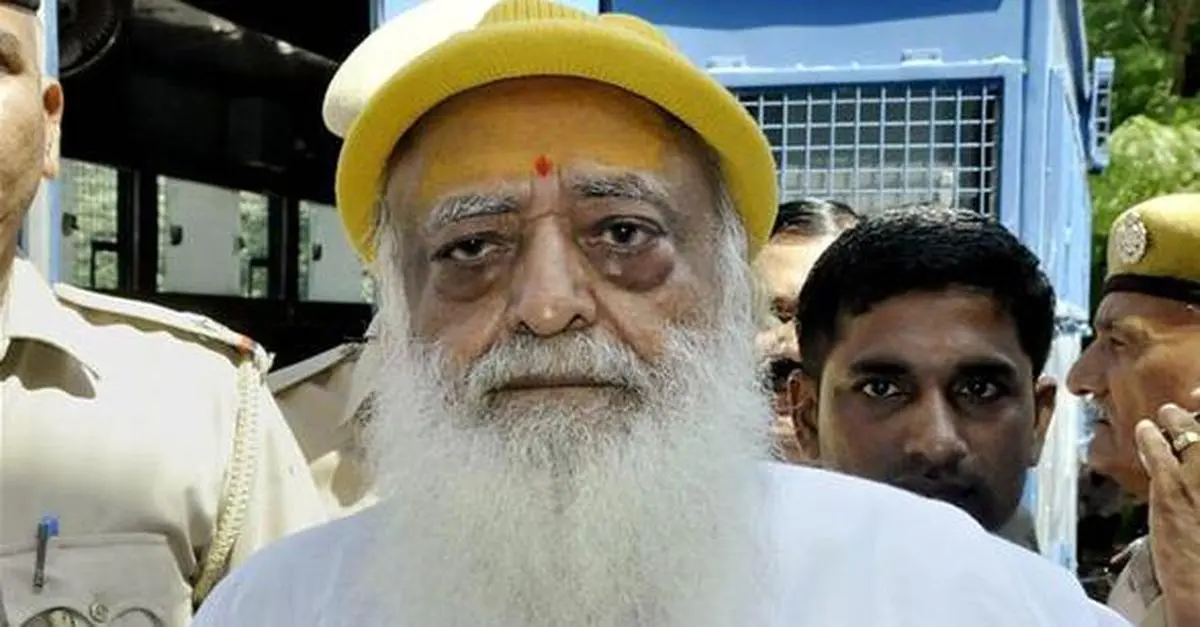
Asaram is produced in a Jodhpur court on March 2, 2024, in connection with a sexual harassment case. He was convicted of raping a minor girl at his Rajasthan ashram in 2013.
| Photo Credit:
PTI
Krishnan added that while powerful convicts accused of serious crimes are granted relief, many undertrials remain incarcerated for minor offences. “Political bias is obvious, but the deeper harm is the normalisation of unequal justice,” she said.
A political sanction to rape
Krishnan also commented on the political overtones in the celebration of the release of rapists on bail. “These are nationally prominent figures, openly patronised by ruling parties. These celebrations are not organic responses; they are enabled by forces with power over the entire country.”
This, Krishnan said, marks “a political sanction to rape”. Taken together with cases such as the wrestlers’ allegations against BJP MP Brij Bhushan Sharan Singh, this sends a message that sexual violence is acceptable when committed by “our people”, she pointed out. “Rape has always been about power. When that power is backed by the state and the ruling party, you are no longer merely pardoning individuals, you are mobilising public support around rape culture itself. You are creating legitimacy for certain rapes.”
In 2018, two BJP ministers attended a rally in support of a man accused of raping and killing an eight-year-old girl in Kathua, Jammu. In a widely circulated video, a BJP councillor’s husband, accused of rape, can be seen threatening the victim, claiming that nothing could happen to him even if a complaint was filed. He has since been arrested. According to a 2024 report by the Association for Democratic Reforms, 151 sitting MPs and MLAs have declared cases of crimes against women, including 16 rape cases. Of these, 54 belong to the BJP, 23 to the Congress, and 17 to the Telugu Desam Party.
Krishnan said that the increasing incidence of bail given to rapists reflects a deep erosion of institutional neutrality. “At the very least, institutions once felt compelled to appear unbiased. Even that pretence is eroding.” She added that this must be recognised as an extraordinary crisis. “Long-standing ideas—gender justice, the taboo against rape, even the idea that the state must claim to follow rules—are all collapsing. We have to name how bad it is, and continue [the resistance against it], one day at a time.”
Also Read | Unnao rape case: Corrupt nexus
Also Read | How the Supreme Court lets down the Muslim middle class