

Explained: This article explains the political background, key decisions, and possible outcomes related to Explained : Is India being made into another Israel?- Parakala and Its Impact and why it matters right now.
The failure of political parties to resist this trend is attributed to two main reasons: a lack of internal democratic commitment and a gradual submission to majoritarian politics. As a result, the responsibility increasingly falls on civil society and ordinary citizens
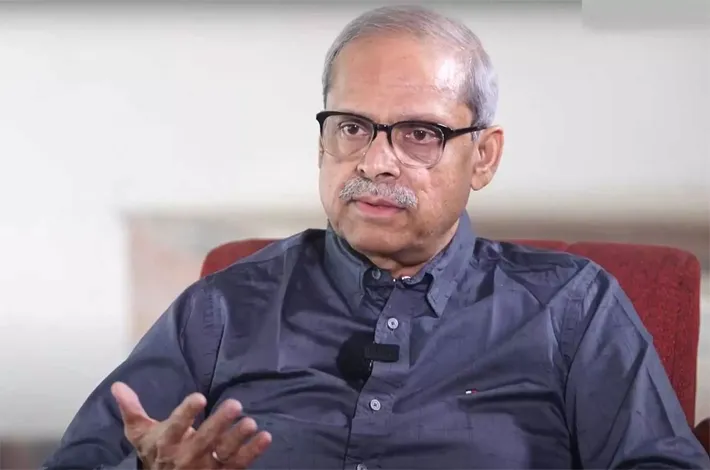
Eminent writer and journalist Dr.Parakala Prabhakar in an online interview acknowledged that the concern raised regarding subversion of democratic process by central government may be valid. He opined that the entire exercise appears to be driven, at least in part, by the party in power at the centre, particularly the Bharatiya Janata Party. As per him, the responsibility does not rest solely with the ruling party. Opposition parties, too, are compelled to respond—not necessarily out of concern for the public, but because they feel political pressure. Given the seriousness of the issue, the speaker suggests that opposition forces should unite and confront it collectively. Yet, he lamented that this this unity has not materialized effectively, raising deeper concerns.
He urges people to understand that this is not merely a potential threat to democracy—it is an ongoing one. In a functioning democracy, citizens should be able to expect political parties to defend democratic values. However, he argues that such expectations may be misplaced because many parties themselves lack internal democracy. Their primary focus remains on gaining and retaining power, rather than safeguarding democratic principles. This short-term mindset, he argues, leads them to believe that electoral losses are temporary and that they can always return to power later, without recognizing that the very nature of the political system may be undergoing a fundamental transformation.
A deeper issue, according to the him, lies in the shifting nature of voter identity. If voters increasingly identify themselves primarily through religion, then all political parties—regardless of ideology—will begin competing for the same religious vote bank. In such a scenario, every party risks transforming into a version of a majoritarian religious party. Dr. Prabhakar warns that even centrist parties are beginning to mimic the rhetoric and strategies of the ruling party, gradually adopting similar ideological positions.
Over time, this leads to a narrowing of political discourse, where speaking about marginalized groups—such as Dalits, Adivasis, minorities, and labourers—becomes politically disadvantageous because they are not seen as decisive voting blocs. To illustrate this trajectory, he points to Israel, where major political parties like Likud and Israeli Labor Party often converge on key issues due to the composition of their voter base. The implication is that even if governments change, the underlying political structure remains the same. Parakala Prabhakar warns that India could be heading in a similar direction, where electoral outcomes may vary, but the core ideological framework remains unchanged. This, he argues, is not just a political shift but a broader societal transformation—what they describe as the “Israelization” of India.
The failure of political parties to resist this trend is attributed to two main reasons: a lack of internal democratic commitment and a gradual submission to majoritarian politics. As a result, the responsibility increasingly falls on civil society and ordinary citizens. However, he expresses concern that citizens themselves have been influenced by political practices such as vote-buying, caste-based appeals, and religious polarization. This has weakened their ability to act as independent, critical participants in democracy.
In this context, Dr. Parakala Prabhakar calls upon intellectuals, activists, and engaged citizens—often referred to as “organic intellectuals”—to take action. They emphasize the need to raise awareness about the magnitude of the threat and encourage everyone to contribute in whatever way they can: by speaking, writing, organizing, or supporting those who do. Even small acts, such as sharing information or offering encouragement, are seen as valuable contributions to a larger democratic effort.
He also addresses civil society organizations that focus on specific issues such as education, women’s rights, environmental protection, and access to information. While acknowledging the importance of their work, they urge these groups to temporarily set aside their individual agendas and concentrate on defending the broader democratic framework. The argument is that if this foundational struggle is lost, all other causes will become irrelevant, as there will be no space left to pursue them.
Finally, he warns against complacency and detachment. Many people tend to believe that such crises happen elsewhere—in distant countries or regions—and not to them. This sense of indifference, they argue, must be overcome. What is happening is not distant or hypothetical; it is unfolding in real time. The speaker draws a powerful analogy with spectators watching a cricket match: it is easy to criticize from the sidelines, but this is not a game. The stakes are real, affecting people’s lives, futures, and the nature of the country itself.