

Explained: This article explains the political background, key decisions, and possible outcomes related to Explained : Bihar politics heats up as Nitish Kumar set to step down and Its Impact and why it matters right now.
Speculation over Bihar’s next chief minister has intensified after Nitish Kumar resigned as MLC and signalled a move to the Rajya Sabha. NDA leaders are considering possible successors, with a decision likely after Kharmaas ends on April 14
Published Date – 30 March 2026, 05:43 PM
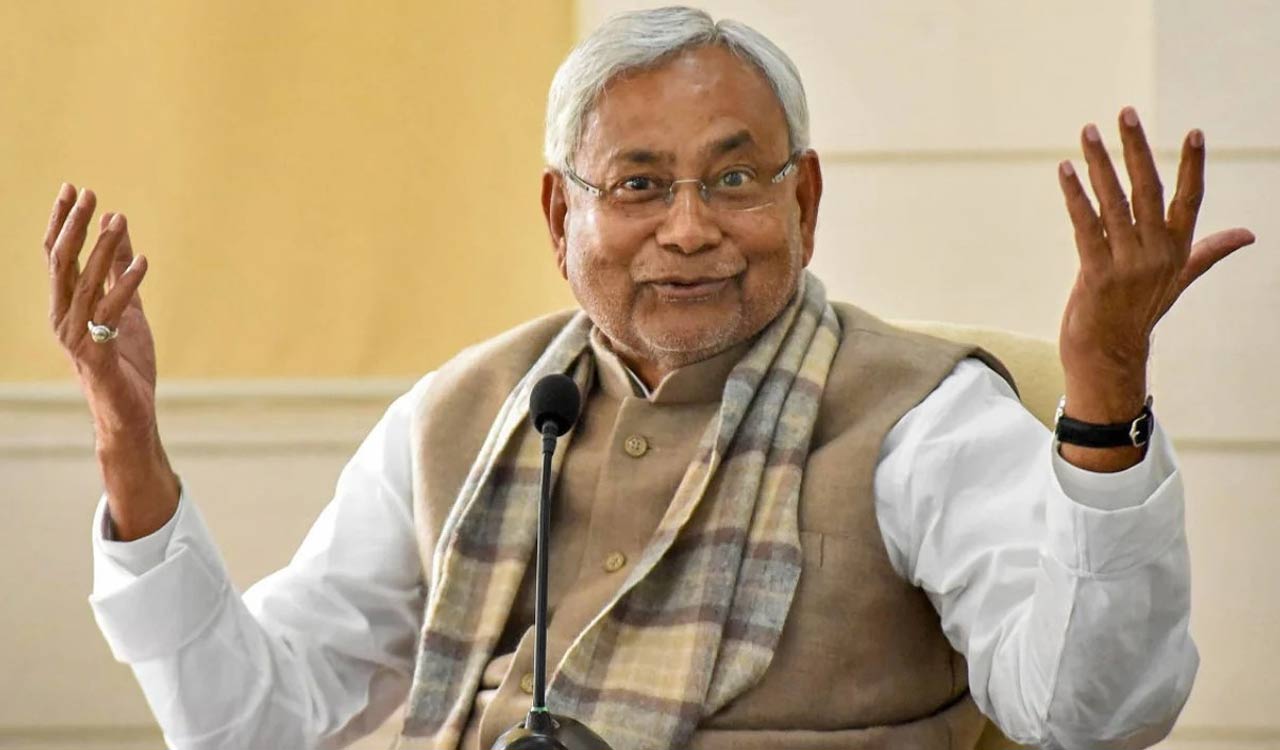
Patna: With Bihar Chief Minister Nitish Kumar giving up his membership of the state legislative council, speculation is now rife about who would head the new government to be formed after the JD(U) president relinquishes the seat of power.
Kumar, who turned 75 on March 1, took all by surprise a week later when he announced his decision to enter the Rajya Sabha, signalling that he wanted to end his innings as the CM, barely four months after getting a fresh mandate in the Assembly polls.
Close aides of the leader have, for some time, been making cryptic remarks about a constitutional provision that allows a person to “remain the chief minister for up to six months after ceasing to be a member of the state legislature”.
Such statements, made even by senior ministers like Shravan Kumar, have fuelled speculation that the JD(U), which has only four MLAs fewer than the BJP, could drive a hard bargain before allowing its alliance partner to stake claim to the top post.
However, sources in the NDA say it is unlikely that Kumar, who may get sworn in as a Rajya Sabha MP early next month, would remain in the seat of power for that long. They are also of the view that a change of guard could take place “only after Kharmaas”, the inauspicious month as per the Hindu calendar, which ends on April 14.
The BJP camp is thrilled at the prospect of finally having its “own chief minister” in the only Hindi heartland state where the seat of power has remained elusive, despite it having been a member of the ruling coalition for nearly two decades.
Names of many probables are doing the rounds, with the frontrunner being Samrat Choudhary, the Deputy Chief Minister who holds the crucial Home portfolio.
Choudhary is a Koeri, a numerically significant OBC group which has so far not been aligned with any particular party, unlike the Yadavs, who are die-hard supporters of Lalu Prasad’s RJD, or the Kurmis who revere Nitish Kumar.
BJP sources admit that by making a Koeri the CM, the party may secure, for a long time, the support of the dominant OBC group, besides ending the perception that it is a “pro-upper caste” political force, which puts it at a disadvantage in a state like Bihar, where politics has for decades been influenced by the Mandal agitation of the 1990s.
However, some old-timers in the BJP point out that Choudhary, whom Union Home Minister Amit Shah had famously promised to make a “bada aadmi” (big man) during the assembly elections, may not enjoy much traction with the all-powerful Sangh lobby, given the fact that he spent nearly two decades of his political career in RJD and JD(U) before joining the saffron party in 2017.
Another prominent name that is doing the rounds is that of Nityanand Rai, a former state BJP president, who is understood to be a favourite of Shah, by virtue of having been the Union Minister of State for Home.
Party sources also concede that while the new CM will be announced at a meeting of the legislative party, whenever it is held, the person occupying the seat of power will be “handpicked by the powers that be in Delhi”.
They cite the example of Rajasthan, where a first-term MLA was made the CM after a Union minister was rumoured to have flown down to Jaipur carrying a small piece of paper with the name inscribed.
Meanwhile, JD(U) sources assert that they will insist on “a fair share” in the new cabinet, and the supremo’s son Nishant Kumar, who joined the party only recently, is likely to be pushed for the Deputy CM’s post.