


Explained: This article explains the political background, key decisions, and possible outcomes related to Explained : Anna’s Protests, Politics & Power Plays and Its Impact and why it matters right now.
Tamil Nadu is the graveyard of national political parties. It buried the Congress at its peak then in 1967. The BJP, also at its peak now, has been pregnant with possibilities but has failed to deliver. Never a serious player in the state before the dawn of the Modi-era, the BJP has been humbled in every election since his arrival in 2014 (2019, 2021 and 2024).
Pundits and laypersons, Tamil Nadu confounds everybody alike. What makes it the strongest citadel of regionalism in contemporary politics that is now soaked in nationalism? Why is it a unique entity even among its culturally similar southern states? All these states are also fiercely proud of their cultural moorings, but none practices antagonism to national parties as a principle of state policy, so to say. What makes it stand out and stand apart? Is it true that a monolithic national narrative suppresses or seeks to suppress the state’s distinct Tamilakam (Tamil Nadu of yore) identity and ancient glory? Or, do the state’s Dravidian parties deliberately stoke the sense of cultivated alienation and grievance to perpetuate their careers? What has Dravidian politics delivered that the state does not want a taste of any other model? What is the collective angst of the Tamils? Is it justified? Why can’t the rest of India fathom it? As another grand electoral spectacle looms in 2026, these are some of the myriad questions that need to be addressed. Not to predict winners and losers, but just to understand why Tamil Nadu is the way it is.
In this new series, that is what Chennai-based senior journalist, TR Jawahar, will attempt to do. He will dig deep into history and heritage, arts and archaeology, language and literature, cinema and culture, kingdoms and conquests, castes and communities, religion and race and, of course, politics and pelf, to paint a picture of the state that might help you understand whatever happens when it happens.
Read More
The 1950s and 60s in the Madras Presidency were not just decades of transition; they were a rhetorical blitz of epic proportions. As the “Rising Sun” of the DMK began its ascent from the rain-soaked soil of Robinson Park, C.N. Annadurai (Anna) performed a qualitative shift in Southern politics.
He turned the rationalist reality of the erode father into a
celluloid charm and a Parliamentary polish that would eventually dismantle the
“grand old party” of India. This was the era of agitation alchemy,
where the “scholar of the streets” transmuted raw, visceral protests
into policy gold, proving that the pen and the megaphone were the ultimate
Dravidian dynamos.
Hindi Heatwave
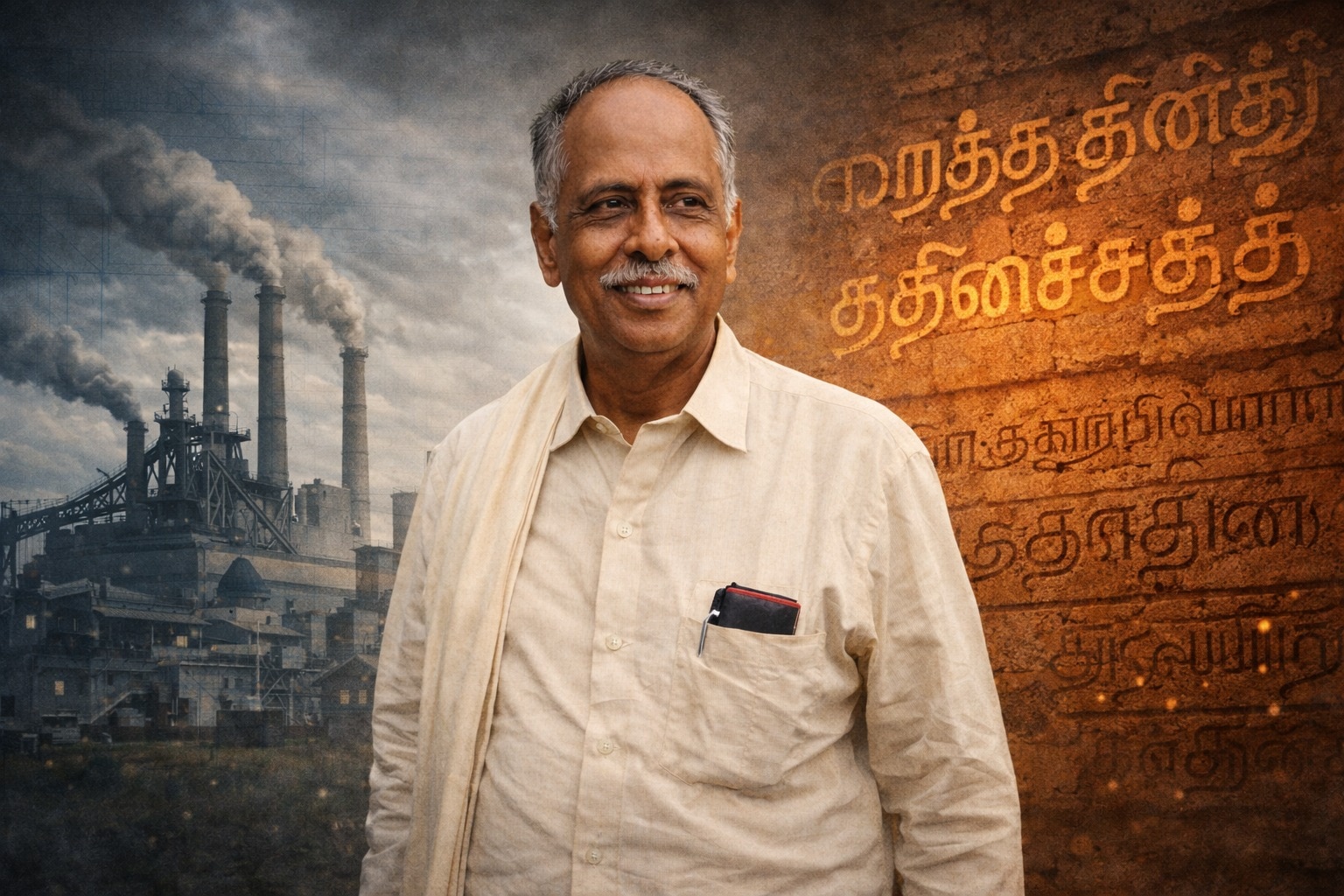
C.N. Annadurai during the 1950s, as debates over language and identity reshaped politics in Southern India (AI image)
The 1950s marked the birth of a linguistic tinderbox that
would eventually incinerate the Congress monopoly in the South. While the North
was occupied with the “swadeshi” of industrial goods and the grand, heavy-industry
projects of the five-year plans, Anna was fighting for the swadeshi of the soul.
He realized that language was not just a tool for communication; it was the
very “soul of the soil,” the primary vessel of people’s dignity and
the hardware of their heritage.
The anti-Hindi fury reached its absolute, blistering peak in
1965, building on the foundations of Periyar’s earlier bonfires but infused
with Anna’s strategic spin and scholarly weight. He realized that for the
Dravidian movement to move from the “fringe to the forefront,” it
needed a cause that resonated beyond the radical atheist circles. Language was
that lever. “The North’s linguistic lasso must loosen,” he thundered
in rallies that stretched from the salt-air of the Marina to the industrial
heart of Coimbatore.
His wheat-versus-rice allegory—a punchy, metaphorical reload
of the theme he had nurtured since his Periyar days—rallied thousands. He
argued that if Hindi was “national” because it was spoken by the
majority, then the crow should be the national bird because it was more in
number than the peacock. It was a verbal volley on the logic of
majoritarianism. He argued that forcing Hindi on a Tamil-speaking South was not
a move toward national integration, but a form of cultural autocracy designed
to create a “permanent linguistic underclass” of non-Hindi speakers.
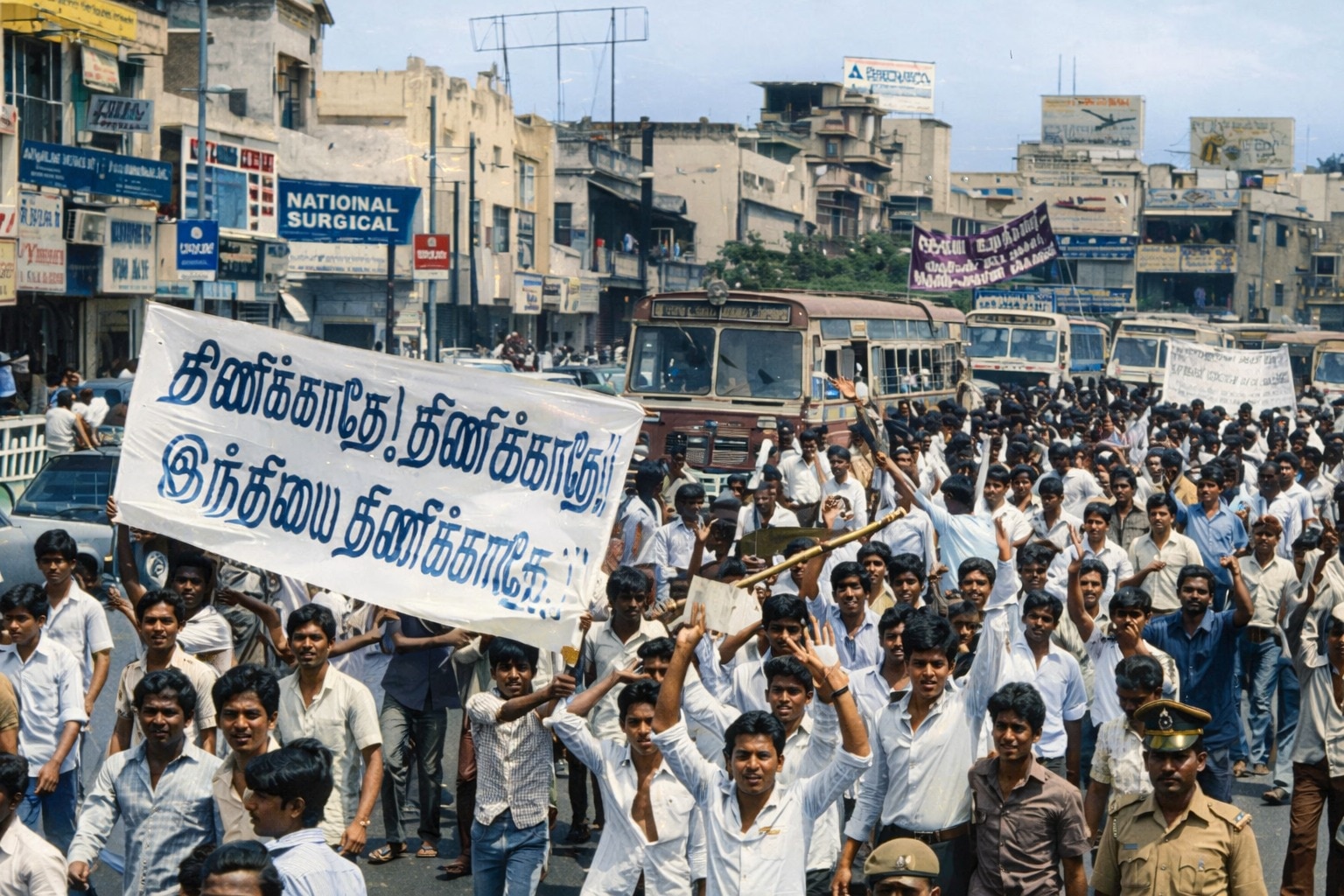
A glimpse into Tamil Nadu’s anti-Hindi imposition protests, a movement that shaped the state’s linguistic and political identity.
On January 26, 1965 – the day Hindi was to legally become
the sole official language of India—Anna declared it a day of mourning. This
was a jab at the central establishment that echoed from Madras to New Delhi.
The streets became a human furnace of protest. The tragedy was real and gut
wrenching: over 70 lives were lost in police firing, including the iconic
student martyr Rajendran at Annamalai University. Self-immolations, a
terrifying new form of protest, shocked the national conscience as men like
Chinnasamy became human torches for the cause of their tongue.
Anna mourned these losses in assembly speeches with a
poignancy that turned private grief into a galvanizing public force. He did not
officially lead the students to rebel; he however managed the atmosphere of
agitation admirably. While the rhetoric came from the top DMK leaders from a
diplomatic distance, the fingerprints and fatalities were of the radicalised
youth on the war front.
Jail terms piled up—Anna’s own incarcerations, spanning over
15,000 total days across his career, turned cells into classrooms where he
continued to educate his “Thambis.” “Prison is the price of
pride,” he coined, and slogans like “English ever, Hindi never”
became the DMK anthems that vibrated through every village teashop. He was the
warrior of words who ensured that the “Northern noose” would never choke the
Southern lilt, turning a language protest into a “linguistic launchpad”
for total political takeover.
Parli Pulse
As an MP from 1957 to 1962, Anna’s parliamentary stints were
oratory opuses that redefined the South’s place in the Indian Union. He entered
the Rajya Sabha not as a regional supplicant, but as the Oxford of the Orient,
raising issues with a scholarly sharpness that sliced through the “Hindi heartland’s”
dominance. In this, Anna was a trailblazer for similarly placed regions that
shared the spirit but lacked the nerve or had even lost their voice.
Anna was also the first to have the audacity to pitch for
the state’s name change in the national halls. “Madras is a name forged in
colonial chains; let Tamil Nadu rise as a sovereign sentiment,” he urged -
a vision he would realize years later but which found its first breath in these
federal fights.
English erudition and eloquence were his greatest shield and
sword. Drawing from George Bernard Shaw for wit and Charles Dickens for drama,
he made himself a resonant, unignorable Southern voice in Northern halls. In
his memorable 1962 speech in the Rajya Sabha, he famously thundered, “I
belong to the Dravidian stock,” a phrase that captured the Dravida Nadu
dream while subtly changing direction toward a more realistic demand for state
autonomy. He didn’t just speak; he performed a legislative autopsy on central
overreach.
He could easily pivot from profound to pedestrian, arguing
the fine points of the Constitution while keeping the fire of the streets alive
in his eyes. Defamation cases became a regular part of his life as the Congress
establishment tried to label him a secessionist and a traitor. Anna won most of
these legal battles with the calm of a philosopher, his courtroom quips like
“Truth is my only treason” honing his resilience and adding to his
patriot’s badge.
In a 1960 speech on federalism, he masterfully quoted
Abraham Lincoln’s “government of the people” to argue for the
necessity of linguistic states, a nod to global precedents that showcased his
status as a worldly-wise man of letters. He proved that a regional rebel could
also be a subcontinental intellectual of the highest order, making the Delhi masters
realize that the South would no longer be a silent spectator.
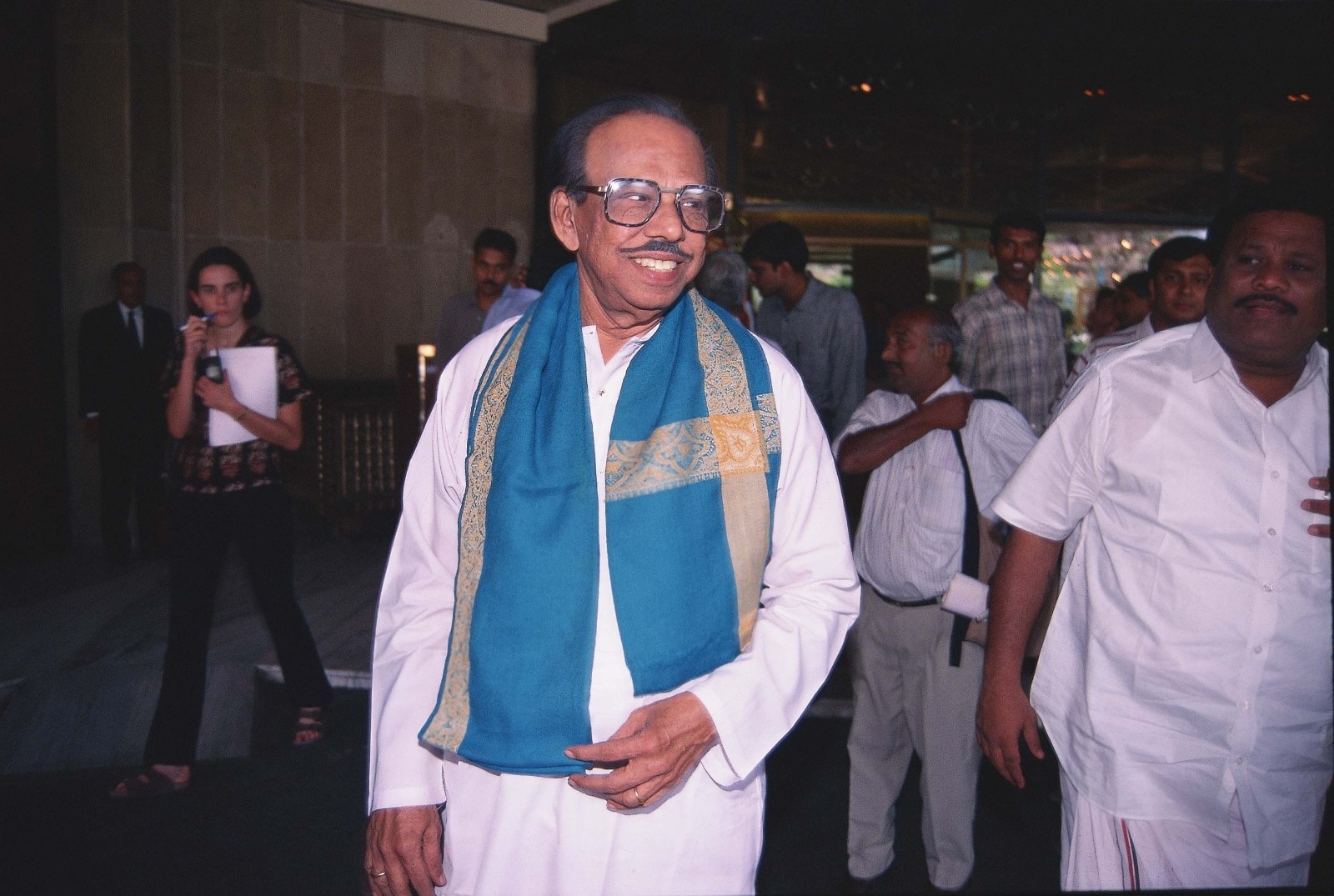
From the DMK’s launch in 1949, Nedunchezhian served as Anna’s trusted deputy all through
Nedunchezhiyan backed him in Parliament with a strategic
finesse, their tag-team tactics turning dry debates into dramatic Dravidian
displays. Anna, in an ironic way can be called a ‘Dravidian intellectual
invader’ who proved the South could out-think, out-speak, and out-manoeuvre the
North in the language of the Constitution itself. He turned the Rajya Sabha
into a regional stage, proving that the Rising Sun could shine even in the fog
of Delhi.
Cinema Crucible
While he fought in the Parliament, Anna was winning the hearts
of the masses through the cinema crucible. Tinsel remained his unswerving
weapon, a vehicle for cultural conquest and a catalyst for change, that
propelled the DMK’s rise and still shapes the TN polity today. The silver-tongued
orator realized that the silver screen was the ultimate Dravidian dynamo. As
the script master, he collaborated with his apprentice scribe, the young and
fiery M. Karunanidhi, besides lighting up the Tamil skies with several stellar
stars and storytellers.
Anna’s dialogues were not mere entertainment: it was a
social scalpel performing surgery on caste, temple corruption, and the
hypocrisy of the elite. “Gods are man’s making, not vice versa,”
Anna’s writings ignited audiences in a way that pamphlets never could. He
realized that the cinema hall was the ultimate people’s pulpit, reaching those
who had never stepped foot in a library.
This wasn’t mere movie magic; it was a celluloid coronation
that mobilized millions of voters against the Congress. Anna’s plays with their
anti-superstition themes echoed in every DMK rally. He realized that while
Periyar broke the idols on the streets, the big screen could build the icons
that would lead the movement to the ballot box.
He was the architect of the aesthetic, turning the projector
into a political projectile that hit the Congress exactly where it hurt—the
imagination of the common man. A geriatric grand old party was no match for the
slick slogans of the sensational scholar who brought the curtains down on it.
Tirades That Turned the Tide
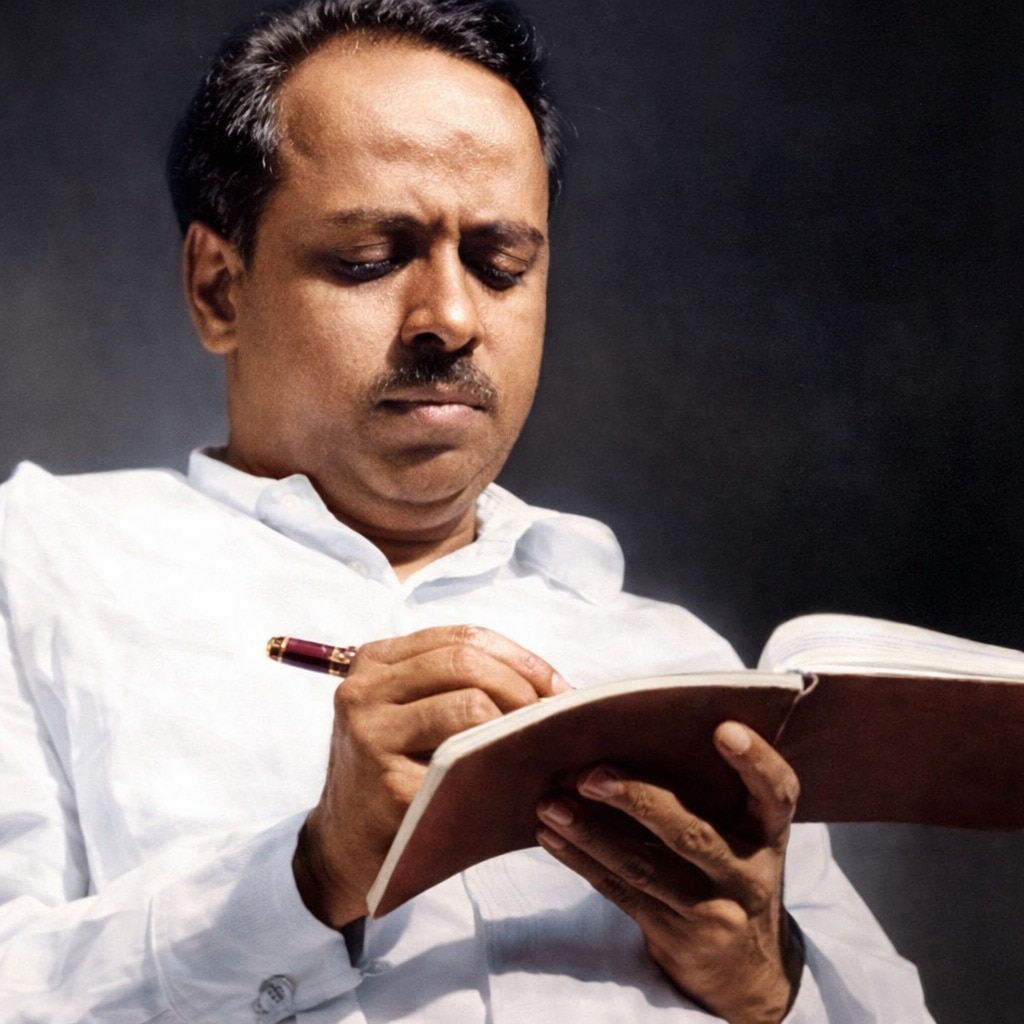
In the mid-1960s, C. N. Annadurai rallied Tamil Nadu with sharp slogans aimed at loosening what he saw as New Delhi’s tightening grip.
By the mid-sixties, the Congress fortress in Fort St. George
wasn’t just aging; it was ailing, and Anna was ready with the wrecking ball.
The Bhaktavatsalam regime, often dismissed by Anna as a proxy of the North and
a prisoner of the past, became the prime target of his trenchant tongue. While
the Congress was busy celebrating its pedigree, Anna engaged in exposing its
poverty—both of policy and of purse.
The mid-sixties saw a Tamil Nadu tethered to the whims of
Delhi, and Anna’s slogans were the sharp shears meant to cut those strings. He
didn’t just critique; he conducted a masterclass in mockery, turning and
twisting the “Kamaraj Plan” into a punchline and the Bhaktavatsalam
administration into a cautionary tale of corruption and callousness.
Anna’s most poignant darts were reserved for the rice crisis
and the Hindi imposition—the two millstones around the Congress neck. He
famously quipped that under Bhaktavatsalam, the state had transitioned from a
granary to a gallery of empty pots. His slogan, “Kamarajar Annachi,
kadalaiparuppu vilai ennachu? Bhaktavatsalam annachi, arisi vilai ennachu
(Elder brother Kamaraj, what happened to the price of chana dal? Brother
Bhaktavatsalam, what happened to the price of rice?),” wasn’t just a jingle; it
was a jugular grasp.
And here is one more for the road. With the common man’s
‘kumbi’ (belly) burning in the fire of a famine-like food crisis, Anna’s
acerbic wit turned the government’s Ooty retreat into a political funeral pyre,
scorching the Bhaktavatsalam regime with the stinging query: ‘Kumbi eriyudhu,
kudal karugudhu, kulu kulu Ooty oru keda?’—a punchy reminder that while the
people sought rice, the rulers were itching for the cool breeze.
These alerted the common man to where it hurt most—the
stomach—and the kitchen, where alliteration and agitation met. He lampooned the
government’s “Three-Language Formula” as a three-card monte, where
Tamil was the card always hidden or discarded.
When corruption charges began to cling to the Congress like
a layer of grease, Anna didn’t just point fingers; he painted pictures. He
spoke of a government that was “blind to the black market but had 20/20 vision
for the tax-payer’s pocket.” His demand was simple yet striking: “Duty,
Discipline, and Dignity,” a trinity he claimed the Congress had traded for
“Deceit, Debt, and Decay.”
By the time the 1967 elections loomed, Anna had successfully
framed the Bhaktavatsalam era as a dark decade of desperation, using his
signature mix of metaphors and municipal-level reality to ensure that the Rising Sun would finally set on the Congress’s long, lethargic afternoon.
Alliance Art
Anna’s power plays hinged on an alliance art, a pragmatic
methodology that bordered on political genius. He knew that to win the throne,
one needed to move from being a group of grumblers to a governance guild: from
street protests to sensible pragmatism. To topple the seemingly immovable Congress
behemoth, he forged an anti-Congress front that was a masterpiece of strategic
flexibility.
The most delicious and paradoxical move of his career was
the 1967 pact with Rajaji. In a re-run of the earlier Salem-Erode Show that
baffled the North and even some purists in his own party, the “atheist arignar”
Anna joined forces with the “conservative Brahmin” Rajaji, the very
man he had picketed years earlier during the Hindi agitations. “Unity
against tyranny,” he now thundered, though critics saw it as a calculated,
perhaps opportunistic, compromise.
This was a coalition of convenience of the highest
order—with both the scholar and the statesman realizing that joining hands with
the “enemy of my enemy” was the only way to redraw the map of power.
Rajaji provided the moral aegis and the support of the elite, while Anna
generated the mass momentum and the Rising Sun energy. It was a gilded deal
that bridged caste, class, and ideological rifts for a larger Dravidian goal.
This partnership, which included many other parties and
individuals, was the demolition squad that ensured the Congress collapse in
1967. Anna proved that in the theatre of politics, a tactical retreat from pure
ideology was often the fastest way to a strategic advance toward the throne. He
reasoned that to win the battle of the ballot, one needed to assemble a bridge
of brotherhood even with former foes.
This alliance wasn’t just about winning; it was about
consensus building, showing that the DMK was ready for the high table of
governance. He turned the “Brahmin-versus-Dravidian” binary into a
“Dravidian-led Coalition”, a significant shift from Justice Party-Periyar
formula.
It was also a masterstroke that left the Congress in a state
of “shock and shame”, from which the national party has never recovered.
Anna was the architect of its destruction.
Cadre Craft
Anna’s absolute loyalty from his leaders and cadres was not
a product of fear, but of profound cadre craft. He personally groomed a
generation of lasting successors, a confident captain who invigorated a team by
example, walking the talk shoulder to shoulder with his ‘co-borns’.
He was a mentor in every sense, nurturing the likes of
Karunanidhi, MGR, Nedunchezhiyan, Anbazhagan, Madhiazhagan, Natarajan etc.
Typical of western models, Anna had a shadow cabinet ready to step in. Such was
his foresight.
Even during his 1965 jail term, he wrote a series of letters
to his party folk, training them in the philosophy of nonviolent resistance and
turning Incarceration into Inspiration. He taught his followers that a leader’s
true strength lay not in the loudness of his roar, but in the “depth of
his knowledge” and the “discipline of his speech.” He engineered
a turn from grievance to governance, an ‘organic evolution’, ‘parinama
valarchi’, that guaranteed the DMK wouldn’t just win power but would know how
to hold it. He was the mentor of the mindset, ensuring that the Rising Sun was
powered by a brain trust of dedicated brothers, Thambis.
Triumph Time
The 1967 triumph tide swept the Congress away in a wave that
felt like a Dravidian deluge. The DMK’s win was the perfect payoff for years of
toil, a validation of a crucial decision to recognize the power of the vote as
an instrument for social and political change. As a result, the Congress, led
locally by Kamaraj and other veterans, found itself in a permanent Southern
exile.
The “Rising Sun” had finally dawned over the
ramparts of Fort St. George, and the Celluloid Caesar was now the Statute Book
King. Roaring from sidewalks, streets and stages, rolling out reems of scripts,
stories and songs, riding on stars, sirens and soulful speakers: Anna’s DMK had
at last climaxed in the grand multiplex of the legislative assembly.
This was the apotheosis of the alliterative architect. Anna
arrived at the swearing-in ceremony not in a silk suit or a ceremonial robe,
but in his trademark simple dhoti, a pithy and poignant symbol of the common man’s
Victory. He had moved from the Robinson Park Rain to the chief minister’s chair
in less than two decades.
The orator of the orient had finally secured the keys to the
kingdom. He was no longer just the protégé of Periyar; he was the herald of a
new era, ready to perform the final, monumental syllabic surgery that would
rename the land and reboot the Southern soul. As the state celebrated, Anna
stood and shone like a lighthouse for a people who had finally found their
voice. And as a thanksgiving to them, he announced the promised “Two-Rupee
Rice Scheme” (the Padi rice), the first welfare wave that hinted at the
many social security measures to come.
The agitation alchemy had clicked—the lead of social
oppression had been turned into the gold of a gilded glory. Anna’s words and
work were now the “official anthem and agenda” of a state in
transition.
Next | Anna’s CM Crown: Landmarks, Legacy & Lingering Loss