


Explained: This article explains the political background, key decisions, and possible outcomes related to Explained : Akootai And Colonial Sexual Health Politics and Its Impact and why it matters right now.
In 1917, a woman’s brutal murder brought to the forefront a question that had been rearing its head since the rise of public health in British India – whose sexual health matters, and do sex workers figure in these discussions?
The woman who was murdered was a sex worker named Akootai, who had been sold to a prominent brothel on Duncan Road (present-day Mumbai) a few months before her killing. She had attempted to escape, but the brothel keepers had caught her. According to official statements, she was tortured, starved, burned with scalding water, and beaten with a curry stone. Days later, she succumbed to her injuries.
The news of Akootai’s murder spread through the city, and the gruesome details were prominently featured in newspaper reports, provoking public ire. Earlier that year, the Bombay police had been alerted to the plight of sex workers when a prominent inspector named Favel was found guilty of extorting pimps, mistresses, and workers of European brothels in Kamathipura. This case was quickly suppressed to prevent unwanted media attention to corruption within the Bombay police forces.
However, as Akootai’s murder became highly sensationalised, the colonial government, fearing controversy, hastened to collect details on the matter. It was no longer possible to overlook the increasing threat of human trafficking and forced prostitution, particularly in Bombay.
Brothel violence in colonial India
As the trial of the brothel keeper, Mirza Syed Khan, who was responsible for murdering Akootai, gained publicity, the British administration began to dig further into the problem of the widespread abuse of sex workers throughout the subcontinent. It was particularly important to them to gather information about debt bondage, kidnapping, and ‘sale’ of women and girls, to assess the gravity of the situation. The Home Department forwarded details of the court case to the provinces of British India, requesting details of similar evils elsewhere.
Today, the then sensationalised news of Akootai’s death, as well as the suppressed case involving Favel, are remembered in connection with the appalling realities of brothels in colonial India. However, these cases were not just about violence against sex workers or their abuse at the hands of the police. From a medical standpoint, Akootai’s case presents an important entry point into the obscure histories of colonial sexual governance, especially to study the failure of laws governing sex work.
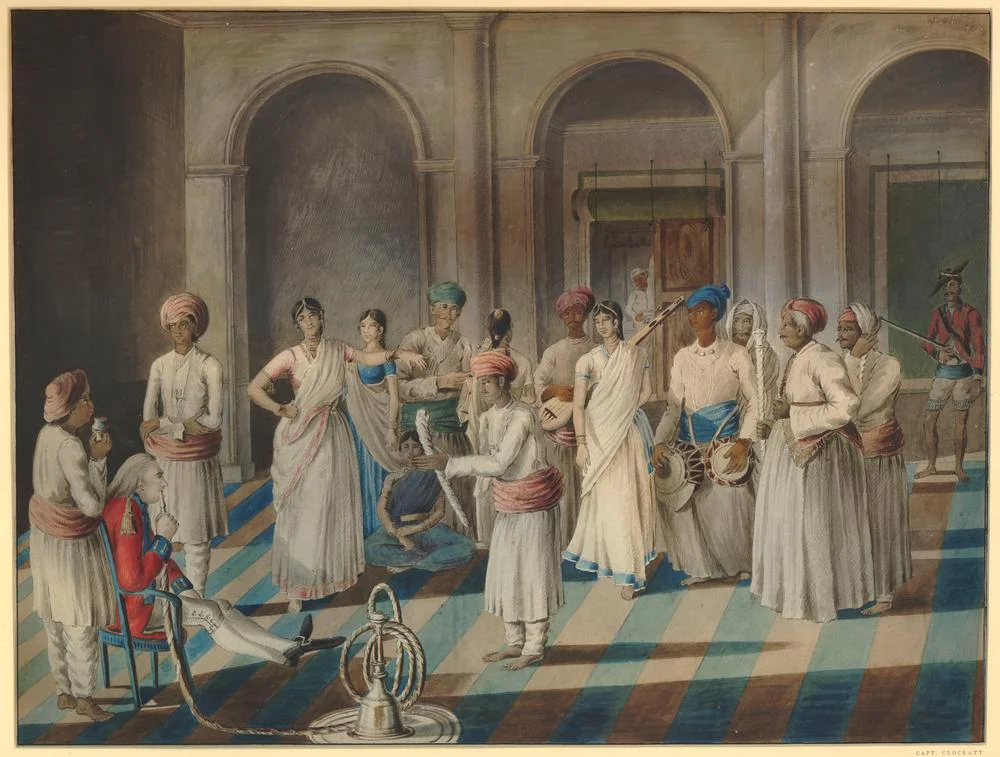
Akootai’s death, in particular, reveals flaws in regulation and the imperialist agendas. It brought focus to the long history of the government’s neglect of the welfare of sex workers, even though they were a key element of the British government’s sexual health policies. However, colonial sexual health policies pathologised sex workers, especially native women.
In the sexual economy of the empire in India, sex workers occupied a paradoxical position – they were central to the sexual health policies of colonial India, but their bodies were never considered subjects of health.
They were categorised as the ‘spreaders’ of ‘venereal disease’ (sexually transmitted infections), while European male bodies were painted as the recipients of these diseases, and therefore, the victims. Prostitution laws targeted the rising levels of sexually transmitted infections (STIs) among European men stationed in India. Thus, in the sexual economy of the empire in India, sex workers occupied a paradoxical position – they were central to the sexual health policies of colonial India, but their bodies were never considered subjects of health.
Sexually transmitted infections and lock hospitals
In the 19th century, the high rates of STIs among British soldiers were a constant source of embarrassment for the authorities. The intemperance of the men presented a sorry picture of Pax Britannica. Moreover, frequent attacks of diseases such as syphilis entailed costly as well as time-consuming treatments.
One third of European soldiers were found to be perpetually hospitalised due to STIs in the mid-nineteenth century. This figure was as high as 359 per 1,000 in 1859. The government understood that rigorous policy changes were required to tackle the public health threat of STIs; however, the authorities could not find sustainable solutions to manage the sexual habits of the men of the empire.
If sex workers were found to be infected, they were arrested and sent off for treatment in lock hospitals. These institutions, although meant to be sites of healing and care, were quasi-carceral in nature.
Instead, sex workers, especially native women, were regulated and monitored. Only licensed sex workers were allowed to work in cantonments, and these licenses were contingent upon regular medical checks that were not only invasive but also demeaning. The British went to the extent of ensuring the men in cantonments had access to batches of sex workers in the barrack-specific chaklas (brothels in military bases which provided a fixed number of regulated and licensed sex workers per regiment), to reduce the chances of the men catching diseases.
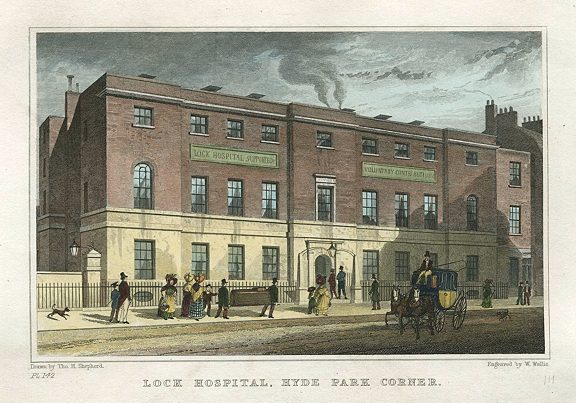
If sex workers were found to have STIs, they were arrested and sent off for treatment in lock hospitals. These institutions, although meant to be sites of healing and care, were quasi-carceral in nature. In practice, the infected sex workers were detained here and subjected to state-mandated treatment, with or without their consent. Thus, the regulatory reforms and legislative measures were aimed at surveilling, restricting, and confining sex workers, rather than safeguarding their health.
In this climate of sexual surveillance, the soldiers continued to engage in risky behaviours. Sometimes complaining that they got tired of the same women in the designated brothels. The authorities noted that, despite knowing the risks, the soldiers preferred to have sex with unregistered women if they were not ‘old and ugly’. The women were often referred to as ‘hags’, ‘old, ugly, broken down’, ‘deformed and seared by disease’, and ‘dragging on a miserable existence by the aid of opium, bhang, and liquor’ in official reports.
Yet the colonial authorities continued to place the needs of the men as the highest priority, and it was decided that the ‘class of women provided for the soldiers must not be old and loathsome hands,’ and that men must be kept in their barracks at night.
The Cantonment Acts
The lack of attention paid to safety is reflected in the way sex workers were highly vulnerable to STIs, often due to medical mismanagement and the carelessness of their clientele. Discourses around their ‘moral corruption’ allowed for the easy justification of coercive legislative measures that were meant to curb the spread of STIs among British men.
In fact, in the name of combating STIs, British soldiers who were diagnosed with them were asked to identify the women they had engaged in sexual relations with. The identified women were then dragged off and detained in lock hospitals based on a single testimony. The patterns of dehumanisation in the case of sex workers continued as the lack of state protection became more and more glaring.
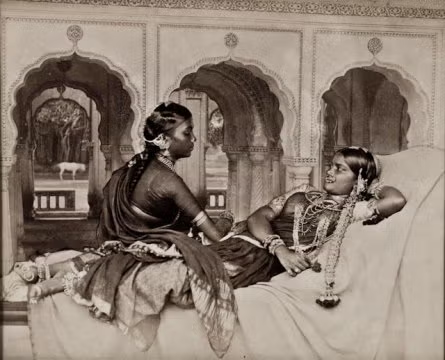
In the nineteenth century, defiance towards the Cantonment Act increased, but sex workers like Akootai remained on the fringes of society. At this time in England, a feminist anti-regulationist sentiment had emerged in response to the Contagious Diseases Acts of 1864, 1866, and 1869. These legislative measures targeted sex workers and subjected them to coercive forms of sexual and medical surveillance. In the backdrop of emerging discussions around suffrage, debates about the discriminatory nature of the Contagious Diseases Act gained momentum, particularly in relation to women’s civil rights and human dignity.
After an arduous struggle, the result was the repeal of the Acts in 1886 in the United Kingdom. Resistance towards the Indian Contagious Diseases Act also culminated in riots against the British in the late 19th century. Given that it was repealed in Britain in 1886, the 1888 House of Commons resolution did the same for India, condemning the compulsory examination and licensing of sex workers.
However, this did not mean that the change was accepted by the authorities, who were in favour of the system and apathetic towards the welfare of sex workers. In 1889, a new Cantonment Act was introduced to facilitate the expulsion of those from the cantonments who resisted treatment or left the hospital without authorisation.
Colonial medicine and sexual surveillance
Today, the so-called ‘old, ugly, broken down’ Indian sex worker of British India emerges as a subaltern figure in need of historical reinvestigation. Women’s History Month invites us to delve into those histories that remain obfuscated or partially explored. The colonial archive presents us with some forgotten figures who open a window into the lived realities of those whose lives are otherwise reduced to statistics. Although we know a handful of names, official data is full of nameless, faceless women who were trafficked, abused, infected, and detained. It barely contains data on those who resisted or rebelled against the system.
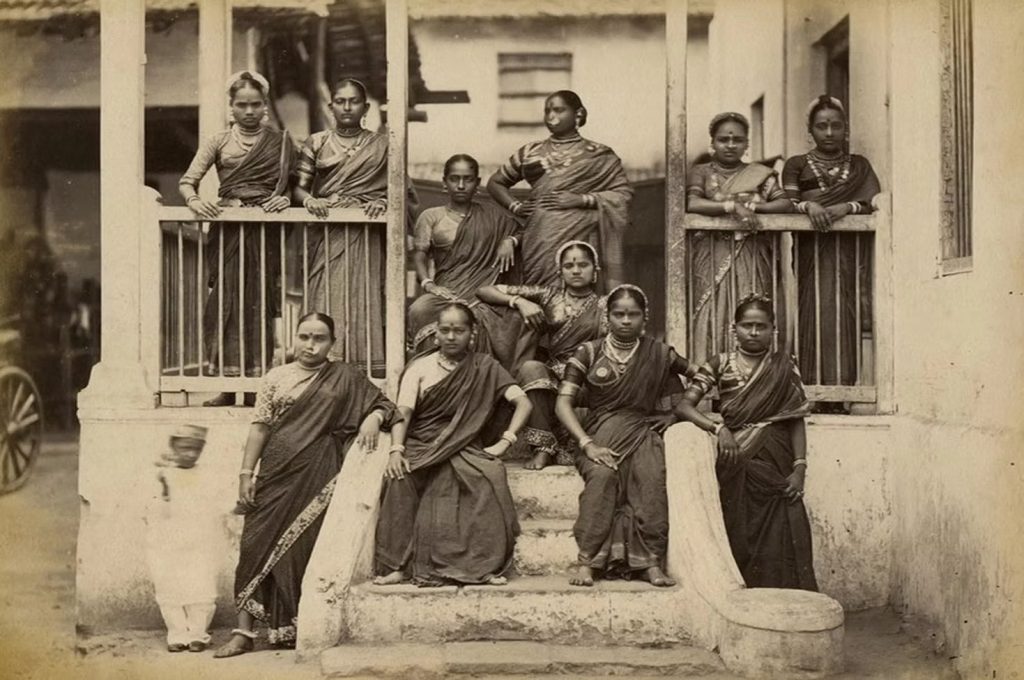
Akootai herself is remembered not because of her redemption, but because violence forced her into mainstream discourse. She did not campaign for rights or reforms, and she did not redeem sex workers in India. However, her escape, the refusal to resign herself to her captors, was her rebellion. Her subsequent murder exposed the faults in colonial governance, sexual management, and even failures in public health measures. Her story reveals to us the limits of a system that curtails a woman’s body and fails to recognise her right to health.
In all this, one must remain mindful of not reducing Akootai to an allegory. Instead, she may be seen as a figure who exposed the contradictions of a system that sought to control rather than protect women. With her, we acknowledge the countless others who escaped or didn’t, but who were and continue to be failed by the state, and remain only as statistical evidence of sexually transmitted infections.
References:
- Sandy Chang, A Colonial Haunting: Prostitution and the Politics of Sex Trafficking in British India, 1917-1939 (University of British Columbia, 2012), 1-3.
- Ashwin Tamble, Hierarchies of Subalternity: Managed stratification in Bombay Brothels, 1914-1930 (2004), 3.
- S Legg, Prostitution and the ends of empire: Scale, governmentalities, and interwar India i (UK: Duke University Press, 2014), 3.
- Erica Wald, Vice in the Barracks: Medicine, the Military and the Making of Colonial India, 1780-1868 (United Kingdom: Palgrave Macmillan, 2014), 48 hospitalised.
- Phillipa Levine, Prostitution, Race and Politics: Policing Venereal Disease in the British Empire (United Kingdom: Taylor & Francis, 2013), 66.
- United Provinces of Agra and Oudh. Fifth Annual Report on the Working of the Lock-Hospitals in the North-Western Provinces and Oudh for the Year 1878. North-Western Provinces and Oudh Government Press, 1879. 18.
- Margaret Hamilton, ‘Opposition to the Contagious Diseases Acts, 1864-1886’, Albion: A Quarterly Journal Concerned with British Studies, vol. 10, no. 1 (1978): 15.
- Nancy L. Paxton, Writing Under the Raj: Gender, Race, and Rape in the British Colonial Imagination, 1830-1947 (United Kingdom: Rutgers University Press, 1999), 126.

Ipshita Nath’s work explores gender, medicine, race, and everyday life in British India. She has held the Elizabeth and Cecil Kent Postdoctoral Fellowship at the University of Saskatchewan, Canada, and the LIAS Visiting Fellowship at the University of Leicester, UK. She is the author of Memsahibs: British Women in Colonial India, nominated for the Sahitya Akademi Yuva Puruskar in the non-fiction category. She has also authored The Rickshaw Reveries, a collection of short stories nominated for the Sahitya Akademi Yuva Puruskar for debut fiction. Her essays and writings on history, literature, and society have appeared in leading newspapers and publications. She is currently an Associate Professor of English at Manav Rachna International Institute of Research and Studies, India.