


Mike P. Nelson’s ‘Silent Night, Deadly Night’ Q&A — Ending Explained
[Editor’s note: The following interview contains spoilers for “Silent Night, Deadly Night.”]
Few horror franchises have worked harder to earn their villain’s sympathy than “Silent Night, Deadly Night,” and Cineverse‘s audacious new remake from filmmaker Mike P. Nelson is no exception.
Since the original movies’ infamously brief theatrical run in 1984, this seasonal slasher — sometimes about a Santa-obsessed serial killer with hallucinatory PTSD, sometimes not — has stayed relevant through its flexible holidays IP and various directors’ willingness to manipulate the backlash its core concept still gets. That loose framework “relaxed” Nelson when making his movie (the second remake, after one in 2012), and gave imaginative genre fans one of the best “Silent Night, Deadly Night” installments yet.
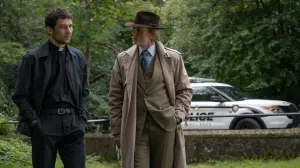
“When I think of ‘Silent Night, Deadly Night,’ Billy Chapman is the anchor,” Nelson said of the series’ strangely lovable protagonist, played here by Rohan Campbell. “I know the sequels exist — three, four, five — and they’re not necessarily my go-tos, but what they did was open the door to the idea that anything is possible in this series. That gave me permission not to overthink it.”
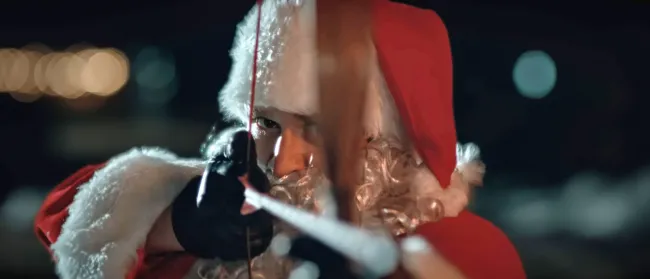
Chaos isn’t almost something to correct, and Nelson goes to his own extreme lengths to make you like this new take on a world still very much influenced by the original’s killer Santa (Robert Brian Wilson). Rather than sanding down the violence or sharpening up the cruelty, Nelson reframes familiar scenes through a romantic lens of longing, loneliness, and lost moral order that even sees Billy embrace Pam (Ruby Modine), a mostly throwaway victim from the first movie, as his moody and complicated girlfriend.
That approach, Nelson says, was only possible because of the franchise’s anything-goes history.
“I knew I wanted to tell a Billy Chapman story, but could I take it in a totally new direction? Sure. Why not? That’s kind of the spirit of these movies,” he said. The result is a film that openly manipulates its viewers, toggling between Christmas magic and cathartic brutality — including a deliberately crowd-pleasing Nazi massacre — to secure audience allegiance. In his conversation with IndieWire, Nelson breaks down how far he was willing to go to make Billy Chapman “relatable” and whether he wants to make a sequel.
The following interview has been edited and condensed for length and clarity.
IndieWire: How’d your relationship with the “Silent Night, Deadly Night” remake start?
Mike P. Nelson: I’d always wanted to do a Christmas horror movie. It was sort of one of those boxes I hoped I’d get to check at some point, and when this opportunity came along, it felt like I needed to see it through. I had just done a segment for “V/H/S/85” with producer Brad Miska, and we premiered that at Fantastic Fest in 2023. It was a really great experience all around. He was at Cineverse and Bloody Disgusting at the time, and later said, “We have ‘Silent Night, Deadly Night’ with the original producers, Scott Schneid and Dennis Whitehead, and we’re putting something together. Do you have a take?”
I said, “No — but I can figure something out.” That phone call was literally the start of everything. Those guys had been trying to get this movie made for almost a decade, and when I pitched them a version of what ended up being a pretty weird idea, it just clicked. They said, “This isn’t what we were expecting — but that’s why we like it.” They told me to write a treatment, and about 85 percent of what’s on screen was already there from that first pass.
What was your familiarity with the original 1984 film and the sequels going into that?
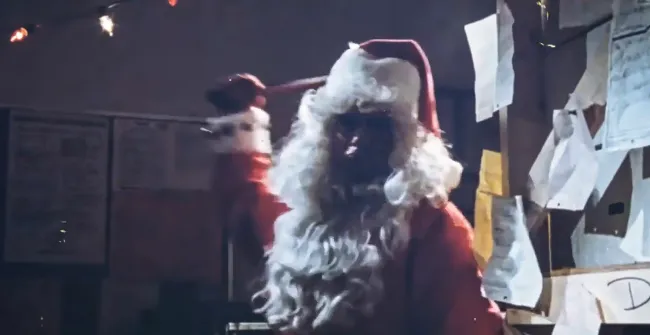
I actually saw the original much later in life. I wasn’t allowed to watch horror movies growing up, so it didn’t leave that childhood imprint on me the way it did for a lot of fans. But that poster? That poster was huge. I think there are tons of kids of the ’80s, horror fans or not, who remember walking through video stores and judging everything by the box art. You’d stand in that aisle and your imagination would just run wild. You were absolutely judging books by their covers.
When I finally did see the movie later on, the Billy Chapman story stuck with me. I knew that if I was going to remake or reimagine it, I wanted to do my version of Billy. I wanted to make him sympathetic again, but in a different way. There’s so much magic tied up in Christmas, culturally and emotionally, and I thought, why not bring some literal magic into it too? Hopefully in a way people weren’t expecting.
You drastically shifted the mechanics of the story — leaning into the supernatural, but also reshaping the tone to be more romantic. Was that the kernel of that “weird idea”?
At the time I was writing this, my wife and son were not big horror fans. They’ll do some gateway horror with me, but the really gnarly stuff is usually just me on the couch alone. What we do watch together is a lot of ’90s comedies and a lot of Pixar. So I was watching movies like “The Santa Clause,” “Elf,” “Up,” “Coco,” “Inside Out,” — all that warmth and whimsy — while also working on a horror script.
The two genre movies that really sandwiched all of that together for me were Bill Paxton’s “Frailty” and Adam Wingard’s “The Guest.” “Frailty” has that incredible father-son story, this sense of divine calling that feels completely insane until it isn’t. And “The Guest” is Dan Stevens coming into this family’s life as a drifter, slowly revealing who he really is, and that really stuck with me. I loved the idea of someone arriving with a mysterious past, carrying something dark, but also trying to connect.
So, it was a bizarre mashup. Pixar, ’90s comedies, “Frailty,” “The Guest.” Throw it all in a blender and hope it becomes cohesive. That was the goal.
Rohan Campbell is essential to selling that tonal balance, and he attempts something in “Halloween Ends.” Talk to me about casting him and shaping Billy around his performance.
Rohan read the script and immediately said, “I’m in.” I loved him in “Halloween Ends,” one of the executive producers, Steven Schneider, had just worked with him and suggested we send him the script. When Rohan responded the way he did, I thought, “Wow, this could be huge.”
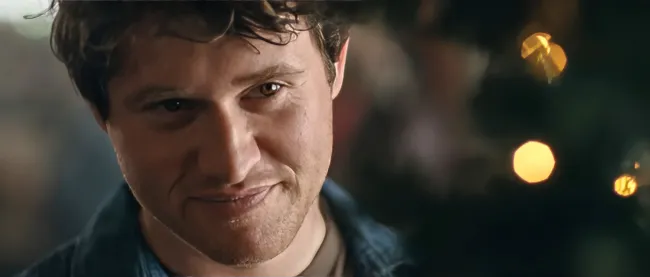
The key thing we talked about was that Billy needed to feel like just a dude. There’s nothing overtly special about him. He’s universal. He’s awkward. He’s bad at pursuing a normal life. He’s done horrible things, but he wants something simple. Everybody’s been in that position where you feel an immediate attraction to someone and have no idea how to talk to them. Billy’s endearing in that way, and Pam becomes our eyes into his world. She’s intrigued by him, but she’s also her own person with trauma.
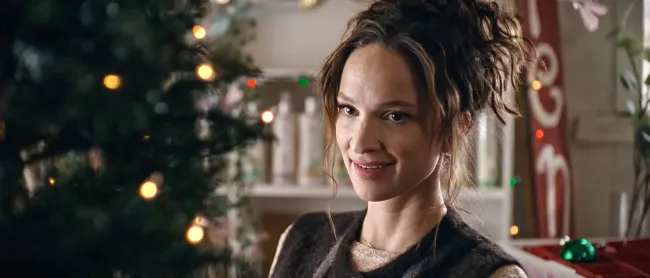
That’s where I really found the heart of the story — in their chemistry and backstories. This movie is ultimately bout two people with inner demons in very different ways coming together in something that could be either a match made in heaven or an absolute disaster. And we kind of get both.
Talk to me about that Nazi massacre sequence. How did you approach that?
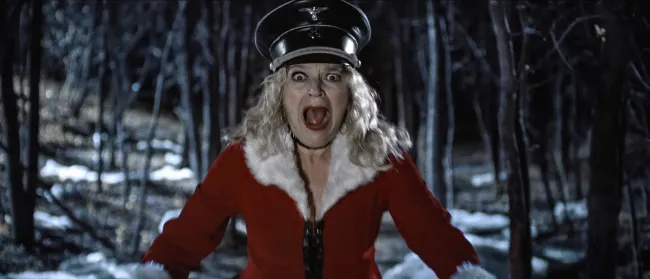
That sequence was huge for us. On the page, it was maybe three lines. But I knew it was going to be a lot more than that. It knew it had to be the moment that people would talk about. Up until then, you might still be unsure how you feel about Billy. That scene is where the audience fully commits. There’s no ambiguity anymore. You’re like, “OK, we’re Team Billy.”
The kills in the movie aren’t just there to break things up. They’re character moments. When he kills someone, you’re learning something about him — and sometimes about Pam, too. He has principles. That’s unexpected. It reframes everything.
The original film was famously misunderstood on release, and it feels like you’re deliberately playing with that history here. Is that where your take on these characters ultimately comes from?
I don’t think most of the people picketing the original movie even saw it. They didn’t have any stake in the game. And sure, Siskel and Ebert hated it, but that’s beside the point. What interests me is complexity. I’m much more drawn to complex characters in simple stories than intricate plots.
This story is straightforward: guy comes into town, meets girl, falls in love. The complication is what’s happening inside him and inside her. That’s always where my work goes. I like slice-of-life stories, even in extreme circumstances. I want to sit with people and see what they’re going through in that moment.
The ending opens the door to something much bigger. How intentional was that?
Very intentional. There’s lore there that we touch on without fully explaining. There’s more to it, and if things work out, I’d love to explore that world further. There’s a lot more story to tell with Billy, Pam, and Charlie. A lot more fun to be had.
This comes after you remade “Wrong Turn” in 2021, and obviously, “Silent Night, Deadly Night” has been remade before. When you work with expanding IP, what’s your guiding principle?
I have to tell an original story first. As soon as I start trying to appease people or give them what they expect, I’m not doing myself or the audience any favors. Whether it’s “Wrong Turn” or “Silent Night, Deadly Night,” it has to feel personal. If it feels like something that could almost exist on its own, then I know I’m on the right track.
From Cineverse, “Silent Night, Deadly Night” is now in theaters.
Source: www.indiewire.com
Published: 2025-12-16 04:00:00
Tags:
This article was automatically curated from public sources. For full details, visit the original source link above.