


Health Update: Health Update: The Fitness & Wellness Moves That Defined 2025 – What Experts Say– What Experts Say.
These acquisitions, funding rounds and new company launches made headlines in 2025. Here’s how they figure to impact the fitness and wellness industry for years to come
The fitness and wellness industry continues to grow, with increased deal-making activity across the entire sector, sky-high gym membership numbers and a new wave of digital health startups eying an AI-powered healthcare revolution.
This past year saw plenty of headlines, from private equity firms acquiring top gym brands to wearable and health tech companies scoring billion-dollar valuations.
Athletech News recaps the eight fitness and wellness moves that defined 2025, and forecasts what each could mean as we enter a new year.
8. Barry’s Gets Acquired by Princeton Equity Group, Eyes Expansion
At the very beginning 2025, Barry’s received a strategic investment from Princeton Equity Group as part of a deal that saw North Castle Partners exit its long-standing financial relationship with the iconic boutique fitness brand.
Princeton Equity Group, whose portfolio includes other fitness and wellness concepts in Massage Envy, Stretch Zone and D1 Training, signaled its intentions to help Barry’s scale aggressively across the U.S. and internationally in the years ahead.
Why It Matters:
Under the financial stewardship of Princeton Equity Group, Barry’s is aiming to open around 15 to 20 studios annually in America over the next few years, while also pursuing international expansion, its CEO, JJ Gantt, said during the ATN Innovation Summit this past summer.
In the U.S., Barry’s will continue to open locations in major cities like New York, Los Angeles and San Francisco, where it’s historically had a lot of success. But the brand will also target Tier 2 American cities as well as suburban towns, sensing a big opportunity in those markets.
What To Watch in 2026:
Can Barry’s make it in the suburbs? The “red room” brand is famous in big cities like Los Angeles and New York, but it’s fair to wonder whether Barry’s unique take on group fitness can resonate in suburban America and non-coastal cities.
7. Function Gets Massive Valuation Amid Blood-Testing Boom

In November, Function Health raised $298 million in Series B funding at a $2.5 billion valuation, turning the longevity-focused digital health platform co-founded by Dr. Mark Hyman into a unicorn.
Founded in 2023, Function allows users to test more than 100 blood biomarkers and then receive personalized insights into their health. The company says it can monitor early indicators of thousands of diseases, ranging from cancers to lead and mold toxicity to coronary artery disease.
Why It Matters:
Function is leading a movement toward personalized blood testing that’s seen several digital health startups raise millions in funding. All these startups are making some form of the same bet: that enough Americans will be willing to shell out hundreds of dollars per year, not covered by traditional health insurance, to receive personalized insights into their bodies.
What To Watch in 2026:
Can platforms like Function ever become truly mainstream, or will they stay reserved for the privileged few who can afford to spend big on preventive health?
As part of its funding round earlier this year, Function lowered its annual price to $365, down from $499, which should help the platform gain more widespread adoption.
6. Xponential Fitness Continues Selling Spree
Xponential Fitness, one of the industry’s largest and most important companies, is in a time of transition. In 2025, Xponential offloaded an additional three brands, dropping Rumble Boxing, CycleBar and Lindora from its portfolio. Those moves follow the Irvine, California-based company getting rid of three brands in 2024, shedding Row House, Stride Fitness and AKT.
Xponential also implemented staff layoffs earlier this year, and in its most recent quarterly earnings report, revenue was down around 2% from the previous-year quarter. Xponential had 11 fitness and wellness franchise brands in its portfolio at the end of 2023; it currently has just five.
Why It Matters:
Xponential’s new leadership group has sought to frame the moves as part of a plan to shift focus toward bolstering the company’s most successful brands, including Club Pilates, Pure Barre and StretchLab. That’s a fair strategy, and it might pay off for the franchisor in the long run, but it’s never a good look when a company loses more than half of its brand portfolio in less than two years.
What To Watch in 2026:
Xponential’s stock price has dropped significantly since a bombshell short-seller report was published in June 2023, and the franchisor hasn’t been able to turn the tide as of yet. While Xponential should be able to lean on the strength of top performers like Club Pilates and StretchLab, it’s fair to wonder whether more of its brands could be on the chopping block in 2026.
5. Peloton Launches AI-Powered Coaching in Latest Move
Peloton keeps trying new things.
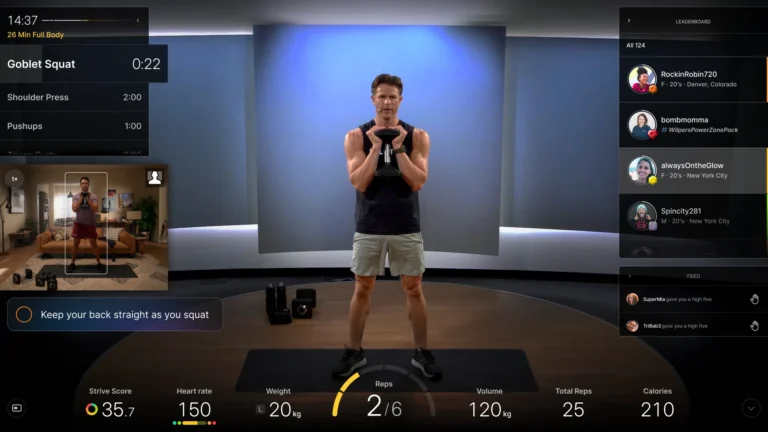
In October, the connected fitness giant unveiled PelotonIQ, an AI-powered personalized coaching system that uses artificial intelligence to deliver dynamic recommendations, including custom workouts and real-time form correction.
Peloton coupled the AI enhancements with the launch of what it’s calling the Peloton Cross Training Series, a major revamp of its entire equipment lineup including bikes, treadmills and rowers.
The new launches came just months after Peloton CEO Peter Stern announced the company’s plans to evolve into a full-scope wellness platform, offering everything from strength training workouts to sleep and mental health content.
Why It Matters:
Peloton is trying a lot of new things to get back to its pandemic-era glory days. So far, the results have been mixed, at best. While the brand has artfully expanded its fitness and wellness content library beyond just cycling workouts, Peloton is still struggling to grow its paid subscriber base in a post-pandemic world where in-person fitness is more popular than ever.
What To Watch in 2026:
Can Peloton ever truly be seen as more than a bike company?
The company’s future (and Stern’s) likely depends on whether enough people come to view Peloton as a one-stop for fitness and wellness, rather than just an indoor cycling brand that sprinkles in some extra workouts for fun.
4. Strava Expands Beyond Fitness Tracking Amid IPO Talks

It’s been a busy year for Strava, which seems eager to become known as more than just a social fitness app.
This year, Strava acquired Runna, an app that creates personalized training plans for runners, and The Breakaway, which does the same for cyclists.
Those moves come as the fitness platform reportedly received a $2.2 billion valuation in May following a fundraising round led by Sequoia Capital. In October, Strava CEO Michael Martin confirmed that the company was exploring an IPO, potentially to fuel more acquisitions.
Why It Matters:
Strava, which counts more than 150 million users across the globe, is in expansion mode.
The acquisitions of Runna and The Breakaway signal that Strava intends to build out the fitness coaching arm of its business, potentially in a bid to beef up Strava Premium, its monthly subscription service.
What To Watch in 2026:
Whether or not Strava goes public in 2026, it’ll be interesting to see how the company plans to integrate platforms like Runna and The Breakaway. Martin’s recent comments hint that Strava will continue to be active on the acquisition front in the coming months.
Still, expect to see Strava continue to invest in its robust social fitness features, driven by Gen Z’s embrace of communal fitness.
3. Oura Hits $11B Valuation, Cementing the Rise of Wearables

In October, Oura raised more than $900 million in new funding as part of a round that valued the Finnish smart ring maker at a staggering $11 billion.
Since launching in 2015, the company has sold more than 5.5 million Oura Rings, with over half of those sales occurring in the past year alone. Oura reported around $500 million in revenue in 2024, and the company projected it would exceed $1 billion in revenue in 2025 amid steady growth.
Why It Matters:
Oura’s incredible $11 billion valuation shows that investors see wearables as a serious category, with significant potential for growth in the years ahead. For competitors like Garmin, Whoop and Ultrahuman, this is undoubtedly good news. It’s also no surprise that tech giants like Apple, Google and Samsung continue to invest in health and fitness wearables.
What To Watch in 2026:
Can Oura bring wearables into mainstream healthcare?
Under CEO Tom Hale, the smart ring maker is thinking beyond just tracking sleep, stress and steps. Hale has stated that he wants Oura Rings to become ubiquitous in modern healthcare, equipping doctors, patients and health insurers with key data that can drive a long-term shift toward preventive health, or as he calls it, “proactive health.”
2. Anthony Geisler Launches Sequel Brands

In May, Xponential Fitness founder and former CEO Anthony Geisler marked his return to the boutique fitness franchising game, launching the aptly named Sequel Brands.
Sequel Brands already counts five fitness and wellness brands under its portfolio: Pilates Addiction, iFlex Stretch Studios, Beem Light Sauna, Body20 and Ultimate Longevity Center.
Pilates Addiction, led by former Club Pilates exec and Xponential president Sarah Luna, is already off to a fast start. The brand has sold over 200 territories since launching its franchise program at the end of June, and has said it plans to have over 100 studios open by the end of 2026.
Why It Matters:
The launch of Sequel Brands comes at an interesting time: Geisler’s old brand, Xponential Fitness, is currently reeling, selling off several of its brands and recently implementing layoffs. Sequel, meanwhile, appears to be in full growth mode, counting Luna and several other former Xponential executives among its leadership team.
What To Watch in 2026:
Will Sequel Brands acquire more boutique fitness and wellness franchises in 2026, or does it plan to stick with five brands in its portfolio? Speaking at the ATN Innovation Summit this past summer, Geisler said he was undecided on whether the company intends to expand beyond five concepts, although he certainly left the door open.
1. Crunch, EoS Get Acquired as Low-Price Gyms Flourish

In what were likely the two biggest fitness deals of 2025, Crunch Fitness and EoS Fitness were both acquired by private equity firms with big budgets — and big ambitions.
In April, Leonard Green & Partners purchased a majority stake in Crunch, America’s second-largest high-value, low-price (HVLP) gym brand behind Planet Fitness, reportedly valuing the fitness franchise at around $1.5 billion, including debt.
Just one month later, TSG Consumer Partners signed a definitive agreement to acquire EoS Fitness, another fast-growing HVLP gym chain with over 175 U.S. locations open or in the pipeline, reportedly valuing the operator at around $1 billion, including debt.
Why It Matters:
The Crunch and EoS deals give major validation to the rise of fitness as a serious industry. For an industry that doesn’t usually make headlines for M&A activity, two mega private equity deals happening in one calendar year is a cause for celebration.
EoS has already put its new backing to good use. In October, the gym brand acquired 23 Gold’s Gym locations in Southern California, a massive move that will see nearly every Gold’s Gym location in Los Angeles change its name to EOS Fitness
What To Watch in 2026:
Now flush with even more capital, Crunch (over 500 locations) and EoS (over 200 locations) are well-positioned to continue opening new gyms across America, and in Crunch’s case, internationally. As both brands race to expand, expect to see them acquire other gyms, especially mid-priced operators, many of whom are struggling to compete with the rise of low-price fitness.