


Health Update: Health Update: Inside Rocket Health’s Mental Wellness Mission – What Experts Say– What Experts Say.
Rocket Health blends AI and therapy (Getty Images)
Bengaluru: As conversations around mental health become more open—especially among Gen Z and millennials—India’s mental healthcare landscape is undergoing a quiet but significant transformation. Today, several organisations are combining professional therapy with AI-powered digital tools to make mental health support more accessible, personalised, and less intimidating. This blended approach aims to bridge the gap between immediate emotional support and long-term, human-led care.
Experts caution that technology can only play a supportive role. Anubhuti Das, Senior Psychologist at Trijog Mumbai, in an interview with ETV Bharat, explained that while AI can help individuals manage immediate distress—especially in crisis situations—it cannot replace the human connection at the heart of effective therapy.
“AI responses are based on pre-existing data; they are machine-generated and lack the ability to fully grasp the complexity and unpredictability of raw human emotions,” she said. “While AI can serve as a convenient, on-the-go resource, long-term healing still depends on the therapeutic relationship between a client and a trained human therapist.”
Standing Out in a Crowded Market
Against this backdrop, Rocket Health is emerging as a notable player in India’s digital mental healthcare space. The platform blends professional therapy, psychiatry, AI-powered tools, and a cloud pharmacy to offer a more holistic approach to emotional well-being—while keeping human expertise firmly at the centre.
Rocket Health operates in an increasingly competitive ecosystem. Early platforms such as Wysa, YourDOST, and Amaha have been active for years, while globally, companies like Talkspace, BetterHelp, and Headspace Health have shaped digital mental healthcare models. Yet, differentiation remains key.
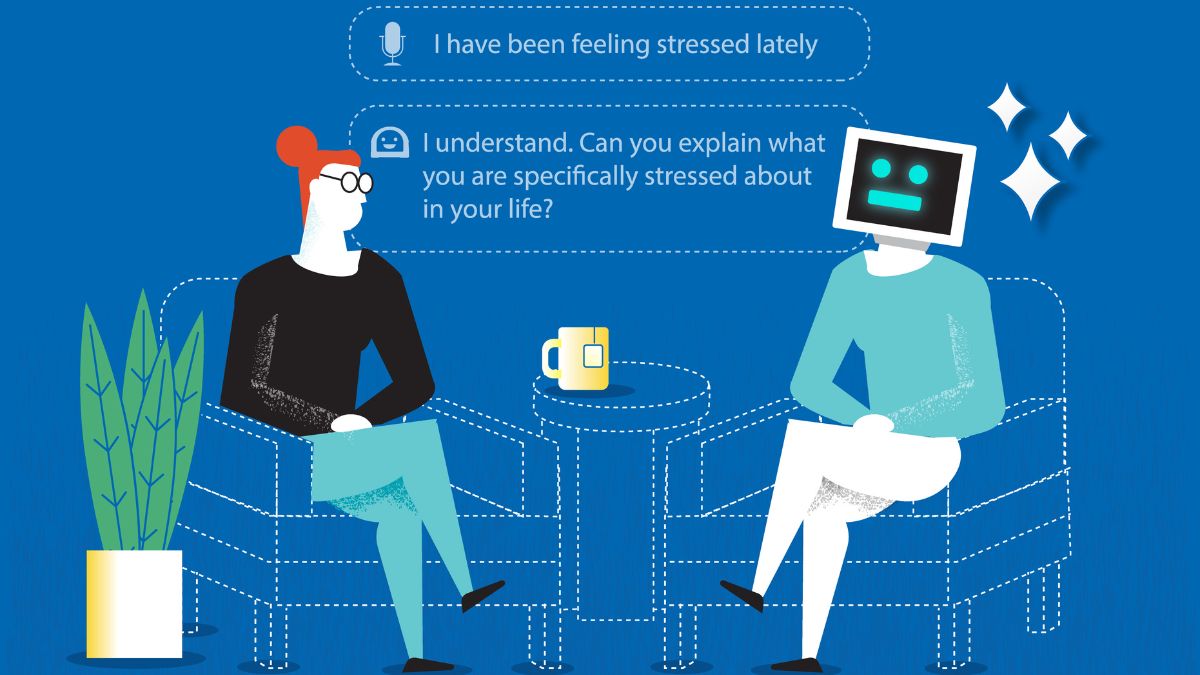
Mental health in India is getting a digital makeover with human-centric AI (Getty Images)
According to Abhineet Kumar, CEO and Founder of Rocket Health, branding and communication play a crucial role—particularly in a sector still weighed down by stigma. In an exclusive interview with ETV Bharat, Kumar explained that Rocket Health is being built as a contemporary, relatable healthcare brand. “We want users—especially Gen Z and millennials—to feel safe being vulnerable, without fear of judgment, and get a comfortable space to speak openly with psychologists and psychiatrists,” he said.
Building a ‘Hospital on the Internet’
One of Rocket Health’s key structural differences lies in its approach to working with mental health professionals. While many platforms operate as marketplaces with freelance clinicians, Rocket Health employs psychologists and psychiatrists on its own payroll. “In essence, we are building a hospital on the internet,” Kumar said, noting that this model ensures greater consistency, accountability, and quality of care.
The platform offers therapy, psychiatry, ADHD support, stress and anxiety counselling, women’s mental health services, LGBTQ+ friendly care, and discreet medication delivery. So far, Rocket Health has delivered over 200,000 therapy sessions through a network of more than 100 psychologists across India.
From Pandemic Volunteering to a Scalable Platform
Founded in 2021 by siblings Dr Ritika Sinha and tech-savvy Abhineet Kumar, Rocket Health grew out of a deeply personal understanding of healthcare challenges. Raised in their parents’ hospital in Bihar, the duo witnessed firsthand the gaps in India’s healthcare system. The idea for Rocket Health took shape during the COVID-19 pandemic, when access to mental healthcare was limited, and stigma remained high.
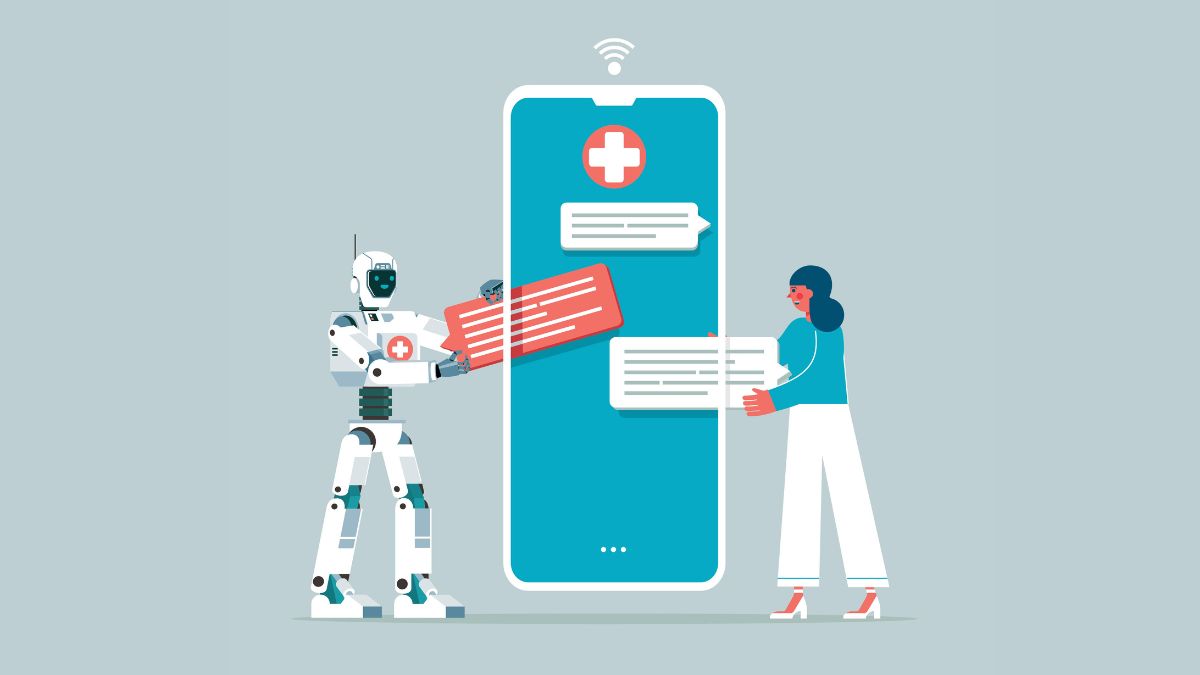
Rocket Health is integrating AI tools with professional therapy (Getty Images)
What began as a volunteer-led initiative offering free teleconsultations soon revealed a much larger unmet need. “We saw how many people were struggling, and how few platforms were addressing mental health in a meaningful way,” Kumar recalled.
By December 2021, Rocket Health formally launched. What started with over 4,000 free teleconsults has since grown into a fast-scaling digital mental health platform, serving users across Tier-1, Tier-2, and Tier-3 cities.
Rocket Journal: AI as the First Layer of Support
To reach individuals who may not yet be ready for therapy, Rocket Health recently launched Rocket Journal—an AI-powered voice journaling app designed to act as a mental health companion. The app allows users to speak freely to an empathetic AI that listens, offers guided prompts, and tracks emotional patterns over time.
Kumar noted that while the demand for mental healthcare in India runs into hundreds of millions, the supply of trained professionals cannot scale at the same pace. “AI can serve as the first layer of support,” he said. “It offers a judgement-free space where people can open up, and when needed, guides them toward human care.”
Drawing Clear Ethical Boundaries
Despite growing interest in AI-driven mental health tools, Kumar is clear that AI cannot—and should not—replace therapists. “We position AI as a companion, not an AI therapist,” he said. Trained on evidence-based approaches such as Cognitive Behavioural Therapy (CBT), AI can support reflection and emotional expression, especially when immediate access to a psychologist is not available.

Rocket Health has delivered over 200,000 therapy sessions through a network of 100+ in-house psychologists across India (Getty Images)
However, he emphasised that companies using AI in healthcare must clearly communicate its limitations. Clinical decision-making, diagnosis, and treatment must always remain with trained professionals.
Measuring Impact Beyond Numbers
When it comes to measuring success, Rocket Health looks beyond traditional engagement metrics. User feedback and continued usage are key indicators of impact. “If users keep coming back—whether for therapy or journaling—it tells us the product is genuinely helping,” Kumar said.
The Road Ahead
As AI tools evolve, they may offer deeper insights into emotional patterns and behaviour. Yet, Rocket Health maintains a firm boundary between self-reflection and clinical care. “AI can help people understand themselves better,” Kumar said, “but when professional help is needed, it must come from trained psychologists and psychiatrists.”
He added that Rocket Health’s approach is about striking the right balance—maintaining high standards of clinical care while building AI-powered digital tools that expand access and reach. However, the core of the company will always remain the same: connecting users with qualified psychologists and psychiatrists worldwide, Kumar further said.
With Gen Z increasingly open about mental health, Kumar believes awareness and digital solutions will continue to grow—provided they are grounded in ethical, high-quality care. “At our core, we are a human-led healthcare company,” he said. “Technology helps us scale, but healing begins with human connection.”