

Case Explained:This article breaks down the legal background, charges, and implications of Case Explained: Legal experts give answer to one of the most asked questions about ICE right now – Legal Perspective
Questions have been surging over whether federal agents can face prosecution for deadly use of force, following two separate fatal shootings by immigration enforcers in Minneapolis.
Renee Nicole Good, who was a 37-year-old mother-of-three, was shot dead by an ICE officer on 7 January, amid US President Donald Trump’s crackdown on immigration in the Minnesota city.
Her death sparked widespread protests, one of which was attended by Alex Pretti, an intensive care unit nurse, also 37.
Pretti was fatally shot by a US Border Patrol agent, just weeks after Good’s tragic death, prompting further outcry and protests, with political figures like former US Presidents Barack Obama and Bill Clinton speaking out to call the shooting a ‘heartbreaking tragedy’ and urge Americans to speak out and take action to ‘shape history’.

Legal experts have given their verdict on whether ICE agents can be prosecuted for fatal shootings (Getty Stock Image)
The Department of Homeland Security (DHS) said that the agents fired in self-defence after Pretti, who they claimed had a handgun, resisted their attempts to disarm him.
However, local officials, eyewitnesses and Pretti’s family have all challenged that account and claimed he had a phone in his hand, not a weapon.
In a statement, the victim’s family said the ‘sickening lies told about our son by the administration are reprehensible and disgusting’.
Can federal agents be prosecuted for shootings?
In the wake of the two tragic deaths within just weeks of each other and amid heightening tensions in Minneapolis, people have started to question whether federal officials can be prosecuted.
Not long after after the shooting of Good, Vice President JD Vance claimed the ICE officer who killed her, agent Jonathan Ross, is ‘protected by absolute immunity’.
Speaking at the White House, he said: “The precedent here is very simple. You have a federal law enforcement officer engaging in federal law enforcement action – that’s a federal issue.
“This guy is protected by absolute immunity. He was doing his job.”
For those unfamiliar, as per Legal Justice Matters, absolute immunity ‘provides complete protection from lawsuits for government officials, regardless of the legality or constitutionality of their actions, as long as they are acting within their official capacities’.
However, Pace University Law Professor Bennett Gershman told Newsweek that this isn’t entirely accurate.
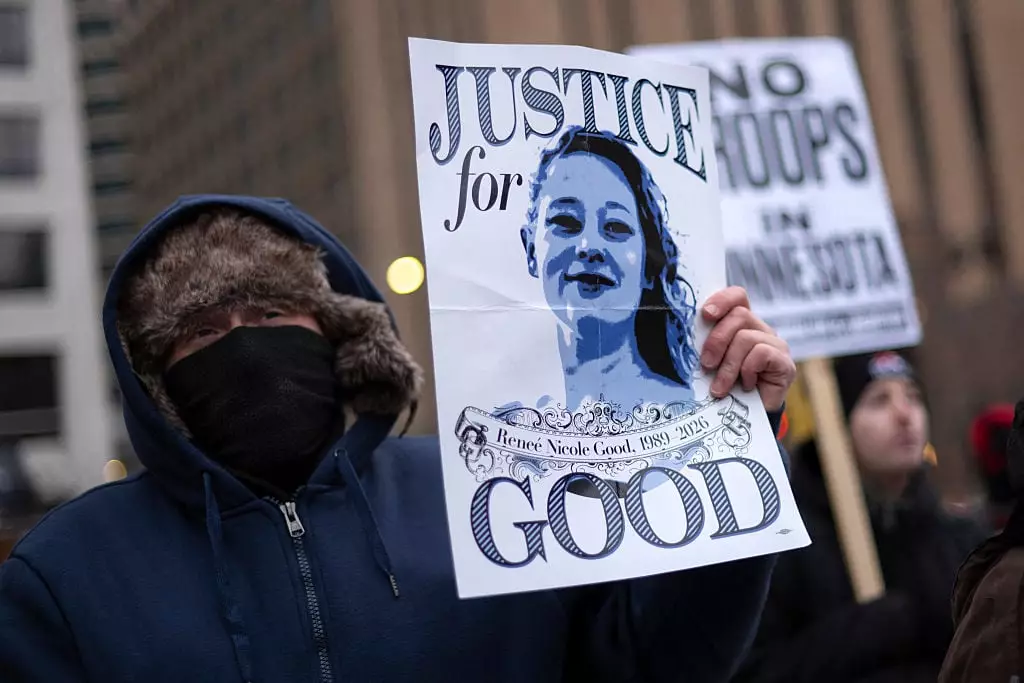
Renee Nicole Good was fatally shot by an ICE officer earlier this month (ROBERTO SCHMIDT/Getty Images)
He said: “The agents could face murder charges in a state court. It appears with almost total certainty that in both cases the agents were not in any physical danger when they used lethal force.
“The agent who killed Good stood near the front passenger side of Good’s SUV. The car appeared not to strike him. He shot her in the face when she turned the car to the right and began to slowly drive away. Pretti was kneeling down and was unarmed when the agent shot him in the back.”
Gershman added that in his opinion, assuming the state of Minnesota ‘can collect sufficient evidence to charge the agents with murder’, the state would in fact be able to prosecute them’ in the face of the federal stonewalling and cover-up’.
The legal expert continued: “The US Constitution’s so-called Supremacy Clause makes the federal government supreme over state governments, and if there is a conflict, the federal government wins. Indeed, according to Vice President JD Vance, given federal supremacy, the agents have absolute immunity for his killings.
“But Vance’s assertion is flatly wrong. In fact, police officers charged with crimes or civil rights violations never enjoy absolute immunity. They typically receive a qualified immunity, assuming they acted reasonably.”
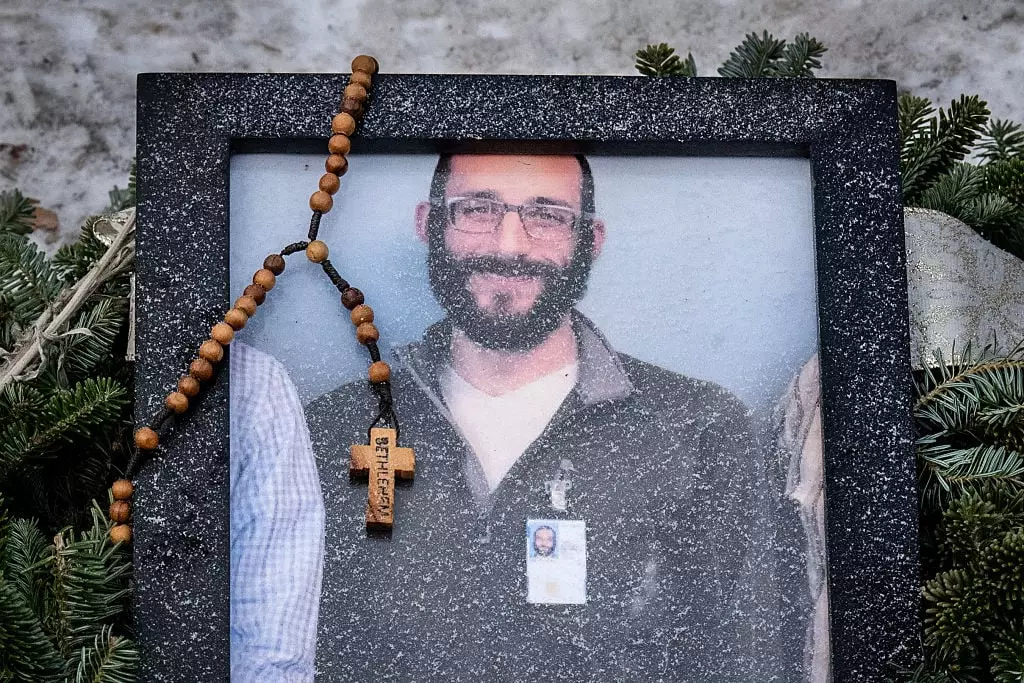
Just weeks later, Alex Pretti was killed by federal agents, also in Minneapolis (ROBERTO SCHMIDT/Getty Images)
Essentially, under Minnesota and federal law, law enforcement use of deadly force is judged by what a ‘reasonable officer’ would believe was necessary to protect against an imminent threat of death or serious harm.
The law in Minnesota only permits deadly force when an objectively reasonable officer would see it as necessary to do so to prevent death or great bodily harm.
Elsewhere, Timothy Sini, a former federal prosecutor in New York, told CNN that while prosecution may be possible, it wouldn’t necessarily be easy.
He said a federal official who was charged with state crimes for their actions could attempt to take the case federal court, ‘where they would then raise their immunity arguments’.
The judge would then have to conduct a lengthy two-part analysis to determine whether the official has immunity in the case.
Sini said: “At every step of the way, (reasonableness is) essentially what you’re determining. And what is objectively reasonable under the particular circumstances is evaluated from the perspective of a reasonable officer on the scene and turns on those facts known to the officer at the precise moment.”
Tyla has contacted ICE and the White House for comment.