

Case Explained:This article breaks down the legal background, charges, and implications of Case Explained: Kerala researchers create AI tool to detect lies in real time interrogation – Legal Perspective
A breakthrough in forensic technology could soon change the way criminal interrogations are conducted, as a team of Malayali researchers unveils an AI-powered system capable of detecting deception in real time.
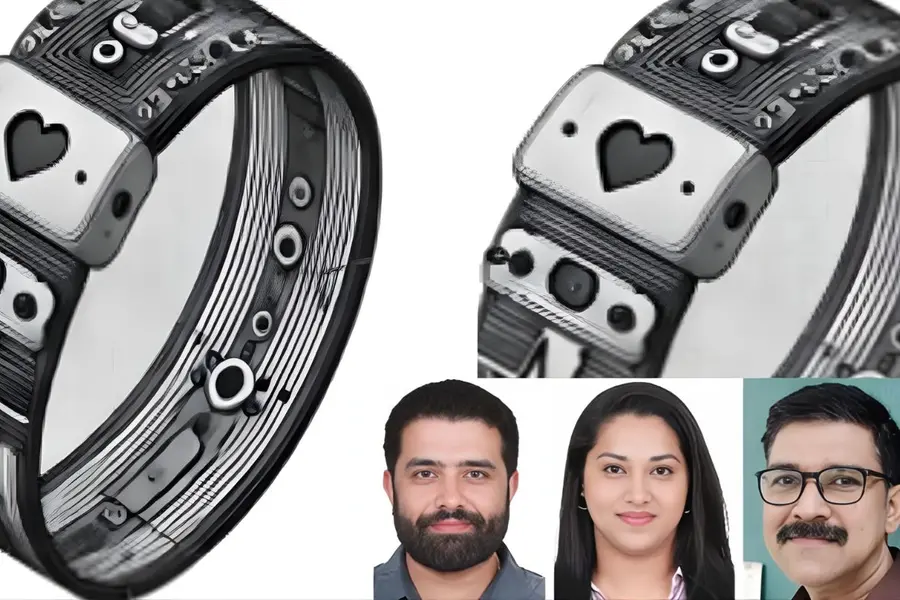
Kasaragod: A team of Malayali researchers has developed an advanced AI-powered system aimed at transforming the interrogation of suspects in crimes, potentially eliminating the need for controversial ‘third-degree’ techniques. The innovation, called the Suspect Emotional Monitoring System (SEMS), uses machine learning to assess whether a suspect’s claims are truthful or deceptive in real time.
The technology analyses facial expressions, voice modulation and body language to detect subtle emotional shifts, enabling investigators to understand a suspect’s psychological state during questioning. The system has already secured a patent, marking a significant milestone in the forensic spectrum.
SEMS is designed to assist law enforcement agencies and forensic psychologists by improving the accuracy and objectivity of interrogations. The system includes wearable components such as camera-enabled smart glasses for the interrogator and a biometric band for the suspect.
During questioning, data collected through these devices is transmitted via Bluetooth to a computer for live analysis. Key physiological and behavioural indicators—including heart rate, galvanic skin response, facial micro-expressions and vocal stress—are continuously monitored to identify even the slightest emotional changes.
Also Read| NASA launches Artemis II moon mission with first crewed lunar flight in 50 years
The collected data is processed using machine learning algorithms trained on extensive datasets. These include baseline emotional responses from different demographic groups, as well as behavioural patterns observed when offenders lie and when innocent individuals deny accusations. This layered dataset helps minimise the margin of error.
The system also integrates augmented reality, allowing investigators to view emotional indicators and alerts overlaid on live video feeds, offering immediate insights during interrogations.
Unlike traditional techniques such as lie detector tests, narco analysis and brain mapping—which require consent from both the accused and the court—SEMS presents a potential advantage as it may not require such approvals, subject to legal validation.
Also Read| Cooking gas from dry leaves? IIT Bombay’s innovation could change everything
The technology has been developed by Assistant Professor Mebin Wilson Thomas from the Department of Forensic Science at Jain (Deemed-to-be University), Associate Professor Dr Santosh K Rajan from the Department of Psychology at Christ (Deemed-to-be University), and Anjana P Nair, Executive Analyst at Amazon ICMRS.
Kottayam native Mebin and Kasaragod native Anjana are a couple, while Santosh hails from Cherpulassery in Palakkad.
Published: 02 Apr 2026, 12:15 pm IST
Subscribe to our Newsletter
Disclaimer: Kindly avoid objectionable, derogatory, unlawful and lewd comments, while responding to reports. Such comments are punishable under cyber laws. Please keep away from personal attacks. The opinions expressed here are the personal opinions of readers and not that of Mathrubhumi.