


Case Explained:This article breaks down the legal background, charges, and implications of Case Explained: Inside the Minab School Strike – Legal Perspective
On the morning of February 28, 2026, at exactly 11:30am, a routine school day in the coastal city of Minab was violently interrupted. According to a detailed report compiled by Iran’s Ministry of Foreign Affairs, what followed was not a single explosion, but a sequence of strikes that reduced the Shajareh Tayyebeh Girls’ Primary School to rubble, leaving behind what officials describe as one of the deadliest attacks on children in recent Middle Eastern history.
The report, titled “The 11:30 Crime; the Minab Wound,” presents a grim account of the aftermath. It states that “168 students—predominantly between 7 and 12 years of age—as well as several teachers and staff members of the school, were martyred.”
In some cases, the report adds, identification was only possible through body fragments, while others remain missing, presumed killed in the blast.
The strike, the report alleges, was carried out using Tomahawk cruise missiles launched by forces linked to the United States, as part of a broader wave of coordinated attacks also involving Israel. Both countries have not publicly confirmed the specific details presented in the Iranian document, and independent verification of casualty figures remains limited.
Still, the Minab incident is rapidly becoming a focal point in a growing international dispute over the conduct of hostilities and the limits of modern warfare.
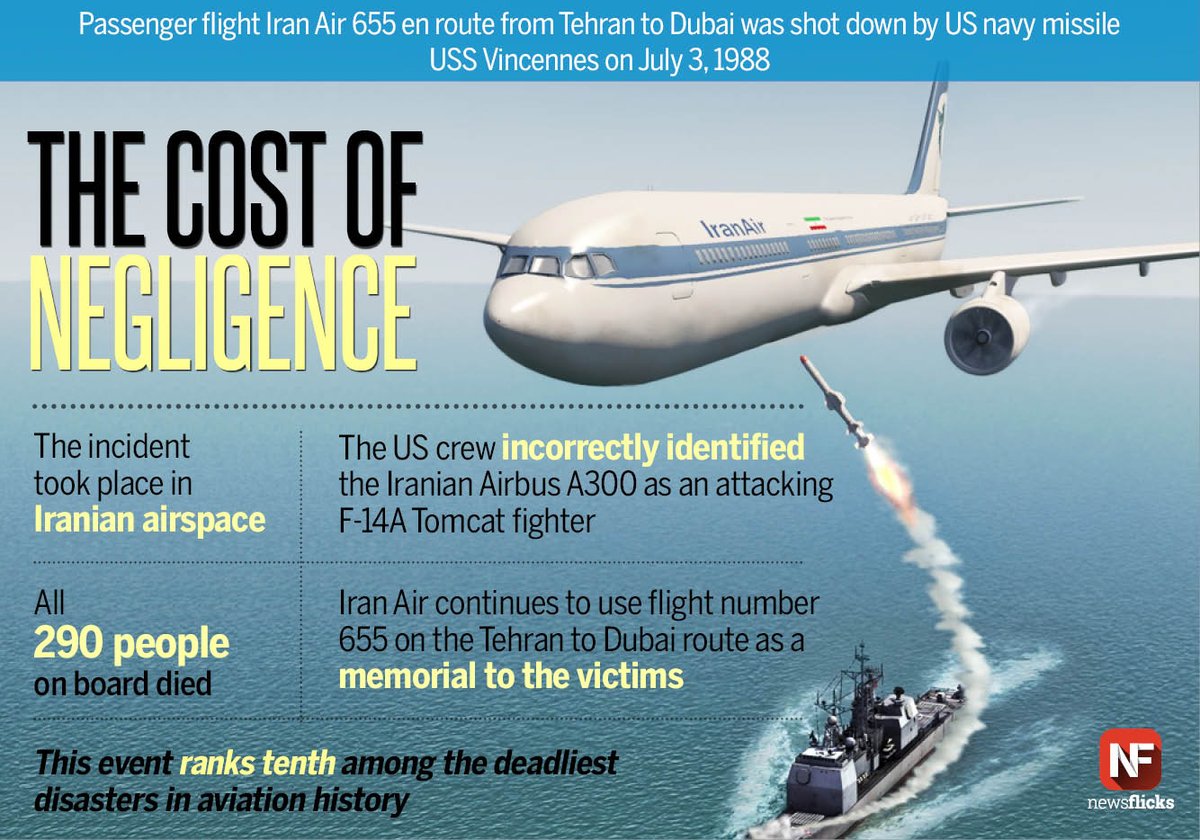
The Iranian report deliberately draws a historical parallel, recalling the Iran Air Flight 655 shootdown and stating that it was “an act that resulted in the martyrdom of more than 290 passengers and crew.”
It argues that the Minab strike reflects a continuation of what it describes as a pattern of civilian harm.
At the heart of the document is a legal argument grounded in international humanitarian law. It emphasizes that “the attack on this school constitutes an extremely grave and multi-layered violation of the fundamental principles of international law and international humanitarian law, and falls within the category of war crimes and crimes against humanity.”
The report outlines the principle of distinction as “the cornerstone of international humanitarian law,” stressing that “attacks may be directed solely against combatants and military objectives,” and that “schools, hospitals, and residential homes are regarded as civilian objects and are therefore protected.”
It further underscores that “any doubt concerning the nature of a target must be resolved in favour of its civilian character,” arguing that the Minab school clearly met that threshold.
Since the US and Israel attacked Iran unprovoked on February 18, the Islamic Republic has retaliated and struck hundreds of targets across the Middle East but there are no reports of them targeting civilian population.
On proportionality, the report notes that “an attack against [a military objective] is permissible only where the expected incidental harm to civilians… would not be excessive in relation to the concrete and direct military advantage anticipated.” The scale of casualties in Minab, it suggests, fails that test.
On precaution, it states that parties are required “to take all feasible precautions to avoid harm to civilians,” including selecting methods of attack that minimize risk and issuing warnings where possible.
The report argues that these principles were violated in Minab, asserting that the school “was struck twice within a short interval—less than one hour—by United States Tomahawk missiles,” and that “under no circumstances could this school have been considered a lawful military objective.”
These claims echo concerns raised by Human Rights Watch, which said: “A February 28, 2026 attack on a primary school in southern Iran was an unlawful attack that reportedly killed scores of civilians, including schoolchildren.”
The organization added that “the laws of war prohibit attacks if the anticipated harm to civilians and civilian objects is disproportionate compared to the expected military gain from the attack,” and called on those responsible to “fully account for the civilian harm and hold those responsible accountable.”
Further, it noted that “the school’s location within the IRGC Naval Force’s compound did not, in and of itself, make the school a legitimate target,” emphasizing that “Human Rights Watch found no evidence that would indicate that the school was being used for military purposes.”
Reporting by The New York Times also raises critical questions. The newspaper stated that “preliminary findings indicate that the United States was responsible for the deadly Tomahawk missile strike,” adding that “targeting a school filled with students constitutes one of the most destructive US military actions in recent decades.”
It further reported that the strike may have resulted from “the use of outdated intelligence concerning the coordinates of the site,” noting that “when Defense Intelligence Agency target data are outdated, intelligence officers are required to use imagery… to update and verify the target.”
According to the same report, “satellite imagery, social media posts, and videos verified… show that the school was struck by a precise Tomahawk cruise missile attack.”
If confirmed, such findings would carry serious legal consequences. Article 8 of the Rome Statute of the International Criminal Court identifies “the intentional targeting of civilians, civilian objects, residential premises, and educational institutions” as constituting war crimes.
Beyond legal frameworks, the Iranian report highlights the human rights implications. It describes the incident as a violation of “the most fundamental of all human rights,” namely the right to life, pointing to the deaths of 168 children.
It also frames the destruction of the school as “a direct assault upon the right to education,” warning that such attacks create “an atmosphere of fear and insecurity” that disrupts access to learning for entire communities.
The report emphasizes the special protections afforded to children, noting that the United Nations classifies “attacks on schools and hospitals, as well as the killing of children,” as “grave violations” in armed conflict.
One of the most striking aspects of the document is its focus on future generations. It argues that “one hundred and sixty-eight students… were to become the mothers, teachers, physicians, engineers… of their society,” and that their deaths constitute “not merely the destruction of a generation, but the ‘killing of the future’ of a society.”
It adds that the attack created a “generational rupture” in the transmission of knowledge and culture, with long-term consequences for social development.
The report further warns of “intergenerational trauma and psychological harm,” noting that “bereaved families, the local community, and even broader segments of a nation suffer profound and enduring wounds.”
Despite the gravity of these claims, key questions remain. Independent verification of casualty figures is ongoing, and neither Washington nor Tel Aviv has publicly provided a detailed account of the specific strike described.
Even so, the Minab incident has intensified scrutiny of how modern militaries conduct operations in densely populated areas. The use of precision-guided weapons has raised expectations of accuracy, making incidents involving large civilian casualties increasingly difficult to explain.
As investigations continue, the case is likely to test the strength of international humanitarian law and the mechanisms available to enforce it.
For the families in Minab, however, the legal debates are secondary to the human loss. The report’s descriptions—children identified only through fragments, classrooms reduced to rubble, and families searching for the missing—underscore the enduring human cost.
“The Minab Wound,” the report concludes, “is one that will endure not only upon the body of the present generation, but also upon that of Iran’s future generations,” warning that without accountability, such tragedies risk repeating.