

Case Explained:This article breaks down the legal background, charges, and implications of Case Explained: Florida law makes urine test refusal a crime as Tiger Woods faces legal trouble for rollover crash – Legal Perspective
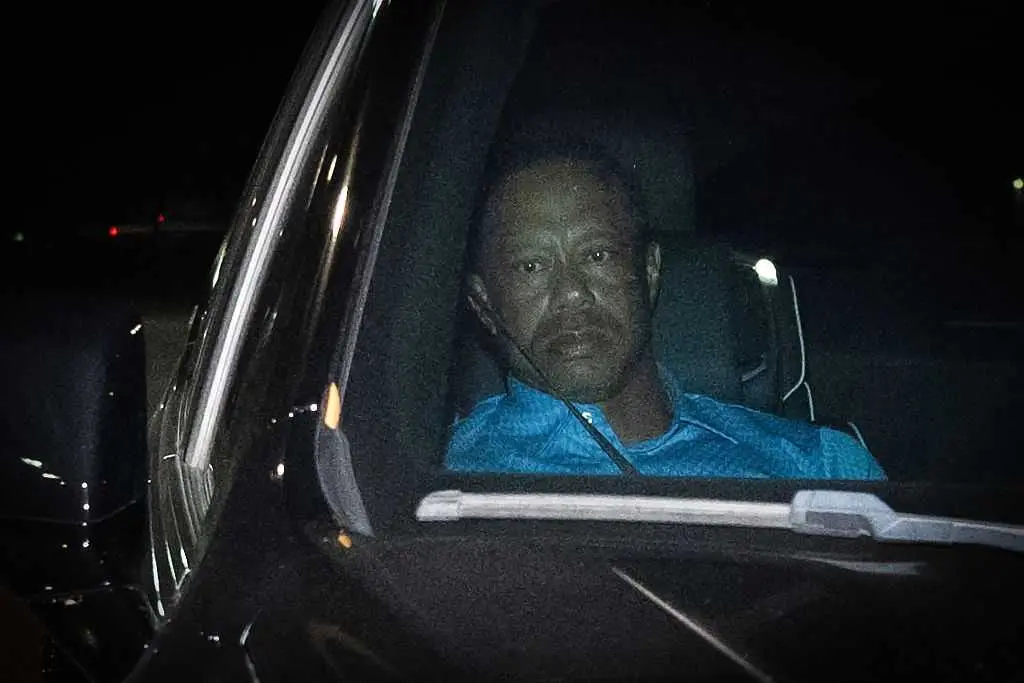
Tiger Woods’ driver’s license might be suspended for one year after his rollover crash near his Florida home and a new state law on refusing a test enhances the punishment for the golfing legend.
On Friday, Woods, 50, declined a urine test, which tests for drugs, including prescribed ones. Though he didn’t acknowledge he had taken medication to Martin County Sheriff’s deputies, Woods has said he has been on them to treat pain after several surgeries. In his 2017 conviction, he tested positive for five drugs, including painkillers.
Offenders have 10 days to request a formal review hearing to contest the suspension.
He would be eligible for a hardship license to drive for work purposes, and enroll in DUI schools and attend a formal review hearing.
“In October 2025, a first-time refusal to submit any required test by law enforcement for purposes of DUI was criminalized,” defense attorney Lawrence Meltzer said. “Prior to that, it used to be an administrative suspension with the DMV. The state could bring in the fact that he allegedly elected to refuse the urine test as evidence of his guilt.”
Meltzer believes there are multiple reasons why a person chooses to refuse a urine test after a crash. “One is they’re shaken up, they’re nervous, they’re scared, they actually don’t know what to do and they err on the side of caution based on human nature,” he said.
The National Highway Traffic Safety Administration has developed three standardized field sobriety tests that are designed to measure a person’s balance, coordination, and ability to divide attention between tasks. Other tests can include finger to nose and alphabet, sometimes backward.
Meltzer said that roadside sobriety exercises should be modified, especially if someone has had back injuries similar to Woods. “And a lot of what those exercises challenge is one’s equilibrium and balance. So, you can attribute, it’s just as likely that if Tiger Woods performed poorly on roadside exercises, if someone were to allege that you could certainly combat that with the nature of the crash and with his injury history that they shouldn’t have been administered at all,” Meltzer said.
Meltzer, who specializes in DUI cases and is a former prosecutor, said it’s unlikely that it will be overturned because of an automatic suspension.
Other legal experts agree.
“Refusing a urine test in Florida triggers an automatic one-year license suspension and a separate criminal charge,” Tarlika Nunez-Navarro, the dean and professor of law at St. Thomas University in Miami Gardens, told sister station WPBF on Saturday. “But here’s what producers don’t know — it may have been the strategically correct decision. If Woods had taken the test and it showed prescription medication at therapeutic levels, prosecutors could still argue impairment. By refusing, his lawyers created reasonable doubt on the substance question entirely. The refusal charge carries less weight than a positive drug test in a DUI conviction.”
The refusal is a second-degree misdemeanor with the criminal offense carrying up to 60 days in jail and a $500 fine.
Previously, it was a civil infraction to refuse a breath, blood or urine test during a first DUI arrest.
Trenton’s Law
In October, Florida implemented significant DUI changes. House Bill 687, known as “Trenton’s Law,” introduces substantially harsher penalties for repeat DUI offenders and fundamentally changes how refusals are prosecuted, including Breathalyzers.
In 2023, Trenton Stewart, an 18-year-old Stetson University football player, was killed when a wrong-way driver, traveling over 100 mph while impaired, struck him head-on. Trenton was home visiting family.
Ariel Monteagudo had already killed a 15-year-old in a reckless driving incident in 2001 and had served 10 years in prison. Despite this prior conviction for killing someone while driving recklessly, he received only 12 years for Trenton’s death because the enhanced penalties in the new law weren’t yet in effect.
Meltzer’s law firm wrote in October they’ve “seen how quickly DUI laws evolve and how devastating it can be when someone doesn’t understand what they’re up against. This new law dramatically increases the stakes for anyone charged with DUI in Florida.”
A second conviction for vehicular manslaughter or DUI manslaughter is now classified as a first-degree felony, increasing the maximum prison sentence from 15 years to 30 years.
The urine test would have been taken at the Martin County Jail, where Woods spent eight hours.
He agreed to the Breathalyzer, which recorded triple zeroes for alcohol.
“Before Trenton’s Law, we could often work with administrative license suspensions through hardship licenses and other mechanisms without the client facing criminal charges for the refusal itself,” the law firm said. “Now, that refusal creates an independent criminal case with its own set of consequences.”
Other charges
Woods also is facing two other misdemeanors: DUI and property damage.
Unlike many DUI cases, there wasn’t a traffic stop. By the time law enforcement arrived just before 2 p.m., Woods was already out of his Land Rover, which was on its side.
Jupiter Island police received a call and the case was turned over to the sheriff’s office.
Officers found a pickup truck pulling a pressure cleaner trailer not far from Woods’ vehicle.
“Our DUI investigators responded to the scene, and Mr. Woods did exhibit signs of impairment,” Sheriff John Budensiek said at a news conference Friday. “They conducted several tests on him. He did explain the injuries and surgeries he has had, and we took that into account. However, after conducting in-depth roadside tests, it was determined that he would be placed under arrest and taken to the Martin County Jail. At the jail — and even on scene — we were not suspicious of alcohol being involved, and that proved to be true.”
Without proof he was impaired, Meltzer said it’s likely the charge won’t hold up. Sometimes charges are reduced to reckless driving.
Defense attorneys will have access to the arrest report and body cameras, which haven’t been publicly released.
Though the sheriff said Woods appeared to be “lethargic,” Meltzer said he might have been that way after experiencing a wreck, including crawling out of the passenger side of the Road Ranger.
“The reality is that Florida’s DUI laws don’t distinguish between illegal drugs and prescription medications when it comes to impaired driving,” the law firm said. “We’ve represented hundreds of clients facing these exact charges, and we can tell you that prescription drug DUIs are becoming increasingly common throughout Palm Beach, Broward, and Miami-Dade counties.”
But they add: “If you were taking medication as prescribed for a legitimate medical condition, this creates reasonable doubt about impairment. We’ve successfully argued that clients were following doctor’s orders and the medication was necessary for their health and safety.”
Past legal issues
Woods was arrested in May 2017 in Florida.
A toxicology report found five drugs in his system — Vicodin, Dilaudid, Xanax, Ambien and THC. He eventually pleaded guilty to reckless driving and entered a diversion program.
Because this offense was longer than five years ago, the new one won’t count as a second offense.
Woods has also been involved in two other crashes.
In February 2021, he was in a near-fatal single-car rollover where Woods was speeding 84–87 mph in a 45 mph zone in Los Angeles, driving his Genesis GV80 SUV.
He suffered severe open fractures to his right leg and ankle, requiring multiple surgeries to avoid amputation.
The Los Angeles County Sheriff’s Department attributed the crash to excessive speed and “pedal misapplication.” He wasn’t arrested.
In November 2009, Woods crashed his Cadillac Escalade into a fire hydrant and a tree outside his home in Windermere. The Florida Highway Patrol determined then that there “was insufficient evidence available to issue a subpoena for additional medical information that may exist in this case.”
Woods’ painful injuries
Woods has had seven surgeries, including back disc replacement in October 2025 and an Achilles rupture.
Woods has said the back pain can be so severe to the point that it is difficult “to just move around,” according to an interview with Josh Schrock at Golf.com on March 18.
“Sometimes I have good days, sometimes I have bad days,” Woods said. “Disc replacement is not a lot of fun.”
On Tuesday, he participated in the TGL Finals for his team, Jupiter Link, at the indoor SoFi Center in Palm Beach Gardens.
“This body … it doesn’t recover like it did when it was 24, 25. It doesn’t mean I’m not trying,” Woods said then. “I’ve had a couple bad injuries here over the past years that I’ve had to fight through and it’s taken some time. But I keep trying.”
When will Woods compete again?
Woods said that he hoped to compete in the Masters, which begins on April 9 in Augusta, Georgia. It’s possible he will be arraigned by then.
Senior ESPN golf writer Mark Schlabach said previously he doubts he will compete there.
“I don’t think that’s going to happen anytime soon,” he said. “You know he’s been heavily involved in meetings to shape the future of the PGA tour, and I think that the tour is going to have to decide whether or not he’s going to face discipline or even potentially be removed from those committees because of the second DUI arrest.”
Because of his medical problems, Woods hasn’t competed in a PGA Tour event since the British Open in July 2024. Earlier that year, he finished 60th in the British Open.