


Case Explained:This article breaks down the legal background, charges, and implications of Case Explained: DC sues landlords with law used in organized crime to stop mistreatment of low-income tenants – Legal Perspective
WASHINGTON (AP) — Washington, D.C., Attorney General Brian Schwalb filed a lawsuit Thursday using an expansive racketeering law — originally crafted to prosecute organized crime — to put a landlord accused of providing unsuitable living conditions to his renters out of business.
Speaking at a press conference, Schwalb announced his office was using the Racketeer Influenced and Corrupt Organizations Act, or RICO, to dismantle the real estate operation of Ali “Sam” Razjooyan, his brother Eimon “Ray” Razjooyan, and their mother Houri Razjooyan. Schwalb said it was the first time D.C. has used the statute in a housing case.
The law is designed for complex investigations that involve legitimate entities, like an LLC or corporations that are used to mask criminal activities. It is especially useful in tracking through multiple corporations and other legal entities to reach the source of alleged illegal activity. Its use in Washington highlights one way cities may fight back against fraud and other actions that deplete already-slim inventories of affordable housing around the country.
Schwalb said that “for every 100 extremely low income renters in the District of Columbia there are only 32 affordable and available homes.” He said the Razjooyans allegedly took advantage of the system through a “sprawling illegal enterprise, a complex web of shell LLCs, unlicensed property management and construction companies and straw purchasers.” Those were all designed to conceal the true ownership and condition of the properties to defraud lenders and take advantage of the district’s affordable housing subsidy programs.
The family owns 70 primarily rent controlled properties, the lawsuit said. The lawsuit accuses them of deceiving lenders with false promises to renovate buildings and then rent them to tenants who receive housing subsidies paid by the D.C. government. The buildings were allowed to fall into disrepair, leaving hundreds of residents living in terrible conditions, the lawsuit said.
“I strongly disagree with the Attorney General’s allegations. These claims have not been proven, yet they are being represented to the public as though they already have been. That is not how our legal system is supposed to function. This case should be decided in a courtroom based on evidence, not through dramatic headlines,” Ali Razjooyans said in a text.
He added that Schwalb has suggested this is about protecting residents when it is imposing substantial costs on property owners and the housing system without producing meaningful solutions. “I will address these allegations in court, where they belong. When the full record is developed and the evidence is tested, I am confident it will demonstrate that the accusations do not reflect the facts.”
Thursday’s lawsuit is a continuation of the action Schwalb’s office took in 2024 when it filed lawsuits on behalf of residents of two properties. The continuing investigation uncovered an intricate array of LLCs, unlicensed property management and construction companies, and straw purchasers designed to conceal the true ownership of certain properties, Schwalb said.
Schwalb said the racketeering statute allows his office to move beyond individual properties and target the “foundation of the Razjooyan’s vast operation, the web of fraud and deception that is core to their business mode.”
Palmer Heenan, a longtime housing expert and civil rights attorney, called the use of RICO in a housing lawsuit “novel and important” because determining the identity of the actual owner of a property can be complicated when it involves multiple layers of corporate ownership.
“One of the advantages is it lets you go backwards into these networks, so it makes it easier to go after all of the companies involved,” he said. “It will also make it easier for tenants to obtain justice for the horrific conditions they’re all too often been exposed to.”
In one allegation that appears in the lawsuit, Razjooyan, while attempting to obtain a refinancing loan, claimed to build 10 new units in one property and showed pictures of new doors and apartment numbers to lenders. The doors opened to “concrete block walls, apparently to deceive appraisers and generate a higher property evaluation,” the lawsuit alleges.
Conditions for tenants in actual apartments were dire, with some living in rodent- and cockroach-infested properties while others suffered noxious smells from basements full of standing water that collected for days, and some who lived without heat during the entire winter, the lawsuit alleges.
Schwalb said at the press conference that some of those apartments became uninhabitable, worsening the affordable housing crisis in the city.
The lawsuit seeks restitution for impacted tenants and to “enjoin the defendants from doing business in the District.”
FILE – District of Columbia Attorney General Brian Schwalb speaks during a hearing of the House Committee on Oversight and Government Reform on Capitol Hill, Sept. 18, 2025, in Washington. (AP Photo/Mark Schiefelbein, File)
MINNEAPOLIS (AP) — The Trump administration is ending a massive immigration crackdown that swept across the Minneapolis-St. Paul area and other Minnesota communities, border czar Tom Homan said Thursday, concluding an operation that led to thousands of arrests, angry mass protests and the fatal shootings of two U.S. citizens.
The crackdown, which the Department of Homeland Security called its “ largest immigration enforcement operation ever,” became the most prominent flashpoint in the debate over President Donald Trump’s mass deportation efforts.
The surge of thousands of federal officers changed life across the Twin Cities. Convoys of unmarked SUVs became commonplace in some immigrant neighborhoods, where residents could stumble onto masked men in body armor making arrests and throngs of protesters who filled the air with taunts, insults and shrieking whistles.
The U.S. Immigration and Customs Enforcement operation, which flared up into street clashes after federal officers killed Renee Good and Alex Pretti in Minneapolis, became a major political distraction for the Trump administration. The announcement of a drawdown marked a significant retreat as a new AP-NORC poll found that most U.S. adults say Trump’s immigration policies have gone too far.
Operation Metro Surge, which started in December, resulted in more than 4,000 arrests, Homan told reporters Thursday morning, declaring it a success.
“The surge is leaving Minnesota safer,” he said. “I’ll say it again: It’s less of a sanctuary state for criminals.”
But while the administration portrayed its Minnesota targets as dangerous criminals, many had no criminal records and they included working families, children like 5-year-old Liam Conejo Ramos and U.S. citizens.
In a city with a long history of progressive politics, there was skepticism, along with relief, at Homan’s announcement.
“We will believe it when we see it — and any ICE presence is a threat to everyone’s safety,” Minneapolis City Council Member Aurin Chowdhury said in a statement. “We will be left in the aftermath of destruction, and we will have to pick up the pieces of our communities.”
The surge sent waves of fear through immigrant communities, with children staying home from school or learning remotely, immigrant businesses temporarily shutting down and church pews left empty. Residents delivered thousands of meals to families too afraid to leave home.
A sprawling activist network pushed back against the surge, with thousands of volunteers tracking the convoys of heavily armed federal agents. Clashes were commonplace for a time, with protesters throwing snowballs and spraying graffiti and officers sometimes using tear gas and pepper spray.
Trump initially said the surge was an effort to root out fraud in publicly funded programs, which he blamed on the state’s large Somali community, most of whom are U.S. citizens. But it soon shifted gears toward other ethnic groups, such as Latinos and West Africans.
State and local officials, who frequently clashed with federal authorities, say the swarm of immigration officials has inflicted long-term damage on Minnesota’s economy and immigrant community.
Russ Adams of the Lake Street Council, a nonprofit serving the largely immigrant neighborhood of the same name, estimated that businesses there lost tens of millions of dollars in December and January.
“We’re not going to recover in March, even if 2,000 ICE agents leave tomorrow,” he said last week. “You don’t come back from that.”
Democratic Gov. Tim Walz urged residents to remain vigilant in the coming days as immigration officers prepare to leave and said he will not express gratitude for the Trump administration officials who caused “this unnecessary, unwarranted and in many cases unconstitutional assault on our state.”
“It’s going to be a long road,” Walz said at a news conference. “Minnesotans are decent, caring, loving neighbors and they’re also some of the toughest people you’ll find. And we’re in this as long as it takes.”
The governor proposed a $10 million aid package for businesses that have suffered, and he called on Washington to help fund the recovery.
“You don’t get to break things and then just leave without doing something about it,” he said.
Homan was vague about a timeline for the drawdown, but Walz said Homan assured him that officers would start leaving immediately.
“We will help you get to the airport,” the governor said. “We will clear the road to get to the airport. I will pack your damn bags if that’s what it takes.”
Homan’s announcement came as Democratic lawmakers are demanding restraints on immigration officers before agreeing to fund DHS. The Trump administration is trying to secure votes in Congress to prevent federal funding from expiring at the end of the week.
Walz, a former congressman, said the announcement does not make him any readier to support restoring DHS funding. He added that he has been in contact with Democratic leaders in both houses of Congress and urged them to “hold the line until you get the at least minimum reforms necessary in this rogue agency.”
In Washington, Republican Sen. Rand Paul said the shootings in Minneapolis changed how some Americans saw the immigration crackdown.
“It’s clearly evident that the public trust has been lost,” the Kentucky senator said at a Thursday hearing. “To restore trust in ICE and Border Patrol, they must admit their mistakes, be honest and forthright with their rules of engagement and pledge to reform.”
“President Trump made a promise of mass deportation, and that’s what this country is going to get,” Homan said.
Todd Lyons, the acting director of ICE, said during the hearing that the agency is still looking for about 16,840 people in Minnesota with final orders of removal.
Homan took over the operation in late January after the second fatal shooting, of Pretti, and amid growing political backlash about how the operation was being run by Gregory Bovino, a proudly norm-breaking senior Border Patrol official who became the public face of the crackdown.
Later Thursday, Sheila Rzepecki was among people visiting a makeshift memorial for Renee Good, an array of candles, posters, flowers and cards left at the scene of her shooting.
Her son is disabled, she said, and his health aide, who is from Colombia, has been too scared to leave her home even though she is in the U.S. legally.
“This is the fear they put into such wonderful people in our community,” Rzepecki said.
She dismissed the claim that the surge left the region safer, saying: “The people they are rounding up are the people that are so important to our community. Don’t believe what they say.”
Many activists said the fight is not over. Lisa Erbes, a leader of the protest group Indivisible Twin Cities, said officials must be held accountable.
“People have died. Families have been torn apart,” Erbes said. “We can’t just say this is over and forget the pain and suffering that has been put on the people of Minnesota.”
In New York, Mayor Zohran Mamdani met in the afternoon with Minneapolis Mayor Jacob Frey to discuss ways to protect immigrants.
“They thought they could break us, but a love for our neighbors and a resolve to endure can outlast an occupation,” Frey said on social media. “These patriots of Minneapolis are showing that it’s not just about resistance — standing with our neighbors is deeply American.”
Associated Press reporters Mark Vancleave in Minneapolis; John Seewer in Toledo, Ohio; Russ Bynum in Savannah, Georgia; Elliot Spagat in San Diego; Rebecca Santana and Nathan Ellgren in Washington; and Jake Offenhartz in New York contributed.
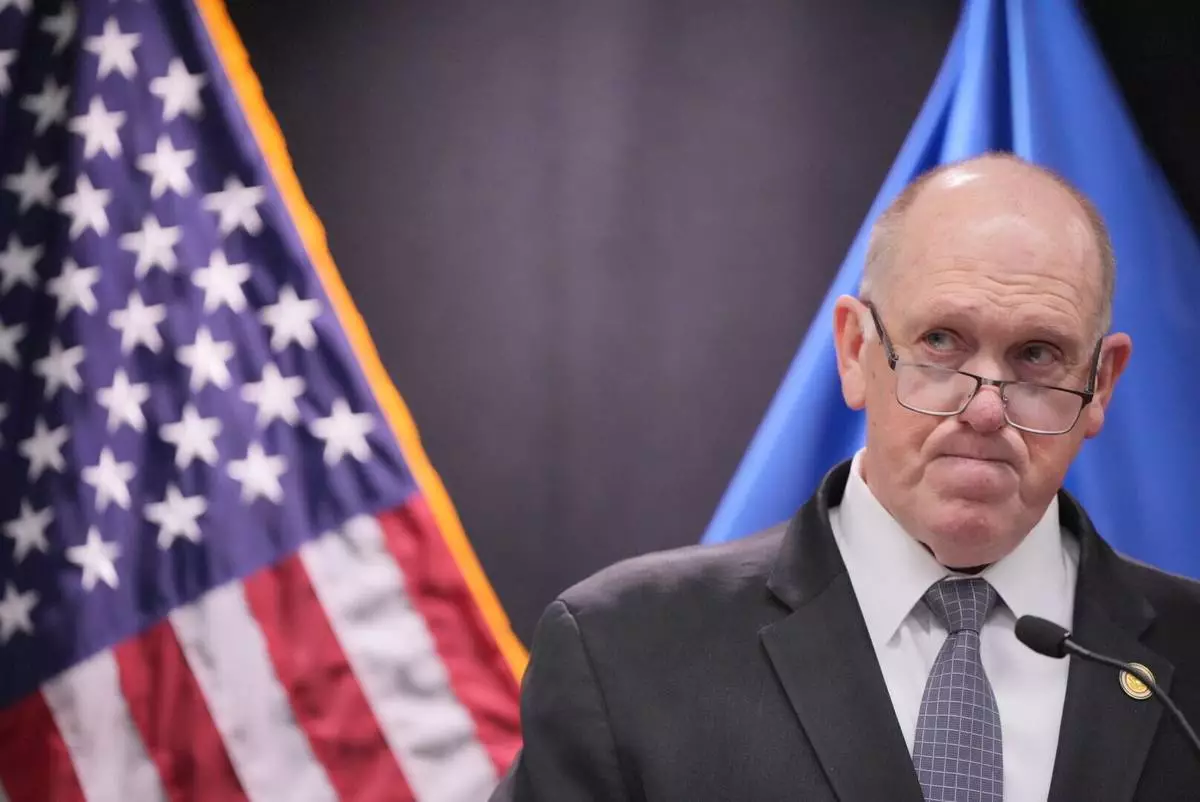
White House border czar Tom Homan holds a news conference at the Bishop Whipple Federal building on Thursday, Feb. 12, 2026 in Minneapolis. (Leila Navidi /Star Tribune via AP)
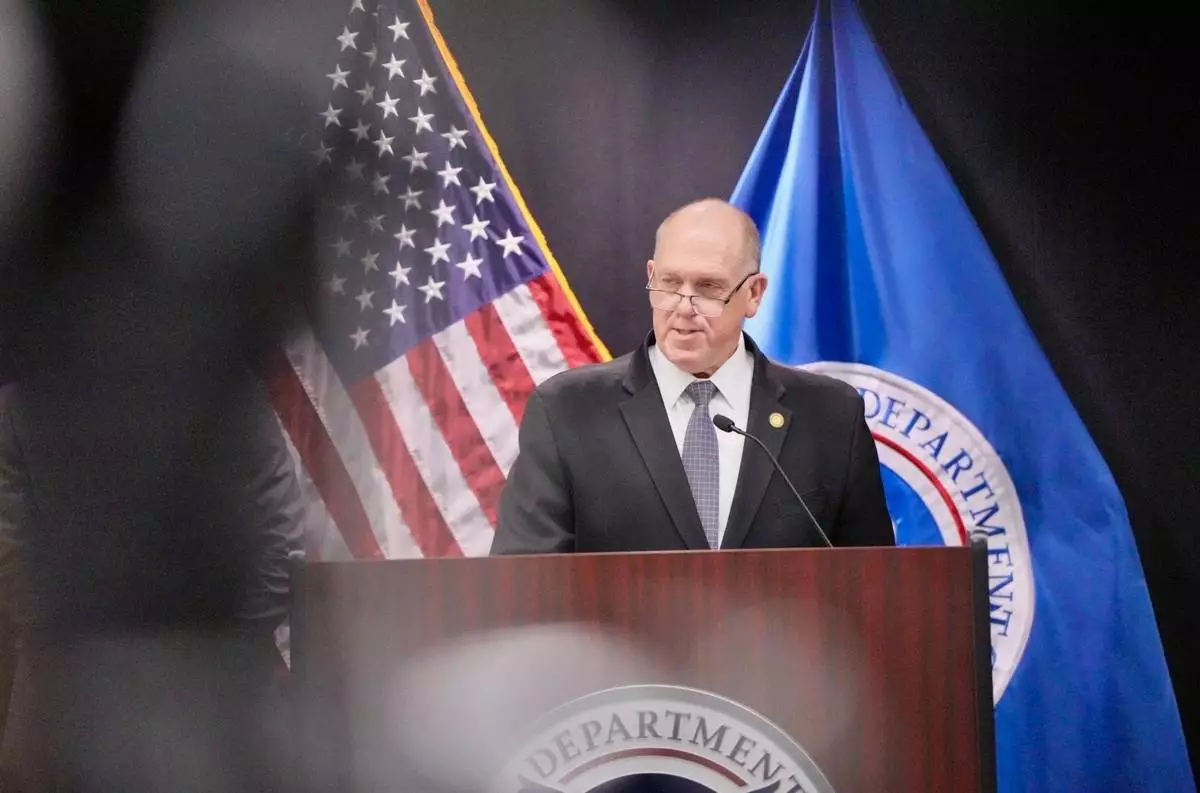
White House border czar Tom Homan holds a news conference at the Bishop Whipple Federal building on Thursday, Feb. 12, 2026 in Minneapolis. (Leila Navidi /Star Tribune via AP)
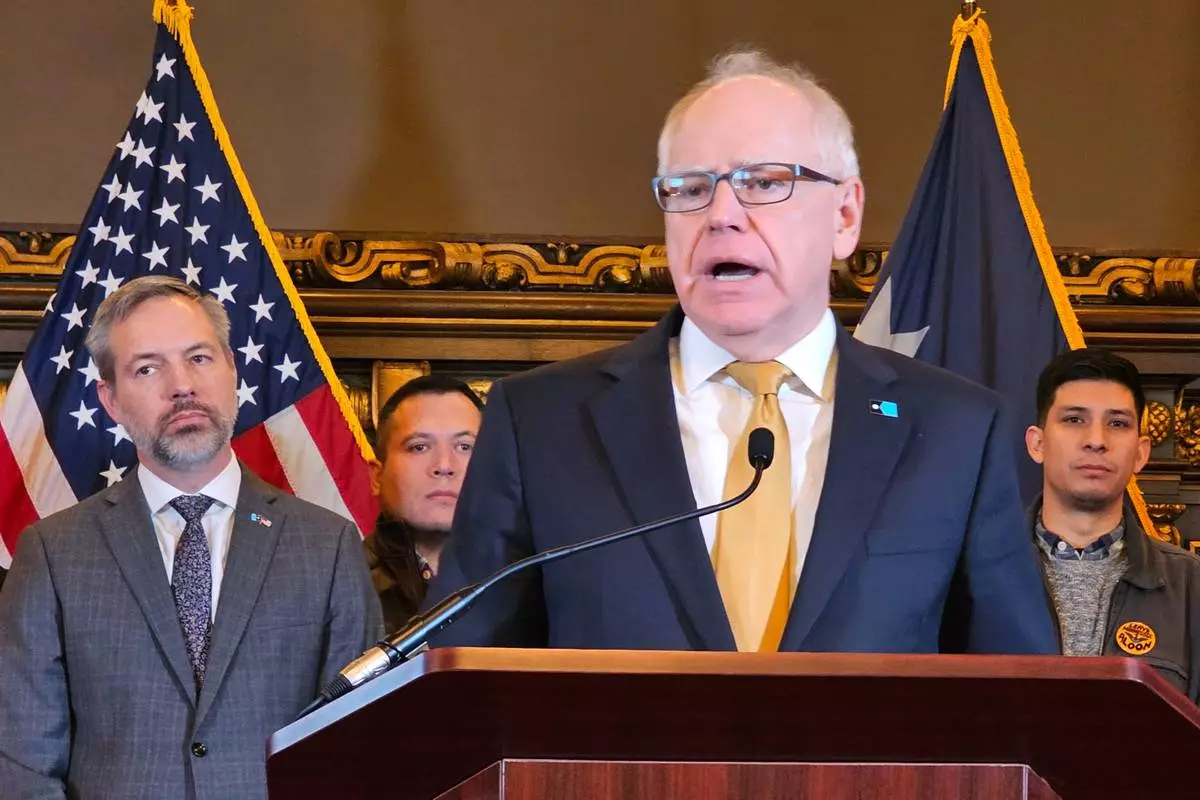
Gov. Tim Walz holds a news conference at the State Capitol in St. Paul, Minn., on Thursday, Feb. 12, 2026. (AP Photo/Steve Karnowski)
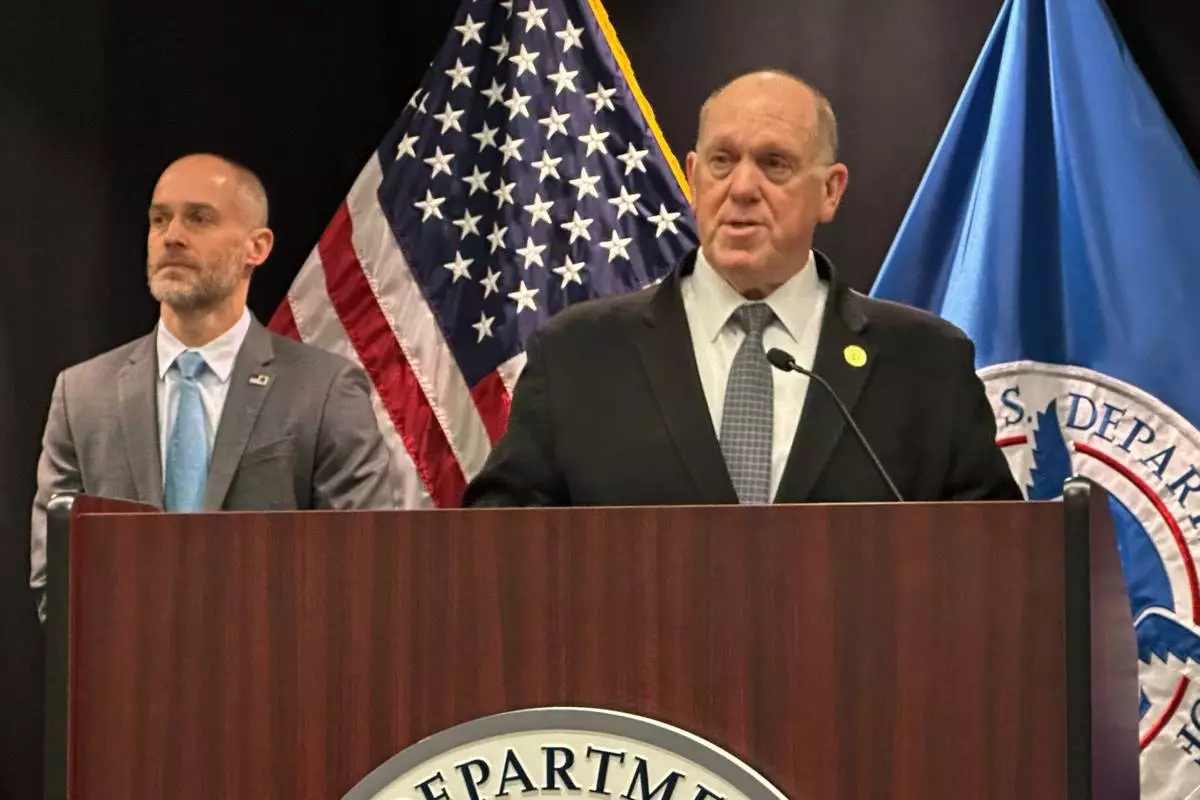
CORRECTS CREDIT TO STEVE KARNOWSKI – White House border czar Tom Homan holds a news conference at the Bishop Whipple Federal building on Thursday, Feb. 12, 2026 in Minneapolis. (AP Photo/Steve Karnowski)