


Market Update: We break down the business implications, market impact, and expert insights related to Market Update: How Companies Build Scalable Business Models in a Data-Driven Economy – Full Analysis.
Business models that adapt and grow create massive advantages for companies that methodically gather, enhance, and profit from data. A truly adaptable business model succeeds by achieving high marginal profitability, as the cost to serve new customers approaches zero.
Companies need to emphasize zero-touch delivery through automation to build adaptable business models. Business models driven by data enable faster scaling and new service additions. Quality data remains crucial – without it, your model simply won’t work.
This piece examines ways to develop and implement adaptable business models in today’s data-centric economy. The focus spans from creating unique value propositions to using operational efficiencies. Staying innovative matters greatly as the marketplace evolves faster.
Core Elements of a Scalable Data-Driven Business Model
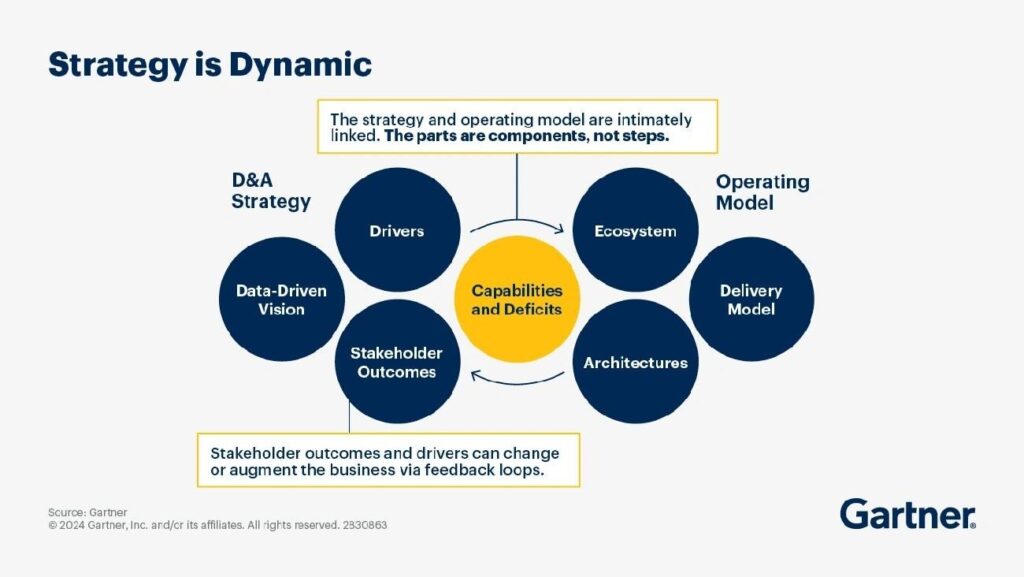
Image Source: Gartner
Two fundamental pillars determine how data-driven business models scale in today’s digital world.
Unique Value Proposition for Broad Market Fit
Product-market fit is the life-blood of any adaptable business model. Your product must solve a universal and unmet challenge that arranges with your buyer personas. Companies with strong product-market fit see consistent customer purchases, growing revenue, and low churn rates. Their customers stay loyal year after year. These satisfied customers become brand ambassadors and spread product awareness through word-of-mouth.
The right fit emerges from measuring both qualitative and quantitative audience data. This confirms that much of the marketplace needs your solution. Research shows 86% of business buyers prefer companies that understand their goals. Companies with proven product-market fit can target high-value cases. This helps them reap benefits quickly and build foundations for steady growth over time.
A broad market fit makes sustainable growth possible. The 3-year old company can recover early marketing and development costs. This leads to better use of future resources and improves overall business sustainability.
Data as the Central Value Driver
Data becomes the central added value for customers in data-driven business models. Successful companies treat data as a strategic growth lever rather than just a team to hire or tools to use. The value proposition relies on data, which changes how companies create and deliver services.
Companies typically choose one of three approaches to data: data-driven, insights-driven, or value-driven. The data-driven approach collects substantial data sets believing future value will justify current efforts. Tesla shows this strategy by gathering vast amounts of data from vehicle sensors, charger networks, and software ecosystems. While not needed for current operations, this data proves critical for training future self-driving algorithms.
PwC research reveals that highly data-driven organizations make significantly better decisions – three times more than those who rely less on data. Companies see this advantage through faster business value capture (up to 90% faster), reduced data quality costs, and quicker product launches.
Revenue Models That Enable Scalability

Image Source: Codica
The right revenue model serves as the foundation to build flexible business models in companies that rely on informed decisions. Successful companies use multiple ways to make money. This helps them maximize growth and match customer value.
Subscription and Usage-Based Pricing Models
Subscription pricing gives businesses steady, recurring revenue streams. This creates stability in financial planning and forecasting. A 2022 survey showed American consumers spent an average of USD 219.00 monthly on subscriptions of all types. Many SaaS companies see great profit margins with this approach. The median gross profit margin reaches 80% on subscription revenue.
Usage-based pricing lets companies charge customers based on what they actually use. This model works well, especially when you have services that involve API calls, data usage, or processing capacity. Companies with changing usage patterns benefit as costs match the value customers receive. Many organizations now mix fixed subscription fees with usage-based components. This gives them both predictability and flexibility.
Freemium and Tiered Access Strategies
The freemium model mixes free and premium features to make it easy for users to start. Users can try core features without risk, which helps build a massive user base quickly. This model has become the top choice for internet startups and smartphone developers in the last decade.
Tiered pricing splits products into different levels with unique features and prices. Companies can target different customer groups at once this way. To name just one example, a project management service might offer basic features in its starter tier, add integrations in its mid-range tier, and include advanced analytics in its top tier.
Affiliate and Advertising Revenue Streams
The affiliate model creates revenue through marketing based on performance. Partners get commissions when they bring in sales or leads. This cuts initial costs by working with external partners while reaching more audience groups.
Operational Strategies for Scaling Efficiently
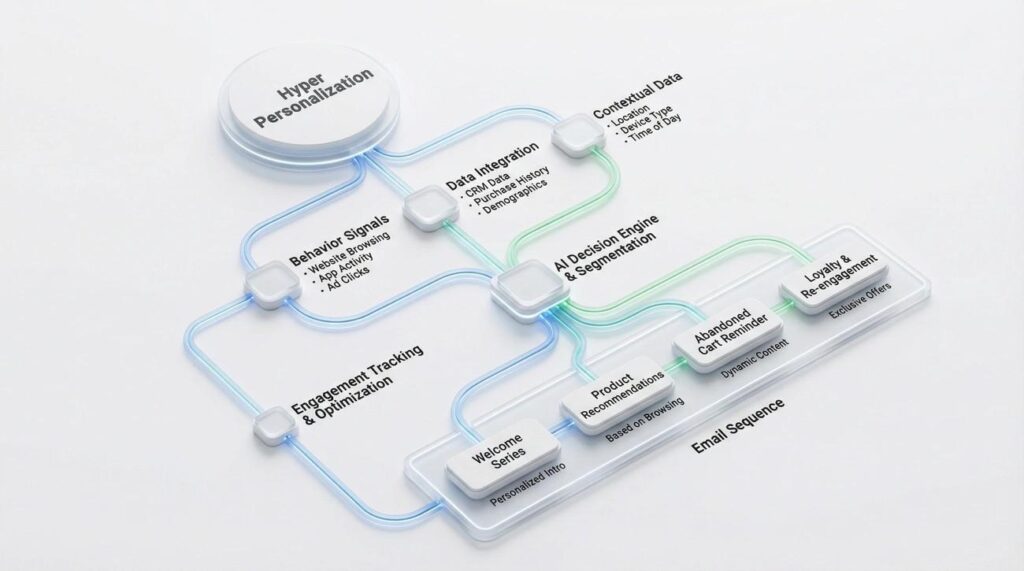
Image Source: Sales Funnels, Email Marketing & Automation – DONE FOR YOU!
Evidence-based operational strategies are the foundations of adaptable business models in today’s data-driven economy. Companies can achieve substantial growth without increasing costs when they optimize their internal processes.
Automation of Back-Office and Customer Workflows
Businesses can handle higher transaction volumes without expanding headcount through workflow automation. Recent studies show companies that modernize their operations through automation achieve nearly 12x growth in yearly staff productivity and almost 6x increase in service level compliance. The operational costs decrease by an average 15.3% year-over-year. Custom-trained OCR and AI solutions change manual processes into efficient ones and minimize errors while improving data accuracy.
Predictive Analytics for Demand and Churn Forecasting
Companies can make evidence-based decisions using predictive models that analyze historical data to identify patterns and forecast future trends. The use of predictive analytics helps reduce customer churn by 15-25%. Organizations respond up to 80% faster to at-risk accounts with these systems. Businesses can optimize inventory levels, production planning, and resource allocation based on predicted demand fluctuations through time series models.
Companies increasingly supplement traditional data models with insights from customer interactions, relying on the best conversation intelligence software to analyze sales calls, meetings, and engagement patterns that reveal churn risk or buying intent.
Outsourcing Non-Core Functions for Cost Efficiency
Companies that delegate non-core activities to specialized providers can focus on significant operations exclusively. Many organizations rely on IT outsourcing services to reduce internal workload while maintaining high technical standards. Studies indicate a 40% cost reduction in IT and customer support services, with administrative tasks showing savings up to 50%. This approach gives access to specialized expertise without maintaining full in-house teams.
Innovation and Adaptability in a Data-Driven Economy
Business models thrive or fail based on how they adapt to our ever-changing data world. Companies that welcome change perform better than their rivals by adapting faster to market shifts.
Agile Product Development and MVP Testing
The Minimum Viable Product (MVP) approach helps businesses test their ideas before major development investments. This method cuts risk and lets companies launch products faster while collecting crucial user feedback. Data shows that 80% of marketers now make use of information analytics to craft strategies and improve results. MVP testing helps teams spot features that solve customer problems and create products that strike a chord with target audiences.
Monitoring Emerging Technologies and Market Trends
Smart environmental scanning spots game-changing technologies before they alter the map of your industry. Companies keep track of changes through automated monitoring of patents, scientific publications, and competitor moves. The OECD measures active companies, R&D spending, and inventions to follow emerging science fields. Up-to-the-minute data analysis brings a 25% boost in operational efficiency.
Investing in R&D for Long-Term Differentiation
Global R&D investment has reached $2.30 trillion yearly—about 2% of global GDP—growing 4% each year in the last decade. Research shows 34% of companies spot R&D investment opportunities, while early-stage businesses show the highest likelihood (89.9%) of pursuing these chances. Artificial intelligence now influences every aspect of R&D, from spotting market needs to powering high-throughput experiments.
Conclusion
Building a scalable business model in a data-driven economy is not about chasing every new tool or trend. It is about creating systems that learn, improve, and respond as the business grows. Companies that succeed understand that data is only powerful when it supports clear decisions, strengthens customer value, and removes friction from everyday operations.
Long-term scalability comes from balance. Automation must support people rather than replace judgment, and growth should be intentional rather than rushed. Businesses that align pricing, operations, and innovation around real customer behavior are better positioned to expand without losing efficiency or quality. When data is used to guide priorities instead of overwhelm teams, scaling becomes more predictable and sustainable.
As markets continue to evolve, adaptability becomes a competitive advantage rather than a technical feature. Organizations that treat data as a living asset and continuously refine how it informs strategy will remain resilient in uncertain conditions. Scalability then stops being a future goal and becomes an ongoing capability that supports smarter growth at every stage.