


Breaking Update: Here’s a clear explanation of the latest developments related to Breaking News:Khamenei, planning for possible assassination, appoints Larijani to key role – report– What Just Happened and why it matters right now.
Iran’s Supreme Leader Ayatollah Ali Khamenei has put in place detailed plans for his succession and emergency chains of command should he, or other top leaders, be killed in potential US or Israeli strikes, The New York Times reported Sunday, also detailing how he elevated longtime loyalist Ali Larijani to manage the crisis.
The United States and Iran last week resumed Oman-mediated talks in Geneva aimed at potentially reaching an agreement, after Washington dispatched two aircraft carriers, many jets and a massive amount of weaponry to the region to back up its warnings.
Also Sunday, senior US officials told the Axios news site that America is willing to send negotiators for further talks with Iran in Geneva this Friday, if Tehran presents a new draft proposal for a nuclear deal within 48 hours.
Officials were cited as saying that this is likely the last chance for diplomatic resolution before Washington launches a major military operation.
According to the New York Times report, at the height of nationwide protests last month and amid rising US threats of military action, Khamenei tapped Larijani — a former Revolutionary Guards commander and veteran politician — to a central governing role, effectively placing him at the helm of state affairs and undermining the powers of President Masoud Pezeshkian.
Citing interviews with senior Iranian officials, members of the Revolutionary Guards and former diplomats, the Times report said that Larijani has since overseen the recent brutal crackdown on protests, managed sensitive nuclear diplomacy with Washington, and coordinated with allies and neighbors including Russia, Qatar and Oman.
He was also said to be leading wartime planning as Iran braces for possible US strikes. The report said that Iran was operating on the assumption that US strikes were “inevitable and imminent.” As such, Iranian forces were on the highest level of alert and prepared to resist.
Iran has been placing its missiles near the Iraqi border, where they can target Israel, and along the Persian Gulf, where they threaten US military bases in the region. Iran has also repeatedly conducted missile tests and drills in the key Hormuz Straights as it gears up for war.
Internal control
The report also detailed the preparations Iran was making to ensure there was no internal loss of control in the event of war.
The officials said that if hostilities break out, special forces units of the police, intelligence agents and battalions of the plainclothes Basij militia, a subsidiary of the Guards, will deploy across cities, setting up checkpoints to stop protests and possibly identify those working for foreign agencies.
On Sunday, the opposition outlet Iran International reported that Iranian students were holding fresh waves of nationwide anti-regime rallies, commemorating those killed in recent protests and voicing opposition to the Islamic Republic.
According to the report, demonstrations have taken place at the University of Tehran, Sharif University of Technology, Shahid Beheshti University, Ferdowsi University, Khajeh Nasir University, and the University of Art.
Iran International, a media outlet based outside the country and branded a “terrorist” organization by Tehran, shared a video on social media of students holding up the flag at Sharif University, as well as videos of rallies at other institutions of higher learning.
شجاعت، غیرت و شرافت شیربچههای جنبش دانشجویی ایران
یکشنبه | ۳ اسفند ۱۴۰۴
دانشگاه صنعتی آریامهر (شریف)#انقلاب_شیروخورشید#جاویدشاه pic.twitter.com/7qFPInbxga— Amirkabir NewsLetter خبرنامهٔ امیرکبیر (@autnews_org) February 22, 2026
A video geolocated by AFP of what appeared to be the same demonstration at Sharif University showed a large crowd around the flag-waving students chanting “long live the shah” and other anti-government slogans.
Members of the Basij paramilitary force have reportedly entered some campuses in an effort to identify protesters.
Others staged competing pro-regime protests as students rallied on Saturday at the start of the new university semester to mark the 40th day since the deaths at the peak of the protests on January 8 and 9, in line with Shiite mourning tradition.
Lessons from 12-day war
Much of Khamenei’s preparations come as a result of the lessons learned by Iran in the wake of the 12-day war fought with Israel in June, when Israeli strikes killed much of the Iranian military leadership in the opening hours of the conflict, and amid fears that the Americans will try and kill the supreme leader.
As such, Khamenei has taken a series of steps to try and ensure the continuity of the regime and of the military leadership, including naming four layers of succession for each of the military command and government roles that he personally appoints.
Khamenei also instructed all people in leadership roles to name up to four replacements, the Times report said.
He has also delegated responsibilities to a close inner circle that could make decisions in the event that he is out of contact or killed, chief among them Larijani.
Other senior leaders mentioned include top military adviser and former commander-in-chief of the Guards, Maj. Gen. Yahya Rahim Safavi; Brig. Gen. Mohammad Bagher Ghalibaf, a former Guards commander and current speaker of parliament; and Khamenei’s chief of staff, the cleric Ali Asghar Hejazi.
The Times said Ghalibaf has been designated Khamenei’s de facto deputy to command the armed forces during war.
The report said Khamenei had identified three potential successors while he was in hiding during the war with Israel, but they have not been publicly named.
The report noted that while Larijani would be tasked with the de facto running of the country, he would not be considered a successor for the role of supreme leader, as he is not a senior Shiite cleric.
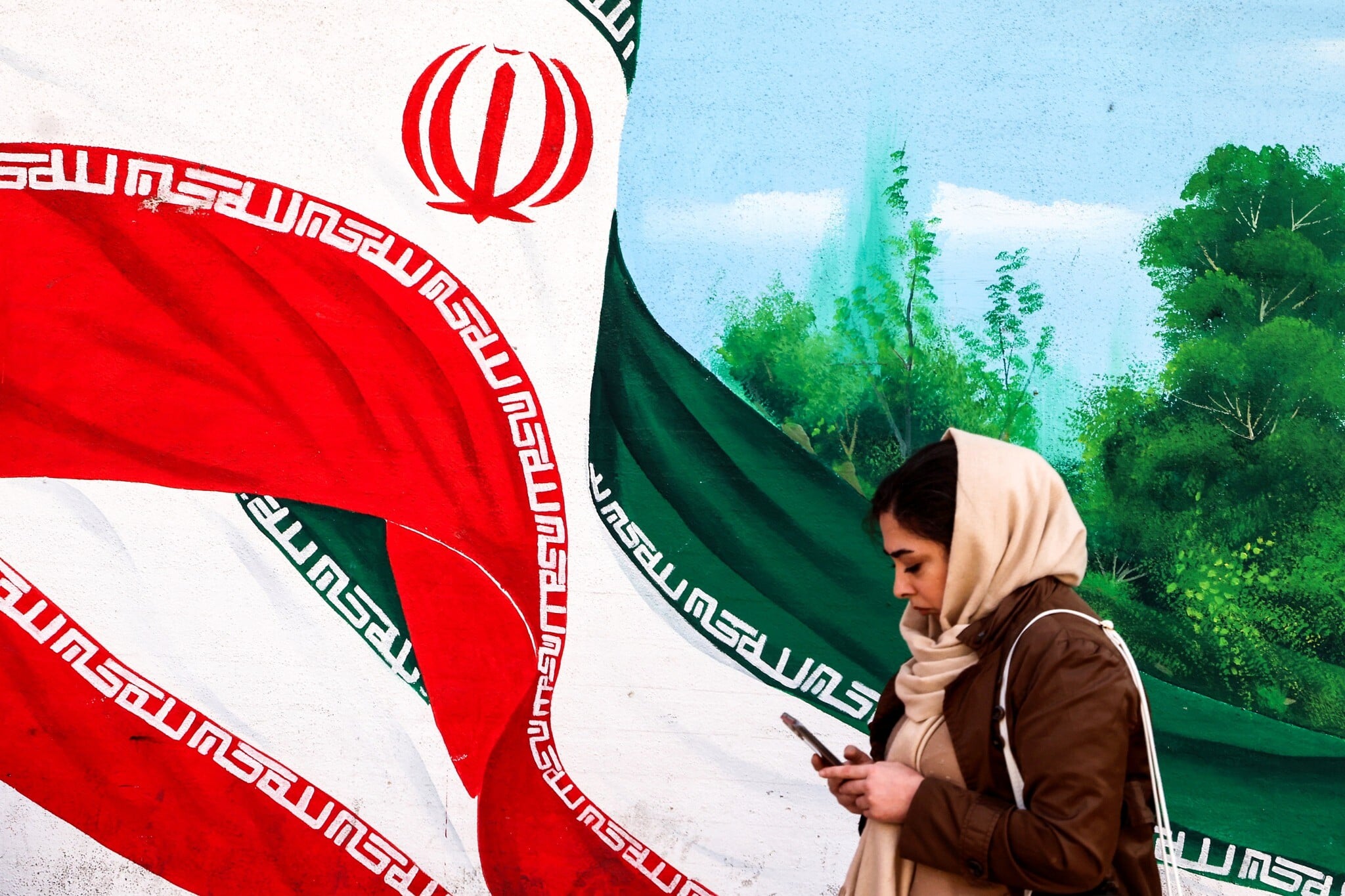
Larijani in charge
Nevertheless, analysts said that Khamenei “fully trusts” Larijani to manage the crisis and lead should Khamenei be killed.
“The supreme leader fully trusts Larijani. He believes Larijani is the man for this sensitive juncture because of his political track record, sharp mind and knowledge,” Nasser Imani, a conservative analyst close to the government, told the Times. “He relies on him for reports on the situation and pragmatic advice. Larijani’s role will be very pronounced during war.”
The report highlighted how Larijani’s ascension has come at the expense of Pezeshkian, detailing how the president had to request that Larijani lift the internet blockade and grant permission to Foreign Minister Abbas Araghchi to establish contact with US President Donald Trump’s chief negotiator, Steve Witkoff.
Last chance talks
Witkoff and fellow negotiator Jared Kushner have been waiting for a detailed offer from Tehran since their last talks with Araghchi on Tuesday.
A senior US official told Azios that the two Americans plan to be in Geneva on February 27 if the Iranians send their proposal early this week.
“If Iran gives a draft proposal, the US is ready to meet in Geneva on Friday in order to start detailed negotiations to see if we can get a nuclear deal,” the official said.
The official also said that the Trump administration and Iran could also discuss the possibility of an interim agreement before a full nuclear deal is agreed.
However, officials warned this could be the last chance for a deal.