

Case Explained:This article breaks down the legal background, charges, and implications of Case Explained: Turkish businessman alleges major extortion network linking media, judiciary and organized crime – Legal Perspective
Abdullah Bozkurt/Stockholm
Turkey’s justice minister, Akın Gürlek, a former chief prosecutor in Istanbul and a loyalist jurist who weaponized criminal investigations on behalf of Turkey’s authoritarian President Recep Tayyip Erdogan, allegedly collaborated with organized crime figures and drug traffickers to run an extortion network and enrich himself, using sham legal probes he initiated along with defamatory articles published by his associates in the pro-government media.
The explosive revelations were recently made by a 36-year-old Turkish businessman who says he was forced to flee the country after receiving threats and has since released videos and documents exposing a coordinated extortion network involving senior judicial figures, pro-government media executives and organized crime groups.
Öncü Sönmez, son of the late industrialist Yalçın Sönmez, claims he was targeted by what he described as a “systematic extortion scheme” that weaponized criminal investigations, media smear campaigns and threats of violence to extort millions of dollars from wealthy individuals.
The targeting of Sönmez began after his father’s death in 2024, which left him in control of a substantial inheritance built by Yalçın Sönmez through decades of work in media, organized industrial zones and innovation initiatives in Turkey.
The allegations, presented in a series of video statements shared on social media before being restricted by Turkish authorities, offer a rare insider account of how controversial investigations in Turkey have been used as leverage against affluent people.

The allegations fit into a broader pattern of aggressive wealth redistribution in Turkey since 2015 under the rule of oppressive leader Erdogan, whose government has systematically used sham legal cases to seize tens of billions of dollars in corporate and personal assets from businesspeople accused of links to the Gülen movement, a group critical of the government over corruption and Turkey’s support for radical jihadist groups.
Major business groups, including the İpek Group led by Akın İpek, which owned gold mining operations and prominent media outlets; the Boydak Group, one of the wealthiest family conglomerates, based in Kayseri; and the Nakiboğlu family in Gaziantep, whose holdings included power plants and chemical and plastics manufacturing companies, were all targeted by the Erdogan government, with their assets seized and redistributed to political loyalists.
Sönmez claims that recent celebrity-focused operations in Turkey, officially framed as anti-drug enforcement, in reality functioned as a “celebrities stock exchange,” targeting wealthy individuals for pressure and financial exploitation.
He said that after his father’s death, he became a target due to his visibility, high-profile lifestyle and financial means. According to Sönmez, individuals linked to organized crime approached him with demands for payment under various pretexts, including fabricated debt. When he refused, the pressure sharply escalated.
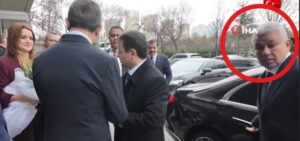
In his account, individuals associated with nightlife venues and entertainment circles allegedly monitored the spending patterns of affluent customers and shared that information with criminal networks. These networks, he claims, then coordinated with actors inside state institutions and media outlets.
Sönmez specifically named Abdurrahman Şimşek, a Turkish intelligence asset who works as news coordinator at the Sabah newspaper, a daily owned by Turkish President Erdogan’s family. He also named Gürlek, Turkey’s justice minister, as being part of the alleged extortion scheme.
The pressure on the businessman began shortly after his father’s death, when he says he was first asked to pay 10 million Turkish lira to Ali Uzun, a powerful underworld figure he links to illegal betting schemes and drug trafficking. Sönmez says he agreed to transfer the money as a loan, later writing it off when it became clear the group had no intention of repaying it. Believing the issue had been resolved, he told them he no longer expected the money back, but, he says, the demands only escalated from there.
After a period of mounting pressure, Uzun summoned the businessman to his office at the Zorlu Center’s A1 building, unit 204, where he demanded $5 million in extortion payments. When the businessman refused, he says he was beaten by Uzun’s associates inside the office, suffering multiple fractures and permanent damage to his fingers. He was then given a few days to produce the money or face death.
He said he went twice to the police department’s organized crime unit to file a complaint and press charges, but as soon as Police Chief Burak Bal heard Uzun’s name, they decided to not take the complaint or process it in official records. “If the police say they can’t even take your complaint, where do you go?” Sönmez said.
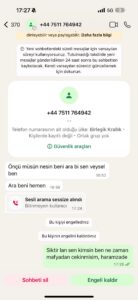
His attempt to file a criminal complaint with the public prosecutor also failed, reinforcing what Uzun had told him — that he was untouchable, protected by the government and operating in close coordination with Gürlek, who was then serving as Istanbul’s chief public prosecutor.
In one of the most serious allegations, Sönmez says his vehicle was ambushed and shot at on April 9, 2025, on Istanbul’s Kilyos road after he refused to comply with the extortion demands. He shared a photograph of the car showing clear bullet damage to the windshield and added that police showed little interest in investigating the incident.
According to Sönmez he was summoned to another meeting on June 20, 2025, at a football field in Istanbul’s Etiler district, where he was told to pay $2 million to resolve issues stemming from the earlier $5 million demand by Uzun. “They told me that if I did not pay, they would publish defamatory stories, issue arrest warrants and destroy my reputation,” Sönmez said in one of the recordings.
He shared SMS messages from his phone detailing the meeting and said he also possessed a video recording he plans to release, which he claims shows how he was asked to pay money to make the troubles go away.
Those present at the meeting, according to Sönmez, included Şimşek, a Turkish intelligence officer identified only as Ümit and a relative of Justice Minister Gürlek — reportedly his nephew, Mehmet, who he said also works for intelligence and serves as the justice minister’s bodyguard.
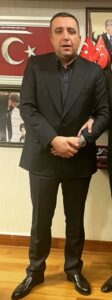
Şimşek allegedly told the businessman, “Let’s resolve this before it escalates. Ali Uzun asked you for $5 million. We can close this for $2 million. Ali Uzun is working with us.”
Şimşek further told him if he did not pay, fabricated stories about him would be published in the Sabah daily, where he works, reporting directly to Serhat Albayrak, the brother of President Erdogan’s son-in-law Berat Albayrak, and that his reputation would suffer.
He also told him that fabricated stories would also appear in what was described as opposition media outlets such as Halk TV. “We also have a very strong presence [in the opposition media],” Şimşek said, adding that the TV station’s owner lives in Dubai and fully complies with their demands. Two journalists who work for Halk TV are his loyal people, he said.
Although the businessman did not explicitly name the journalists, referring to them only by their initials, widespread claims circulating on social media have pointed to figures such as İsmail Saymaz, Barış Terkoğlu and Barış Pehlivan — commentators on Halk TV — alleging that they have operated in ways that align with the agenda of the Erdogan government, despite presenting themselves as critical voices.
Through his lawyer, Sönmez secured a court order in October 2025 to remove what he described as fabricated news reports from outlets including Sabah and Halk TV, but the ruling was never enforced.
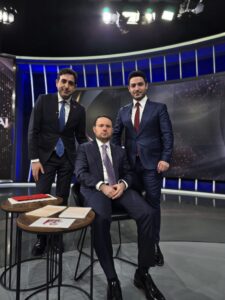
The businessman also specifically named Nevşin Mengü, a journalist who runs her own YouTube channel, alleging that she had made a covert arrangement with government figures to support Erdogan while maintaining the appearance of an independent, critical voice. According to his claims, she argued that she would be more valuable to the government as a journalist perceived to be in opposition rather than as an openly pro-government figure.
Sönmez said that based on what he was told directly by Şimşek, victims should not expect meaningful support from the opposition media in Turkey, which he claims is influenced by figures aligned with President Erdogan. He argued that these revelations reinforce a long-held view among critics that parts of the opposition media landscape operate, directly or indirectly, in ways that ultimately serve the government’s interests.
Sönmez’s allegations appeared to gain further traction when Özgür Özel, head of the main opposition Republican People’s Party (CHP), publicly questioned the rapid and unexplained accumulation of wealth by Justice Minister Gürlek, citing extensive property transactions in recent years.
Journalists named by Sönmez, such as Cüneyt Özdemir and Yılmaz Özdil, subsequently moved to defend the minister and downplayed the opposition leader’s allegations. Rather than examining official records to verify the claims, critics say they quickly dismissed the accusations and appeared to act in concert to minimize their impact.
Öncü Sönmez secured a court order to remove what he described as fabricated news reports from websites, but the ruling was not enforced, which he attributes to pressure from government officials:
The response triggered significant backlash among voters opposed to Erdogan, putting so-called opposition journalists on the defensive.
Şimşek also threatened the businessman with imminent arrest, even showing him what appeared to be a warrant dated June 25, five days after the meeting and before any formal charges had been filed, suggesting premeditation. Sönmez said he was also warned that he would be imprisoned and that Uzun would have him killed in custody.
During the meeting Gürlek allegedly called in to signal his backing of the arrangement, urging those gathered at the football field not to prolong the negotiations and to resolve the matter quickly through a compromise.
A case against the businessman was built, he claims, on statements allegedly coerced from his ex-girlfriend, who later told him in text messages that she had been threatened and forced to provide false testimony implicating him.
Sönmez says he eventually fled Turkey, first traveling to Switzerland and later to the United States, citing concerns for his safety. He claims he has been warned that he was on a “target list” and faced credible threats.
“People like me do not leave their country easily,” he said. “Something serious has to happen.”
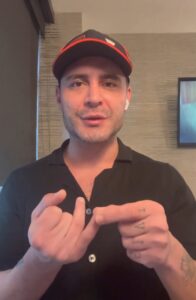
While he was abroad, Sönmez said he received threats of assassination. In a phone conversation he shared, a man identified as Veysel Şahin — whom he described as a key figure in illegal betting operations in Turkey — allegedly urged him to reach a deal and remain silent or face death. Sönmez claims Şahin works in partnership with Uzun and that the two are involved in a range of organized criminal activities.
He further alleged that the group has attempted to recruit Latin American gangs to carry out his assassination in New York.
The businessman also alleged that a man identified as Hayrettin Koç, whom he described as working with organized crime syndicates, was involved in arranging arrest warrants and facilitating INTERPOL Red Notices requested by Turkey. He further claimed that Koç also managed funds allegedly linked to Gürlek, channeling money through stock market transactions via another associate, identified as Kasım Garipoğlu.
The businessman’s claims extend beyond his personal case, suggesting that what has been dubbed the “celebrities operation” — which publicly targeted figures in entertainment, business and social circles — may have served dual purposes. While acknowledging that some individuals may have committed legitimate offenses, Sönmez argues that a significant portion of the cases were driven by financial motives rather than law enforcement priorities.
“Ten percent may be real cases,” he said. “But 90 percent is a ‘celebrities market’ — a system designed to extract money.”
He also alleged that other wealthy individuals paid large sums to avoid prosecution, though he has provided no independently verifiable documentation for these claims so far.
Sönmez described a recurring tactic in which individuals were first targeted with negative media coverage, followed by legal pressure. According to him, pro-government outlets played a key role in shaping public perception and isolating targets before formal legal action was taken.
“They publish stories, and once your name is out there, everything else follows,” he said.
Turkish authorities have not issued an official response to the allegations other than moving quickly to obtain court orders blocking the content on social media platforms where the businessman began sharing his revelations.
The allegations come amid longstanding concerns raised by international observers over judicial independence, media freedom and the influence of organized crime in Turkey.
Sönmez continues to release information from abroad, framing his disclosures as an attempt to expose what he describes as a “corrupt and coordinated network.”
“There is no other way,” he said. “If you stay silent, the system continues.”