

Explained: This article explains the political background, key decisions, and possible outcomes related to Explained : Nuclear rhetoric, hollow claims: Truth behind Pakistan’s ‘Ummah’ politics and Its Impact and why it matters right now.
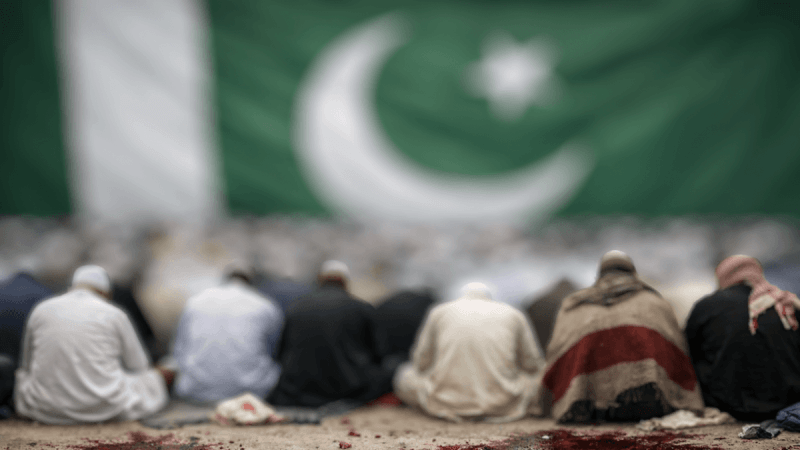
Recent remarks by Abdul Basit, Pakistan’s former High Commissioner to India, should alarm anyone who takes regional stability or moral consistency seriously. Suggesting that Pakistan could respond to a U.S. strike by targeting cities like Mumbai and New Delhi is not strategic analysis; it is a chilling reflection of how casually mass violence is entertained in certain policy circles. Let us be clear: this is not just reckless; it is morally bankrupt. For decades, Pakistan has projected itself as a guardian of the global Muslim community, the Ummah. This claim now stands brutally exposed. Mumbai is home to nearly 3 million Muslims, and New Delhi to over 2 million Muslims.
Any conventional or nuclear strike on these cities would inevitably kill large numbers of Muslims. So what exactly remains of this so-called “Muslim solidarity”? A state that claims to speak for Muslims while openly contemplating the destruction of Muslim lives forfeits any moral authority to invoke the Ummah.
This is not leadership; it is hypocrisy of the highest order.
Pakistan’s very creation in 1947 was justified in the name of Islam and the protection of Muslim identity. That foundational argument is now turned upside down. If safeguarding Muslims was the raison d’être, then threatening cities dense with Muslim populations is nothing short of an ideological betrayal. This is not a minor inconsistency; it is a fundamental contradiction. It reveals that the rhetoric of religion has long been a tool of convenience, deployed when useful and discarded when inconvenient. It would be comforting to dismiss Basit’s remarks as an aberration. But they are not. They fit into a broader pattern of strategic thinking where escalation, even nuclear escalation, is discussed with alarming nonchalance.
Pakistan’s security discourse has repeatedly relied on brinkmanship: the constant signaling that extreme options are on the table. The problem is that such posturing does not remain confined to theory. It seeps into public narratives, normalises hostility, and erodes the threshold for conflict. In a nuclearised region, this is not just irresponsible; it is dangerous to the point of being catastrophic.
There is also an uncomfortable historical truth that must be confronted. Pakistan’s creation, while framed in religious terms, was deeply entangled with late colonial geopolitics. It emerged not merely as a homeland for Muslims but as a strategic construct shaped by imperial interests in South Asia. That legacy has never fully disappeared. From Cold War alignments to its current positioning, Pakistan’s policies have often reflected external strategic calculations rather than any coherent commitment to Muslim welfare. The repeated invocation of the Ummah thus rings hollow. It is less a guiding principle and more a rhetorical shield useful for mobilizing sentiment, but rarely for shaping humane or consistent policy.
For Indian Muslims, the implications are stark. The idea that Pakistan represents their interests or the interests of Muslims globally is not just outdated; it is demonstrably false. When voices from Pakistan can so casually threaten cities with millions of Muslims, the illusion of “brotherhood” collapses entirely. What remains is a geopolitical agenda that is indifferent to Muslim lives when they fall on the wrong side of a border. It is therefore essential for Indian Muslims to call out this hypocrisy clearly, confidently, and without hesitation. This is not about nationalism; it is about refusing to be reduced to pawns in someone else’s strategic narrative.
Perhaps the most disturbing aspect of Basit’s remarks is what they reveal about the normalization of extreme violence. When the idea of striking major cities becomes part of mainstream discourse, the line between rhetoric and reality begins to blur. This is how conflicts spiral, not always through deliberate decisions but through the gradual erosion of restraint. South Asia cannot afford this. The stakes are simply too high.
Pakistan today faces a credibility crisis of its own making. It cannot simultaneously claim to defend the Ummah and threaten actions that would devastate it. It cannot invoke religion as a moral shield while embracing strategies that disregard human life on a massive scale. The contradiction is too glaring to ignore and too dangerous to excuse. If there is any lesson to be drawn, it is this: rhetoric matters. Words shape perceptions, and perceptions shape actions. When those words casually entertain destruction, they do more than reveal intent they expose the hollowness of the ideals they claim to defend. And in this case, that hollowness is impossible to miss.
[Disclaimer: This is an authored article by Dr. Shujaat Ali Quadri, who is the National Chairman of Muslim Students Organisation of India MSO. He writes on a wide range of issues, including Sufism, Public Policy, geopolitics, and information warfare.]