

Explained: This article explains the political background, key decisions, and possible outcomes related to Explained : Naxalism’s Shift: Armed Struggle to Ideological Influence and Its Impact and why it matters right now.
On March 30, 2026, Union Home Minister Amit Shah told Parliament that naxalism in India was not the product of poverty or underdevelopment but of ideology. Poverty, he argued, did not produce naxalism; naxalism produced poverty. The movement, according to him, was not a response to injustice but an organised attempt to weaken the Indian state, its Constitution, and democratic institutions.
Shah said: “Naxalism in the country is now on the verge of extinction… The country will be informed once the entire process is formally completed, but I can say that we have become naxal-free.”
He described this as one of the most significant achievements of the government led by Narendra Modi, crediting security forces, State police, and local tribal communities for what he termed the near-complete dismantling of Left-Wing Extremism (LWE) ahead of the government’s March 31, 2026 deadline.
Eliminating LWE threat
According to figures presented by the Home Ministry, between 2024 and 2026 (until March), 706 Maoists were killed in encounters, 2,218 were arrested, and 4,839 surrendered. Over a longer historical arc, the government estimates, around 20,000 people have lost their lives in naxalite violence, including more than 5,000 security personnel.
Alongside these figures, the state points to a structural contraction of the insurgency. The number of districts affected by LWE has declined from 126 in 2014 to just two in 2026. Districts categorised as “most affected”, which numbered 35 in 2014, are now officially zero. The number of police stations reporting Maoist incidents has dropped from around 350 to about 60.
According to the government, the organisational impact of the crackdown against the LWE outfits has been significant. The entire top leadership of the Communist Party of India (Maoist) or CPI(Maoist), comprising its Politburo and Central Committee, has been neutralised through a combination of arrests, killings, and surrenders. Of the 21 top leaders identified at the beginning of 2024, one has been arrested, seven have surrendered, and 12 have been killed, while one remains absconding.
Security experts said that going by conventional measures of counter-insurgency, this represents a decisive phase. Yet, even as the state moves to close what it considers a decades-long insurgency, a different story is beginning to take shape—one that unfolds not in the forests but in the realm of interpretation.
Targeting “urban naxals”
In recent months, several students, lawyers, and labour activists in States with little or no recent Maoist violence, such as Delhi, Uttar Pradesh, Uttarakhand, Himachal Pradesh, Haryana, and Punjab, have reported being questioned, detained, arrested or investigated over alleged ideological links to banned left-wing organisations.
According to observers, if the insurgency is nearing its end on the ground, its afterlife may be emerging elsewhere, not as armed rebellion but as a contested terrain of belief, association, and suspicion.
Incidentally, Prime Minister Modi and Amit Shah have frequently described Marxist ideology as a destructive and deadly ideology.
This emerging pattern marks a departure from how Maoism has historically been understood. For decades, the Maoist movement represented one of the country’s most enduring internal security challenges. At its peak, it extended across a vast “red corridor” spanning central and eastern India, from regions near Pashupatinath in Nepal to Tirupati in Andhra Pradesh. Over time, this geography came to define the framework through which Maoism was interpreted: a rural insurgency rooted in mineral-rich forested terrain, sustained by local grievances, and organised through underground armed structures.
Amit Shah on Maoism
In his parliamentary address, Shah stated that the movement expanded in regions where “the reach of the state was weak” and that tribal populations were “misled” into taking up arms. In this formulation, Maoists did not emerge from conditions of deprivation but strategically embedded themselves within them.
Government data indicate that districts once considered Maoist strongholds have either been cleared of insurgent elements or substantially stabilised. Security forces, supported by improved intelligence, road connectivity, telecommunications expansion, and welfare delivery systems, have steadily pushed armed cadres into retreat.
In Bastar, Chhattisgarh, long considered the operational core of the insurgency, officials now describe a transition from insurgent control to administrative consolidation. Development indicators such as roads, mobile connectivity, banking access, and welfare schemes are increasingly cited as evidence of this change. From the state’s perspective, these developments mark the culmination of a long counter-insurgency effort.
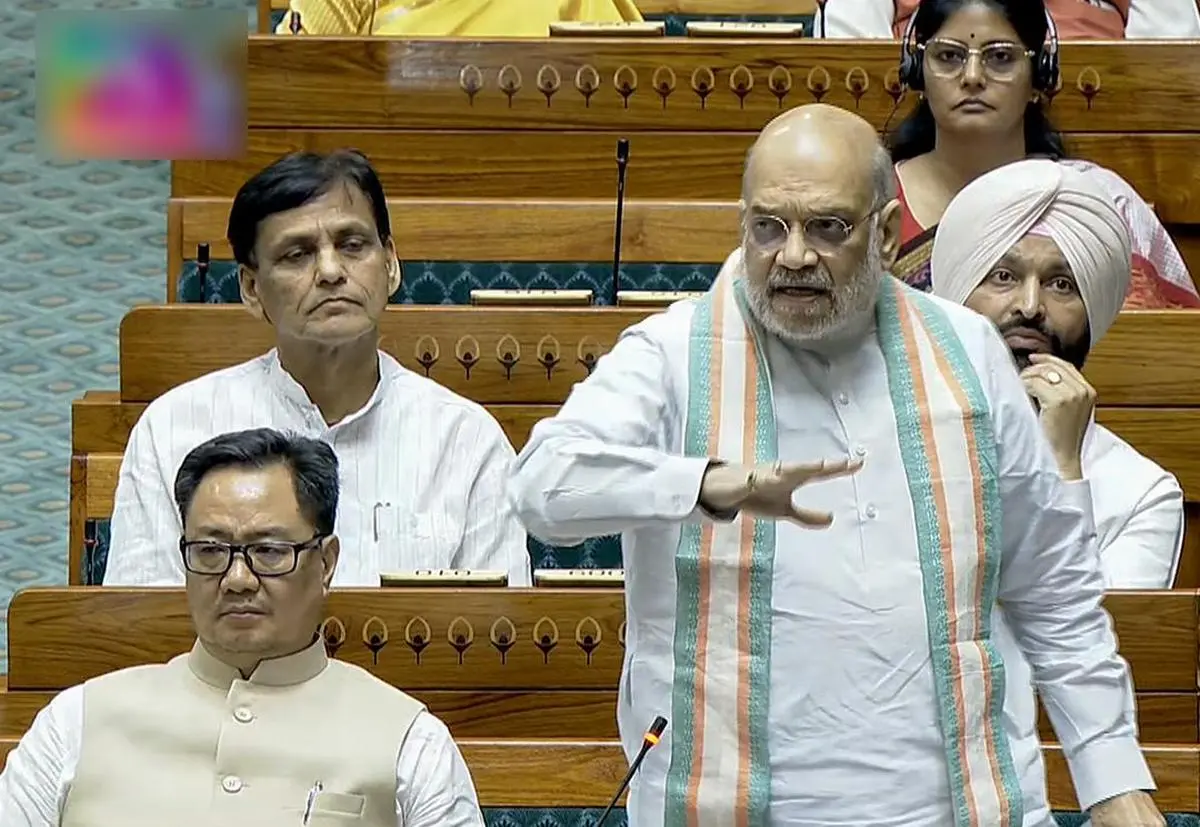
Union Home Minister Amit Shah speaking in the Lok Sabha during the Budget session of Parliament on March 30. He told parliament that the country was free of naxals.
| Photo Credit:
ANI
Yet, this narrative of closure is not only about military success; it is also underpinned by a conceptual reframing of Maoism itself. In his parliamentary address, Shah characterised Maoism as an ideological project. one that sought to create a vacuum in the state, governance, and constitutional order, and to capture power through violence.
Reframing of Maoism
This formulation marks a departure from earlier policy narratives that treated Maoism as both a security and a developmental issue. If Maoism is understood primarily as ideology, the terrain of conflict expands. It is no longer confined to armed cadres in remote Adivasi regions but extends to those seen as engaging with, expressing, or supporting that ideological framework.
The political scientist G. Haragopal warned against such a narrowing. The naxalite movement, he said, has been “a long-standing expression of tribal resistance rooted in land, autonomy, and dignity”. For Haragopal, Maoism intersected with pre-existing forms of resistance rather than producing them. He situated this within a longer historical trajectory. According to him, tribal resistance predates the naxalite movement by more than a century, with figures such as Birsa Munda symbolising the struggle. “Without sustained local support, such a long movement would not have been possible.”
This continuity complicates the claims of closure. As Haragopal said, if the underlying contradictions remain unresolved, the decline of armed struggle does not necessarily mean the disappearance of the conflict. It may instead signal a change in its form as it has done in the past.
It is precisely this possibility, of transformation rather than termination, that frames developments now unfolding across urban India. The individuals in northern States who were reportedly questioned over ideological associations, even though they had no apparent links to armed activity, are linked to progressive organisations that see growing corporate influence over state institutions as driving state violence and dissent suppression to enable “corporate loot” and resource extraction. They argue that “draconian” laws and paramilitary force are being used to clear Adivasi lands for corporations, tying civil liberties to resistance.
Individually, such instances may fall within the broader framework of security inquiries.
Widening ambit
Taken together, these developments point to a widening ambit—from armed insurgency in remote terrains to networks, affiliations, and forms of political activity embedded in urban spaces. At the centre of this shift is a multi-state investigation led by the National Investigation Agency (NIA), formally registered as RC-01/2023/NIA/LKW and anchored in Lucknow, which alleges that attempts are being made to revive organisational structures of the proscribed CPI (Maoist) across north India.
According to investigators, the group’s Northern Regional Bureau (NRB), which covers Uttar Pradesh, Uttarakhand, Delhi, Punjab, Haryana, and Himachal Pradesh, has been tasked with re-energising what the agency describes as a “decrepit” organisational presence in the region.
The NIA’s January 2026 supplementary chargesheet, which names Priyanshu Kashyap alias Rakesh alias Nilesh, a resident of Bastar, as the third accused in the case, provides granular insight into the methods underpinning this alleged revival effort.
Identified as an active cadre who operated as in-charge of an area cell committee in Delhi and a sub-zonal committee unit in Haryana’s Rohtak, Kashyap is accused of carrying out ideological indoctrination, recruitment, and mobilisation activities, alongside efforts to revive front organisations and circulate banned Maoist literature.
Investigators said that these activities were conducted through clandestine networks and false identities, pointing to a shift towards covert, cell-based urban operations rather than overt militant mobilisation.
Crucially, the case builds on earlier charge sheets filed against Ajay Singhal, a resident of Sonipat in Haryana, and Vishal Singh, a resident of Uttar Pradesh’s Mathura, suggesting a layered network of leaders, cadres, and so-called over ground workers working in tandem to reconstruct organisational linkages.
Curbing rebuilding efforts
The emphasis, as outlined by the agency, is not merely on isolated acts but on rebuilding a support ecosystem, one that spans ideological propagation, recruitment pipelines, and logistical facilitation.
In this framing, the alleged strategy seeks to bridge urban centres and rural insurgent zones using students, activists, and sympathisers as intermediaries in a longer-term effort to sustain and expand insurgent capacity beyond its traditional geographical base.
In March 2026, at least 10 individuals claimed that they had been picked up without warrants by personnel linked to the Special Cell of the Delhi Police, detained incommunicado, and subjected to custodial violence. Their allegations are currently under examination before the Delhi High Court. Among the detainees is Shiv Kumar, a Dalit activist, who said he was picked up near Dayal Singh College while waiting to meet a friend. According to him, he was forced into a vehicle by men in plain clothes, blindfolded, and interrogated about his associations. He also alleged that he was subjected to custodial abuse.
Other individuals have recounted similar experiences, suggesting a pattern of informal detention and coercive questioning. The Delhi Police has denied these allegations, describing them as “false, concocted, and motivated”, and asserted that all questioning was conducted lawfully and did not involve coercion.
Prime suspect
At the centre of the questioning is a student activist named Vallika Barashree, referred to in court filings as “Ms V”. According to the police affidavit, she was traced on March 14, 2026, through technical surveillance and her statement was recorded. The investigation remains ongoing.
Sources familiar with the matter said that Barashree, the daughter of a 1995 batch IAS officer, is believed to have gone underground in 2025 after leaving her family home. A letter attributed to her—circulated in activist circles but not independently verified—frames her decision in explicitly ideological terms. It describes India as a “semi-colonial” and “semi-dictatorial” society and calls for a “new democratic revolution”. It also justifies clandestine political activity and rejects the family as a neutral space.
She is said to be associated with the Nazariya magazine, a self-proclaimed anti-imperialist publication engaging with political, social, and economic issues from the perspective of working-class and peasant struggles in the country.
For Haragopal, such developments illustrate a deeper concern. He said: “When the focus shifts from insurgency to ideology, the distinction between political belief and unlawful activity becomes fragile. That is where the real danger lies.”
This concern is reinforced by the trajectory of the broader investigation. Since June 2023, when a first information report first alleged that there was a coordinated effort to revive Maoist structures in northern India, the inquiry has expanded across multiple States. The NIA has conducted coordinated searches in Uttar Pradesh, Uttarakhand, Himachal Pradesh, Delhi, Haryana, and Punjab. The focus has gradually widened—from student groups and civil liberties organisations to labour networks and trade unions.
Across multiple locations, individuals present during searches alleged that officials seized books, pamphlets, organisational records, and electronic devices, but did not recover weapons or explosives. These claims remain unverified.
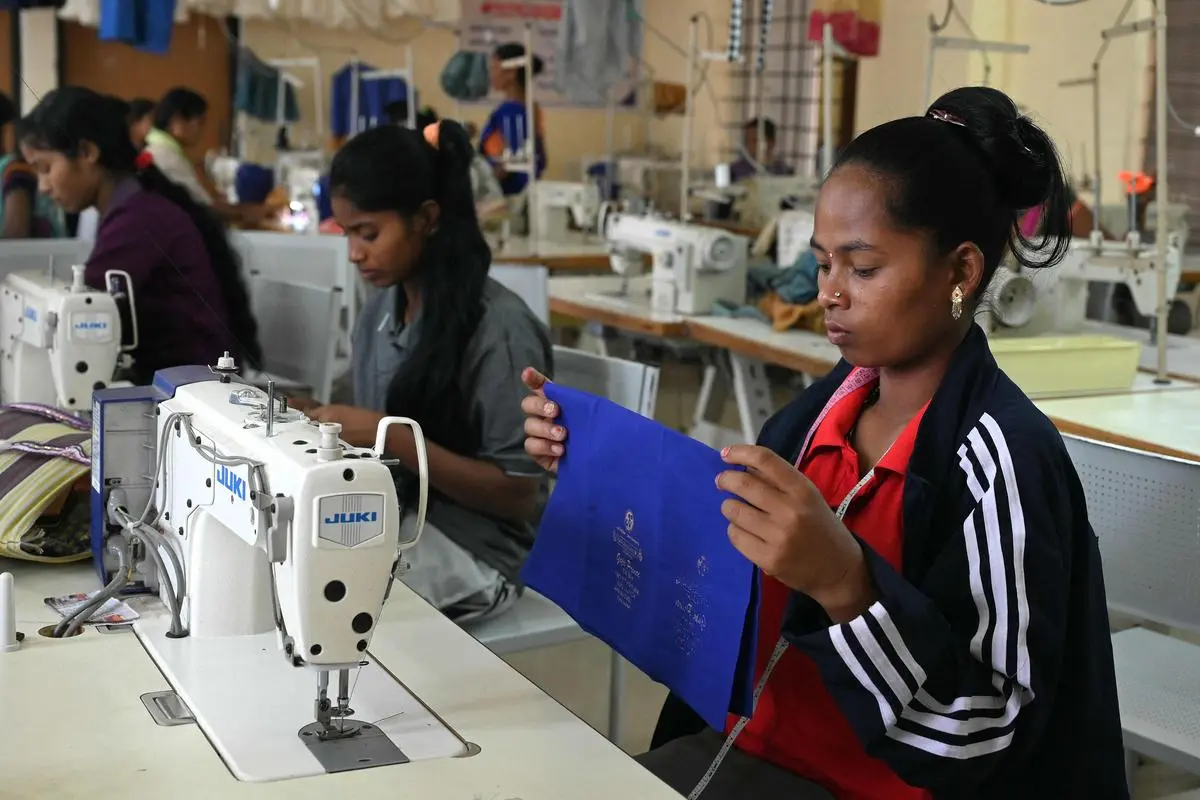
At a rehabilitation centre for surrendered Maoists in Dantewada in Chhattisgarh’s Bastar division, on March 30, 2026. The Central government has placed great emphasis on getting Maoists to surrender and providing them with skills training for life in the mainstream.
| Photo Credit:
SHAMMI MEHRA/AFP
The NIA maintains that its investigation relies on digital evidence such as emails, documents, and correspondence that allegedly link individuals to organisational efforts. Here too, the evidentiary framework signals a shift—from material evidence of violence to documentary traces of association.
Internal conflict in Maoist movement
Developments within the Maoist movement itself suggest a parallel pattern. A January 2026 press note issued by the CPI (Maoist)’s North Coordination Committee refers to attempts to build organisational structures in north India and warns of “parallel centres” operating outside the party’s control.
The note also reflects an internal ideological conflict over the future direction of the movement. It accuses dissenting factions of seeking to “make the party open and legal” and thereby moving away from underground armed struggle towards a more public, reform-oriented approach. The note also exposes what the party calls an anti-party underground network in north India, urging cadres to reject the “liquidationist” camp.
While these claims are not independently verifiable and are embedded in internal factional disputes, they nonetheless indicate that the question of whether—and how—to operate in urban spaces is being actively debated within the movement itself.
In many States, notices issued in connection with Maoist-linked cases have raised questions about the limits of lawful association.
For Haragopal, the implications are both legal and political. When dissent, ideology, and insurgency begin to collapse into each other, the consequences are not only legal—they are deeply political.
This shift is also visible in official rhetoric. Amit Shah has framed Maoism as an ideological threat, while Narendra Modi has referred to Maoists as both “gun-wielding” and “pen-wielding,” describing the later as more lethal. Both of them have frequently referred to “urban naxals” to characterise alleged sympathisers within civil society, academia, and activism, suggesting a broader network that, in their view, legitimises or sustains Maoist ideology in non-violent spaces.
Such formulations expand the scope of the conflict from armed insurgency to ideological influence. And this expansion is not limited to security agencies or political rhetoric. It is also visible within academic institutions. In September 2025, Yogesh Singh, Vice Chancellor of Delhi University, delivered a speech titled “Naxal Mukt Bharat: Why Campuses are the Targets?” at an event organised by the Dr Syama Prasad Mookerjee Research Foundation in partnership with the Association of Indian Universities at Vigyan Bhawan in Delhi.
In his address, Singh argued that naxalism no longer operates primarily from forests but has shifted into universities and cities. He warned of the rise of what he described as “urban naxals” within academia—individuals who “hide behind intellectual masks” and “indoctrinate” students under the guise of teaching.
Referring to earlier campus controversies such as the 2016 Jawaharlal Nehru University sedition case, Singh questioned whether universities had become sites where “anti-national” ideas were being cultivated. He also cited cases such as the Bhima Koregaon investigations and criticised student movements, including Pinjra Tod, describing them as expressions of “ingratitude” and misplaced rebellion.
The remarks drew criticism from sections of Delhi University’s faculty and student body, with some describing them as “regressive” and reflective of a growing attempt to conflate academic dissent with ideological subversion.
On the ground, the Maoist movement has weakened significantly. Leadership losses, sustained counter-insurgency operations, and surrenders have disrupted its organisational capacity. Yet, analysts warn against equating organisational decline with resolution. As Haragopal reiterated, the movement drew its strength from structural inequalities, and if those conditions persist, the question does not disappear.
From forests to cities
Taken together, these developments suggest not a simple conclusion but a reconfiguration. From forests to cities, from armed struggle to ideological scrutiny, the terrain of conflict has shifted. Although this does not necessarily indicate resurgence, it does suggest that the conflict is no longer confined to geography—it is increasingly about how ideas are interpreted, attributed, and acted upon. Even if the government’s claim of eliminating Maoism holds in a narrow, military sense, what is unfolding suggests not closure but redefinition.
Incidentally, recent surrenders by senior Maoist figures point to a churning within the armed movement itself. High-ranking leaders such as Thippiri Tirupati and Malla Raji Reddy, along with others including Mallojula Venugopal Rao, have laid down arms after spending decades underground. Many of them have notably stated that they have only changed their strategy and would continue their struggle through constitutional and democratic means.
On the other hand, several tribal activists, including Raghu Midiyami, Sunita Potam, and Sarju Tekam, have been arrested in separate operations since 2021 across Chhattisgarh and adjoining regions on allegations of links with the banned CPI (Maoist).
On March 25, 2026, Lingaraj Azad and Suresh Sangram were arrested in Bhawanipatna in Odisha’s Kalahandi district. They have been closely involved in defending the rights of rural and Adivasi communities over jal, jangal, and zameen (water, forests, and land) and are known for their efforts towards the effective implementation of the Panchayats Extension to Scheduled Areas Act and the Forest Rights Act. All are reported to have opposed powerful mining interests to protect forest- and farm-based livelihoods, placing their struggles at odds with influential corporate and administrative alignments.
Many such activists have been charged under the Unlawful Activities (Prevention) Act (UAPA), along with provisions of the Bharatiya Nyaya Sanhita related to criminal conspiracy, sedition, and support to unlawful organisations.
Civil liberties groups have challenged these arrests, arguing that the cases rely largely on alleged associations, and raised concerns about the widening use of anti-terror laws against democratic dissent.
The question is no longer only whether Maoism has been defeated. It is whether, in the absence of the gun, the idea itself is being engaged, or contained. In that shift lies a broader test, not only of economic development and security but of constitutional democracy itself.
Also Read | The surrender within
Also Read | Religion joins counterinsurgency in Chhattisgarh, as due process is set aside