

Health Update: Health Update: The Rise of Homes Designed as Wellness Retreats – What Experts Say– What Experts Say.
Kelvins. If you’re anything like me, you probably haven’t thought about them since high school chemistry. Lately, though, they’ve become one of the more hotly debated measurements in interior design.
Kelvins measure the color temperature of light, which is a technical way of saying they’re key to whether a room feels calming or slightly unsettling. The wrong Kelvin temperature can suddenly give your bedroom the vibe of a hospital corridor. Warmer Kelvin temperatures cue relaxation. Cooler ones sharpen alertness. Interior designers now talk about Kelvins the way chefs talk about salt: invisible when it’s right, immediately obvious when it’s not.
That focus on light reflects a broader shift in San Diego homes—people are worried less about how spaces look and more about how they hold you over the course of a day. Design decisions now favor what fades into the background and silently improves daily life. And once you start thinking that way, it’s hard not to apply the same logic to everything else in the house.
My husband and I felt that impulse firsthand last year while shopping for a mattress. We spent multiple weekends wandering the showrooms at Westfield UTC, lying on beds in our outside clothes, asking questions about spinal alignment, breathability, and temperature regulation. We debated coils versus foam, read studies on sleep stages and thermoregulation, and compared notes in the parking lot like two people deciding whether to buy a house.
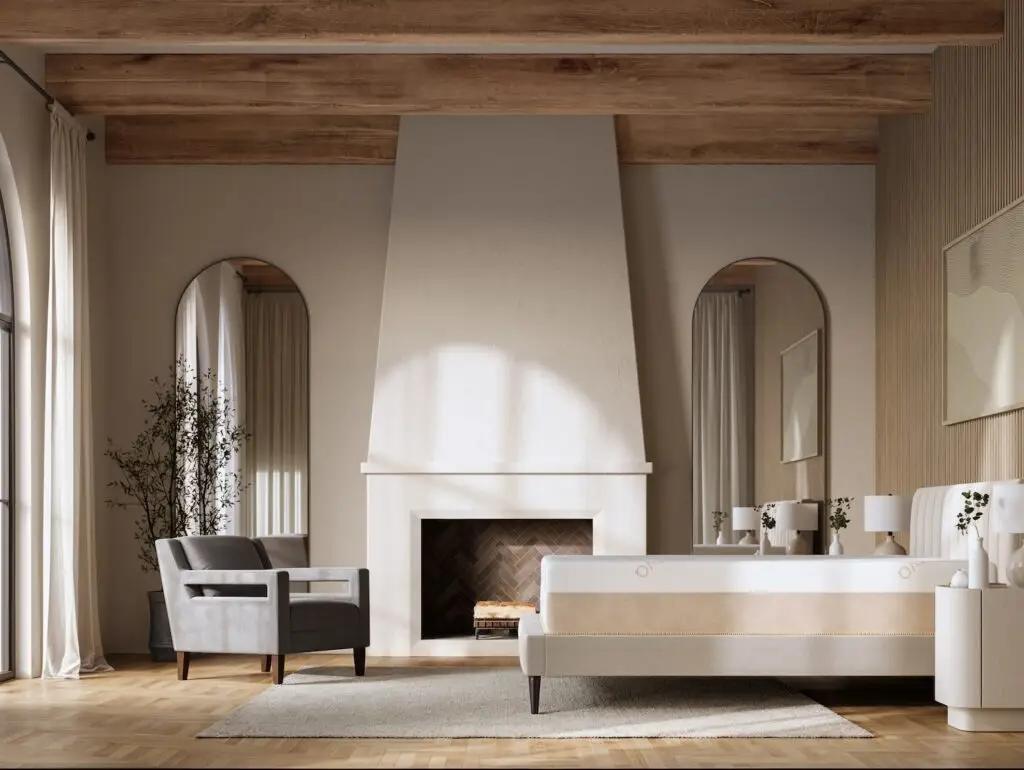
Eventually, we chose the Saatva Contour—a name that sounds more like a luxury sedan than something you sleep on. That felt fitting, given the amount of deliberation we put into it. We picked it for its spinal support and ability to dissipate heat through the night, two factors consistently tied to deeper, less fragmented sleep. At the time, it felt overly academic, but it made its case experientially: We experience fewer disruptions at night and wake with the unexpected sense of being genuinely rested.
Eventually, I realized that our search had been less about shopping for comfort and more about shopping for recovery.
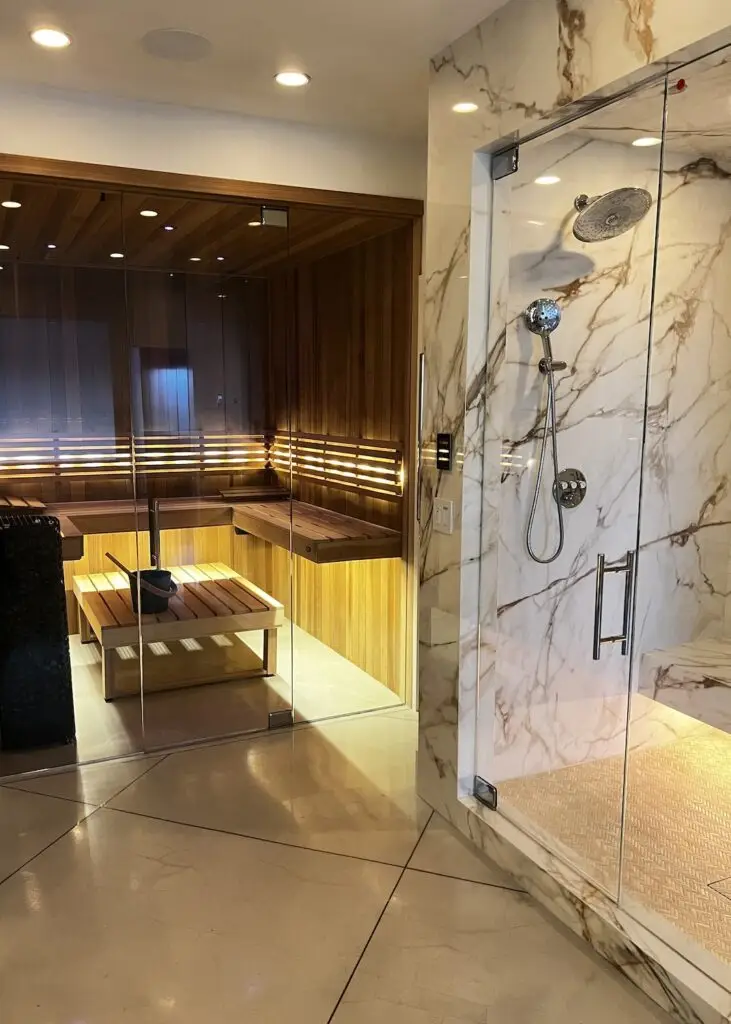
Now when I wake up, I usually head straight to our little sauna, which sounds much more impressive than it actually is. It sits just outside the house, tucked into a narrow corner of our small backyard. Technically, it’s meant to live indoors, but we adapted it for outdoor use because that was the only place it would fit. The door closes with a soft thud; the scent of cedar blooms as the heat sets in. Inside, there’s a single bench and barely room to stretch my legs. It isn’t glamorous, but the science on sauna use is compelling: Regular heat exposure has been linked to improved cardiovascular health, reduced inflammation, and more efficient recovery via circulation and the nervous system. To me, its real value is something simpler—a few quiet minutes that are mine before the day and its noise begin to make their claims on me.
For a long time, luxury meant square footage, statement kitchens, and bonus rooms designed to impress people who don’t actually live there. Homeowners are making different choices today.
“These days, the questions my clients ask are, ‘Will I actually use this?’” says James Denton, senior architectural and interior designer and owner of James Denton Design. “‘Will it help me sleep better? Will it simplify my routines?’”
Interior designer Maegan Ayukonchong, owner of M. Swabb Interior Design Collective, sees that shift in nearly every project. Clients want layouts that reduce friction, storage that actually functions, and spaces that feel uncrowded. “It’s less about filling rooms,” she says, “and more about designing homes that support how people want to live.”
That recalibration accelerated during the pandemic, when homes were suddenly forced to perform at full capacity. Living rooms became offices, kitchens became classrooms, closets became refuges for phone sessions with your therapist. Denton says he noticed clients suddenly confronting how their homes actually functioned.
Ashley Chavez, a realtor with Compass Real Estate in San Diego, watched the same awareness show up in buyer behavior. “After spending so much uninterrupted time at home, buyers started noticing things they used to overlook,” she says, like the amount of natural light, how rooms flow into one another, and whether spaces feel peaceful or overstimulating.
Health conversations widened beyond workouts to include sleep, stress, and recovery, areas where the home environment plays a defining role. Chavez notes that buyers may not use the word “wellness,” but their priorities are clear. “Clients comment on how a home feels,” she says. “They notice whether bedrooms are quiet, whether the layout supports their routines without constant adjustment.”
The results show up in what people choose to build and invest in. Spare bedrooms become infrared saunas. Massage chairs edge out media consoles. Red light panels replace bar carts, delivering low-level light that supports cellular repair, muscle recovery, skin health, and circadian signaling (it’s worth noting that cocktails pretty much do the opposite of all that). Rooms once dedicated to entertaining are reimagined for restoration.
Clement Qaqish drops into a chaise in the living room of his Solana Beach home with the familiarity of someone used to managing fatigue. A maxillofacial surgeon by day and an endurance athlete by choice, he’s completed 14 full Ironman races and a dozen Half Ironmans. “When you’re training this much, recovery isn’t optional,” Qaqish says. “And even if you’re not doing Ironmans, your body still has to recover—from stress, from sitting, from whatever you ask of it.”
Normatec compression boots sit coiled on the floor beside him—long black sleeves that look part medical device, part sci-fi costume. He slides his feet in one at a time, zipping them up to the thighs. They inflate, with air pulsing upward in slow waves, rhythmically compressing his legs to push blood and lymphatic fluid back toward his heart. The soft mechanical whir fills the room. The goal is faster recovery and less soreness after heavy training. “Most people wait until [their legs are] broken,” he says, smiling slightly. “I’d rather not get there.”
When Qaqish and his wife, Gabby Galleo, a biotech executive, moved into the house, those priorities shaped the abode early on. “The first thing I bought for our home was an infrared sauna for Clem’s birthday,” Galleo says. “Once we had the space, it just made sense.”
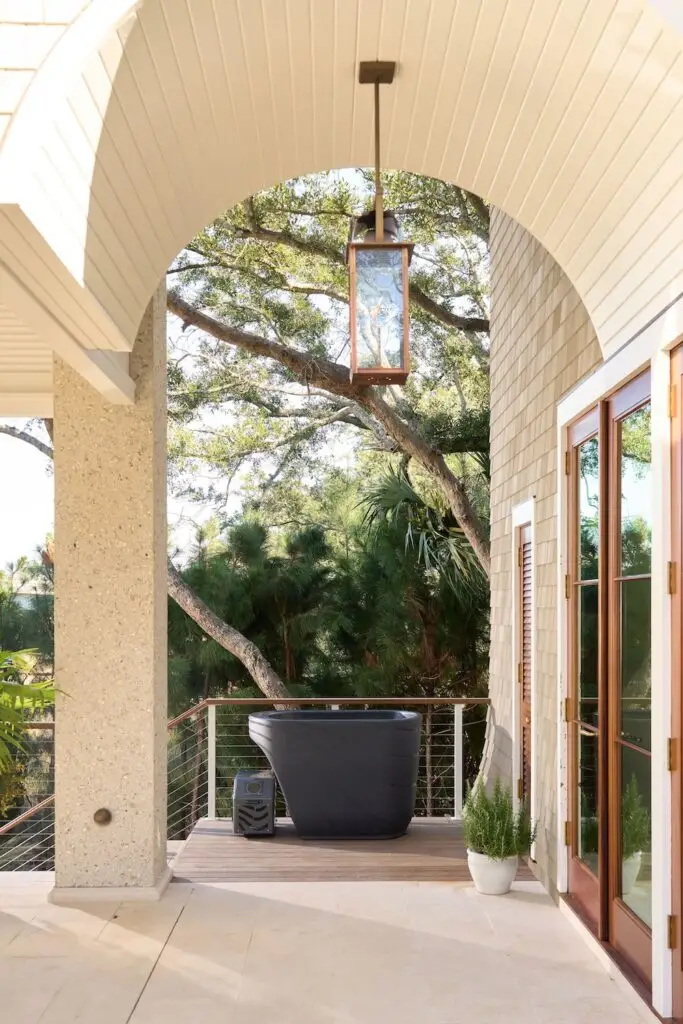
From there, the rest followed naturally: a Nordic Wave Cold Plunge on the patio (to support nervous-system resilience and curb inflammation), compression boots by the couch, a red light mask on the armoire (to promote cellular repair and skin tone). Tools more commonly found in a training facility or high-tech spa are folded into the feng shui of the home. With all the tech scattered around the house, “it’s easier to do it than to avoid it,” Galleo says. “You’re just moving through your day, and it’s there. We didn’t want it to feel like a production. If it required driving somewhere or scheduling around it, we knew we wouldn’t do it consistently.”
While fancy equipment certainly helps you unwind after a hard workout, most of the changes that make a home extra restful can be accomplished without hiring a contractor or taking out a loan for the latest technology.
“Editing is the new flex,” Ayukonchong says. “The most impactful shifts are often the simplest ones: Add live plants for a fresh, calming boost; reorganize storage; replace heavy window treatments with breathable linens to soften natural light.”
In general, lighting is a low-cost approach to achieve an outsized impact. Denton recommends “warmer tones in bedrooms for relaxation, cooler bulbs in workspaces for focus, and dimmers that let rooms shift with the day,” (gotta get those Kelvins right!).
From there, he turns to details most of us overlook, even as research increasingly shows how powerfully they shape how we think and feel. “Start with acoustics. They are key to reducing stress and mental fatigue,” he says. According to research from the University of California, Davis, chronic background noise raises stress hormones and cognitive fatigue, which is why oversized rugs and soft window treatments that dampen sound can matter just as much as aesthetics.
And you can double up on the boons from your houseplants by intentionally placing mirrors near or across from them. Studies on biophilic design link visual exposure to greenery—even if it’s reflected—with improved mood and lower stress, while blank walls offer no such benefit.
Air quality is the final layer. Indoor air can be more polluted than outdoor air, and poor ventilation has been associated with headaches, brain fog, and disrupted sleep. Simple upgrades, like higher-grade HVAC filters or a modest air purifier, address a problem quietly and persistently affects many homes.
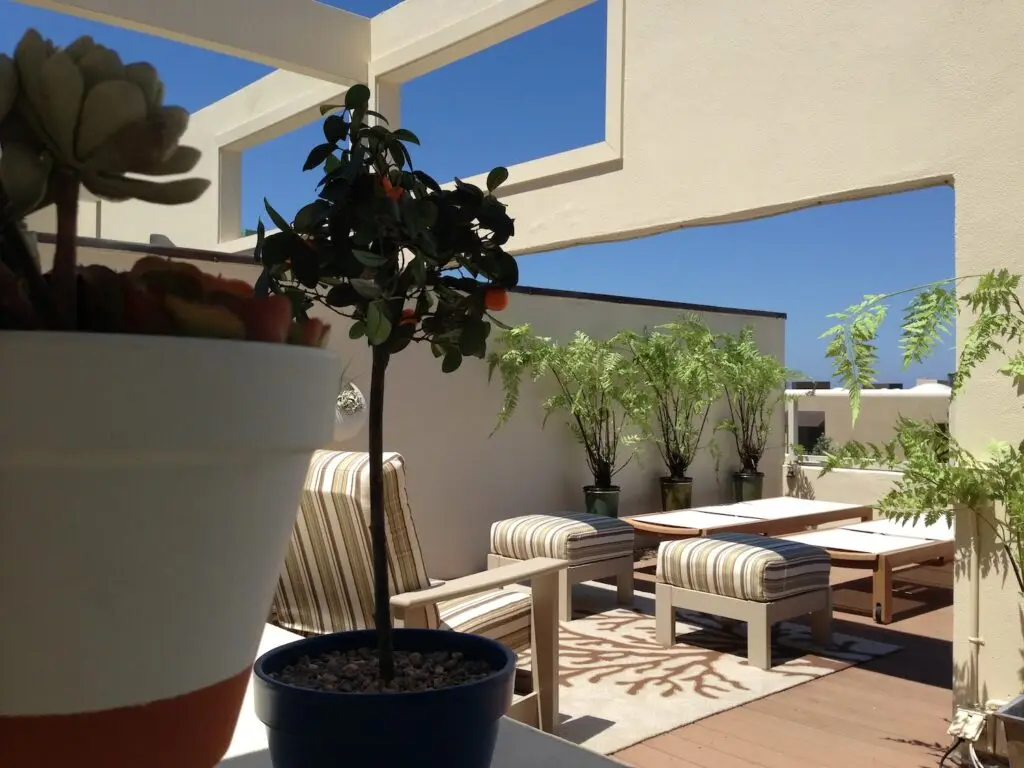
Even simply designating one chair for reading, one corner for stretching, or one surface for tea or journaling can reshape how a home functions. Research in environmental psychology suggests that context-dependent cues help the brain switch states more efficiently, making it easier to relax or focus when an activity is consistently paired with a specific place. Over time, the space itself becomes a signal, reducing decision fatigue and allowing the nervous system to settle more quickly.
Dr. Jenn Chang, a physical therapist, yoga therapist, and founder of The Movement Mechanic PT, walks me through her small Carmel Valley condo. “I didn’t have room to include things casually,” she says. “Everything had to earn its place.”
In her home office, where she sees clients, a yoga wall with mounted bars and straps that support alignment and traction anchors one side of the room. “It feels like a bonus,” she says. “I can use it with patients, but it’s also there for my own practice.”
In the garage, an infrared sauna sits snugly against the wall. Despite the condo’s limited storage, Chang is careful to keep the area around it uncluttered. “If the space starts filling up, the sauna stops feeling inviting,” she explains. “I notice that right away.”
PARTNER CONTENT

James Beard Finalist Tara Monsod Debuts “Date Night” at L…

Inside SeaWorld San Diego’s Mission of Education and Cons…
Aerial yoga hammocks hang from the ceiling for her kids (with safety mats below). A compact Swedish ladder supports dead hangs and calisthenics and doubles as something her children climb on. A vibrating foam roller and a Theragun are stored nearby. “The easier it is to use and put away,” Chang says, “the more likely it becomes part of your day.”
For a long time, I resisted getting a cold plunge myself. It felt unnecessary, even a little excessive. But after spending time with people who treated it as just another part of the house, I eventually purchased one, setting it up on my patio, steps away from the sauna that shields me from notifications and the mattress that we spent so long researching. All together, they offer me permission to do less, move a little slower, incorporate recovery into my everyday life. In a culture that never stops asking what’s next, that feels like the most radical thing.