

Breaking Update: Here’s a clear explanation of the latest developments related to Breaking News:Transporter-16 Sends 119 Payloads to Orbit– What Just Happened and why it matters right now.
The latest cargo train to orbit has left the station. SpaceX’s Transporter-16 mission lifted off from Vandenberg Space Force Base this morning, bringing 119 payloads to orbit on the company’s first rideshare mission of 2026.
More information will trickle out over the coming hours and days as payloads begin operations, but here’s what we know about the manifest so far:
Eyes in the skies: Many of the satellites and payloads on board T-16 are joining growing EO constellations, including:
- Eight sats from OHB Italia will add to the company’s IRIDE EO constellation;
- Six SAR sats from ICEYE, including dedicated satellites for undisclosed customers;
- Two Satellogic Newsat Mark-V high-res EO sats;
- Two EO sats built by AAC Clyde Space;
- One sat from UK-based SatVu, carrying the company’s mid-wave infrared EO payload to monitor heat-signatures;
- One Satlantis EO sat designed for submeter resolution.
Seein’ ain’t believin’: The future isn’t all visual, however, and T-16 is also bringing up a pool of sats focused on RF sensing, with many payloads aiming to provide better situational awareness over the oceans.
- Spire Global launched eight sats to track maritime, aviation and weather activity from orbit;
- Sierra Nevada Corporation launched three sats aimed at detecting dark vessels and GPS jammers from LEO;
- Unseenlabs launched its 20th sat focused on maritime domain awareness;
- The Norwegian Space Agency and Norway-based SFL Missions Inc. flew one sat to expand the country’s maritime situational awareness network.
Can you hear me now? Communications technologies on orbit are rapidly advancing, and the launch brought a handful of payloads pushing the technological envelope on comms.
- The Hellenic Space Agency launched three sats to advance laser comms: PeakSat and ERMIS-3—both flying an Atlas-1 terminal from Astrolight—and OptiSat, flying a TESAT SCOT20 laser comms terminal;
- Japanese startup ArkEdge Space launched a demo to test maritime communications;
- Taiwanese startup Tron Future Tech sent its second cubesat to orbit to demonstrate broadband comms capabilities;
- A consortium of Romanian institutions sent up one sat to demonstrate secure space-to-ground communications.
Piggybacking: As with past Transporter rideshares, many of the payloads onboard are catching a secondary ride through the growing pool of orbital transfer vehicles and reentry spacecraft. These missions include:
- Momentus’ Vigoride-7 satellite, which is carrying 10 hosted payloads, demonstrating RPO operations, robotic in-space assembly hardware, as well as advanced comms and in-orbit computing tech.
- Exotrail’s Spacevan-002, which is carrying multiple payloads and satellites testing tech for atomic timing, deployable solar panels, in-orbit mobility, advanced robotics, and optical space links.
- K2 Space’s two-ton Gravitas satellite, equipped with a 20 kW electric thruster, which is hosting 12 undisclosed payloads from multiple customers, including the DoD.
- D-Orbit’s latest ION satellite, which will deploy four satellites in orbit, and host three payload demonstrations.
- Varda latest reentry vehicle, W-6.
Related Stories
The fundraise highlights not only the overwhelming demand among investors to fund orbital-data-center ventures, but also Starcloud’s unique position as a data-center startup with flight heritage.
Xona has spent the past few years building its ability to transmit PNT signals in LEO that are stronger, more accurate, and more secure than traditional GPS.
Spanish propulsion startup Arkadia Space just secured a stamp of approval from the European Investment Council.
NASA Administrator Jared Isaacman proposed a new plan for America’s human presence in LEO that left many lawmakers scratching their heads.
More Stories
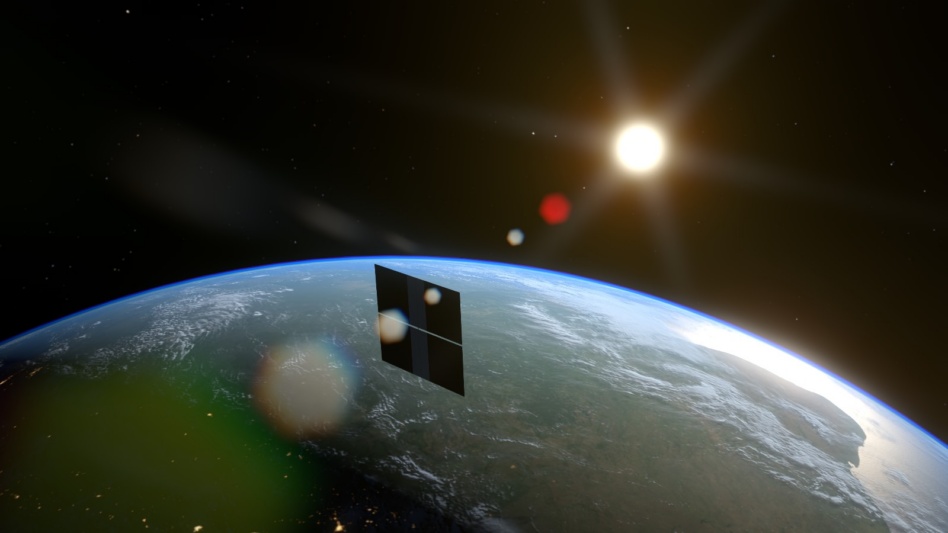
As investors are throwing their weight behind orbital data centers, startup Starcloud today announced a $170M Series A at a $1.1B valuation—just over two years after the company’s founding.
The round for the Redmond, WA company was split into two tranches:
First movers: The fundraise highlights not only the overwhelming demand among investors to fund orbital-data-center ventures, but also Starcloud’s unique position as a data-center startup with flight heritage.
Keep reading