


Case Explained:This article breaks down the legal background, charges, and implications of Case Explained: QLS and Bar Association caution proposed youth crime laws won’t improve safety – Proctor – Legal Perspective
Queensland’s peak legal bodies have cautioned that proposed Adult Crime Adult Time reforms will do little to improve community safety, telling a public inquiry that the new laws don’t account for children’s vulnerability and cognitive development.
The Queensland Law Society (QLS) and Bar Association of Queensland (BAQ) appeared before the Justice, Integrity and Community Safety Committee reviewing the Expanding Adult Crime, Adult Time and Taking a Strong Stance on Drugs and Anti-Social Behaviour Amendment Bill.
Both organisations reiterated their long‑held opposition to widening the adult‑crime sentencing framework for young offenders.
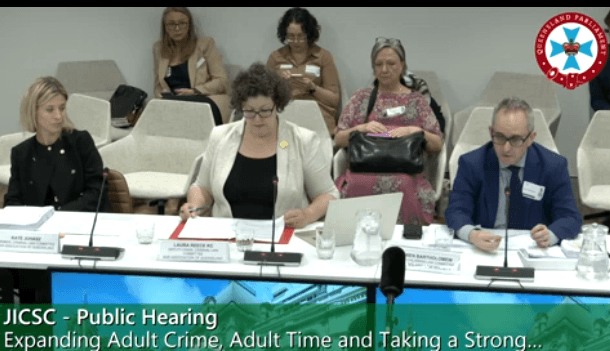
Their evidence on Friday came just hours after the Queensland Government publicly released long‑awaited reports from the Adult Crime Adult Time expert panel, which recommended introducing the new laws.
The release of the reports on the morning of the hearing, the legal bodies said, severely restricted Parliament’s and the public’s ability to fully scrutinise the proposed changes.
QLS Children’s Law Committee chair Damian Bartholomew, who appeared on the Society’s behalf with First Nations Legal Policy Committee co-chair Kristen Hodge, opened his remarks by noting the “significant delay” in publishing the expert panel’s report.
“Without the timely public release of these reports, the parliamentary review process is hindered, and the appropriateness of the proposed amendments are unable to be properly scrutinised by the community,” he said.

Mr Bartholomew said QLS had consistently opposed expanding the Adult Crime, Adult Time regime.
“The Society repeats its position that children must be treated differently to adults due to their age, vulnerability and cognitive development,” he said.
He said established principles of youth justice – including diminished culpability and increased prospects for rehabilitation – should continue to inform sentencing.
“Children whose crimes reflect transient immaturity should not be subject to life imprisonment with minimum parole periods,” he said.
Mr Bartholomew also told the committee that existing laws already provided police with sufficient powers to address anti‑social behaviour in proposed Designated Business and Community Precincts.
Committee members questioned QLS several times about whether it had consulted victims of crime.
“In the preparation of our report, we consult with our members and with our committees,” Mr Bartholomew said.
“Our committees are made up of lawyers from across the state, and those persons have represented many victims in the course of their work, so they are advocates for victims in the work that they undertake, and all of our committees were indeed consulted in relation to our submission.”
BAQ Criminal Law Committee Deputy Chair Laura Reece KC told the inquiry that the Bar had previously raised concerns about the scheme and opposed expanding it further.
“The addition of further offences represents a breach of principles based on well‑established evidence about the developmental and neurological differences between children and adults,” she said.
Ms Reece said those differences had long been recognised as reducing children’s moral culpability and justifying different sentencing approaches, similar to considerations applied to offenders with severe mental illness.
She noted children who frequently appeared in the justice system were among the most vulnerable in the state, with Youth Justice data confirming many experienced significant disadvantage.
Ms Reece also raised concerns about the expert panel report released this morning, saying it did not clearly set out the advice provided to Cabinet.
“It appears to be a report describing a process, rather than disclosing the advice itself,” she said. “To that extent, there remains an element that is unknown.”
The QLS submission on the laws can be read here: Expanding Adult Crime, Adult Time and Taking a Strong Stance on Drugs and Anti-Social Behaviour Amen – Queensland Law Society