


Health Update: Health Update: Why the wellness industry needs a new operating system – What Experts Say– What Experts Say.
Alina M Hernandez and Nigel Franklyn on why longevity now depends on systems that shape behavior, not just services.
Longevity is no longer being shaped primarily in research labs, biomedical formats or pharmaceutical pipelines – or even in Longevity clinics or medical wellness. It is being lived long before diagnosis, prescription, or clinical intervention. It is shaped upstream – in daily behaviors, environments, habits, and social contexts repeated over decades set up even before the conception of life.
Lifestyle is now the front line of longevity.
Prevention, therefore, is increasingly environmental and systemic. It depends on whether people live and respond in contexts that makes healthy behavior repeatable – not merely available.
This is where the current structural tension begins.
Prevention infrastructure – without architecture
The modern Wellness industry has evolved from the Spa industry, and it has historically been developed to deliver prescribed general and repeatable experience, services, destinations, and moments of relief, escape or enhancements. But lifestyle-based longevity requires continuity over years and decades. The wellness industry is now expected, and even responsible, for outcomes, it was never consciously architected to provide function as longitudinal prevention infrastructure.
Lifestyle-based longevity requires continuity over years, behavioral reinforcement, adaptive environments, guidance without overwhelm, and structures that reduce friction.
As the WHO emphasized in the Ottawa Charter for Health Promotion, health is created in the settings of everyday life – work and play.
Yet much of wellness still operates as episodic enhancement and curated environment that fails to transition the guest into real life once they leave the space. The result is an industry responsible for outcomes it was not designed to deliver.
A reframe for traditional OS
An operating system determines how value is created, repeated, and sustained.
It governs what gets prioritized; scales; breaks under complexity; and humans can realistically maintain.
In technology, an OS is invisible yet critical and decisive. It shapes interoperability, efficiency, and user experience. In “human systems,” it shapes behavior. If longevity now depends on lifestyle, then wellness is no longer a collection of services. It is de facto infrastructure.
And infrastructure requires an operating system. The paradox is that it is unrealistic to expect sustained health span or lifelong health from systems designed for episodic experiences.
WHO’s Global Action Plan on Physical Activity (GAPPA) calls explicitly for a paradigm shift toward systems-based approaches that make healthy behaviours easier across environments. Longevity is unlimited by scientific knowledge. It is limited by systems that fail to support human behavior, over time.
The limits of Legacy Wellness OS
Legacy Wellness, as defined by the authors, refers to spa and wellness models built around episodic experiences – treatments, programs, and destinations – designed for short-term relief or enhancement rather than sustained behavioral change over time – and their operating models lack the necessary functionality to support continuous behavioral infrastructure across the lifespan.
This distinction matters because the traditional model organizes wellness around services delivered in specialized environments, where value is created through professional expertise, curated experiences, and temporary immersion in optimized settings. These environments can be primed to be transformative, but unstructured to shift belief and sustain behavior into everyday life.
The wellness development perspective sees the limitation unrelated to a concept, but the system used to run it! The legacy model is inherently time-bound, place-bound, expert-mediated, and functionally segmented – and these characteristics are less suited to the demands of lifestyle-based longevity – dependent on continuity across the ecosystem.
In practice, this creates a structural gap because programs start and end – human life ongoing. Interventions are episodic – habits are continuous. Destinations are occasional – environments are constant.
Informational regulation – the bridge
The central constraint in lifestyle-based longevity or wellness is no longer molecular biology. It is cognitive load. Too many inputs lead to confusion; too many protocols lead to abandonment; and too many decisions dead-end in paralysis.
An adherence platform is more than an operational analytics dashboard. It functions as a continuity layer between clinical insight and daily behavior – decreasing data exposure to manage decisions well. It sequences and prioritizes protocols rather than just adding. It nudges and curates the built environment with seamless routines so that health-supporting behaviors become the path of least resistance.
A journey sample – for new OS
A 47-year-old in a longevity program sleeps poorly, faces a high-stress workday, and shows a glucose spike.
Instead of prescribing actions, the OS responds with behavioural nudges:
“Looks like recovery might matter today – how about an easier movement option instead of your usual plan?”
Before meetings: “Stress tends to peak around 2pm. What’s one small reset that works for you – breathing, a short walk, or music?”
After lunch: “Your glucose rose – what do you think works better, a 5-minute walk now or a lighter dinner later?”
In the evening: “What would make tonight feel restorative?”
An SOP primer
At arrival, staff ask one anchoring “intake” question: “What would feeling well look like in two days’ time?”
The answer sets the guest’s “wellness intention,” guiding subtle defaults – sleep-supportive room cues, choice-based prompts (“movement or stillness?”), menus framed around goals, and a brief daily check-in to reinforce progress.
The hotel orchestrates behavior through environment, moving away from prescription.
The above two examples protect and shape sustained outcomes while curating healthier defaults through environment, timing, and choice architecture:
- Orchestrating inputs
- Tracking change states with embedded self-efficacy outputs
- By assessing emotional impact and narrative coherence
- Functioning seamlessly across the physical and digital environment
The blended category: a design response
The above illustrates that wellness environments must evolve from siloed categories into an integrated collection of categories. This is a design shift as a response to complexity, and an answer to fragmentation.
The “blended category,” coined by the authors, is an omni-channel architecture perspective providing seamless transitions between digital and physical environments, input and output adjusting in real-time – supporting human and technological co-orchestration.
Wellness OS that mirrors human and systemic shifts
The Global Wellness Institute estimates the wellness economy in the trillions and growing – but its sustained growth may be stunted downstream by its lack of architectural maturity. This is because the industry has expanded in size faster than it has evolved in systems design, and the gap between scientific potential and human adherence is widening.
Longevity science will continue to accelerate. But unless the environments in which people practice this are structured to support consistent behavior, the majority of potential healthspan gains will remain limited.
A new Wellness Operating System must therefore be designed as a continuous feedback loop including human cognition, limited attention, emotional bandwidth, social context, and identity formation.
The future of longevity infrastructure needs to be built on more than measurement and prescription. It needs OS that mediates between information and action – intelligently reducing cognitive load while allowing individual sustained autonomy. The technical architecture matters, but what defines success is simple: continuity without overwhelm – where the net winner is the individual, and an industry that is ready for its next paradigm shift.
About Alina M Hernandez
Alina M Hernandez has spent her career pioneering the intersection of innovation, wellness, and design. As the Founder of the Wellness Innovation Hub, she brings a multi-disciplinary lens to the creation of transformative wellness experiences. Her mission is to reshape the future of wellness by blending cutting-edge design thinking with holistic healing traditions to foster resilience, healthspan and thriving communities.
Recognized as one of GoWell Magazine’s “25 Leading Women in Wellness,” Alina is a Mayo Clinic Certified Health Coach, acclaimed speaker, published author and a sought-after industry innovator. Her expertise spans Translational Medicine, Psychological Development Theories, Somatic Movement and Service/Experience Design – tools she uses to reimagine the guest journey across wellness and hospitality.
She is Partner and Innovation Director of the Touchless Wellness Association, serves on the advisory board for the Gharieni Group and co-chairs the Mental Wellness Initiative at the Global Wellness Institute. A global voice in the wellness field, she has spoken at leading forums including the Forbes Travel Guide, Medical Wellness Congress, SpaLife and the Longevity Med Summit.
Alina is a co-author of the white paper Embracing Tomorrow, Today: The Power of Innovation Through Touchless Wellness, which explores Wellness 3.0 and the digital transformation of health. Her design thinking expertise empowers organizations to future-proof their services through rapid prototyping, human-centered experience design (CX, UX, EX, and UI) and evidence-based strategies for behavior change.
About Nigel Franklyn
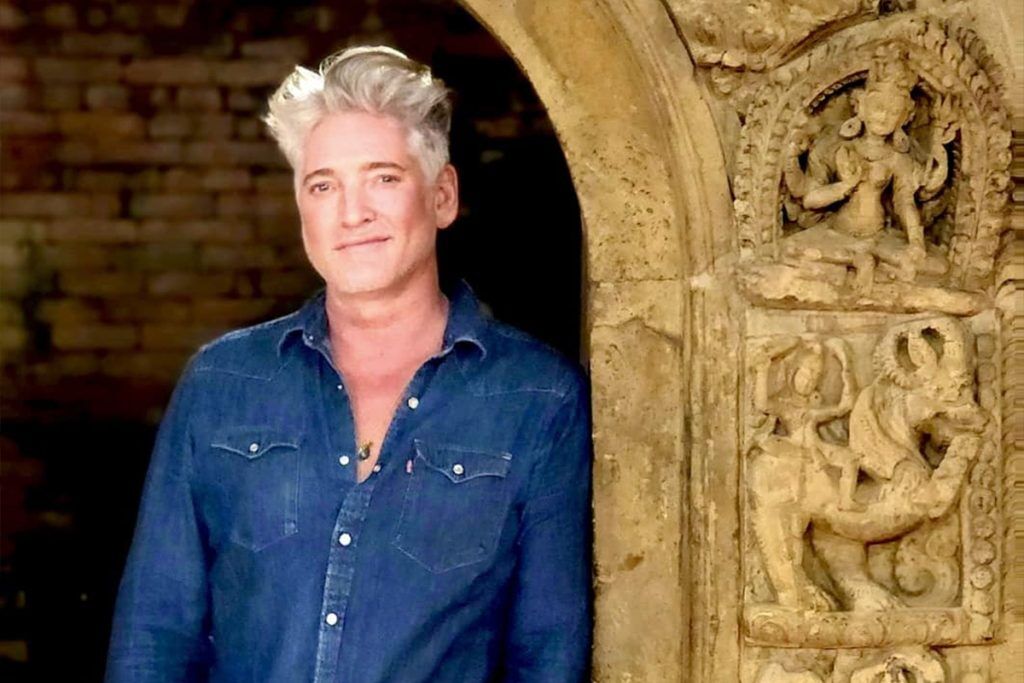
Dubbed “The Spa Whisperer”, Nigel Franklyn is a globally recognized, award-winning, strategic, creative wellness disrupter, and veteran of the global luxury wellness industry; he is renowned as a master of experiential design, and for his innovative approach to concept development, design and execution.
For over two decades, Nigel has been at the forefront of the global wellness evolution, helping shape the industry around the world. His expertise and creativity has been sought after by the world’s most iconic luxury properties, including Four Seasons, George V (Paris), The Siam (Bangkok), Aman Resorts, The Oberoi Group, Clinique La Prairie (Switzerland) and Minos Palace (Crete), among many others. His ability to create immersive, emotionally resonant spaces has made him a sought-after strategist and creative mind in the industry.
As a co-founder of MOSS of the ISLES and Moss Wellness Consultancy, Nigel has merged his decades of knowledge, artistic vision and deep-rooted passion for authentic, conscious wellness. His work goes beyond traditional spa experiences; he creates immersive, interactive environments and wellness adventures that not only balance cutting-edge science with holistic wisdom, but also creates exciting and unique wellness blueprints for the global industry.
Seeking to innovate in wellness design and sensory storytelling, Nigel aims to create destinations of transformation and optimized wellness elevation and evolution, where science meets soul, and where wellbeing becomes an art form. Nigel’s creative focus is to design spaces and experiences that inspire, heal, and transform, setting new standards for the future of luxury wellness worldwide. Nigel is also partner, board member and Creative Director of the Touchless Wellness.