

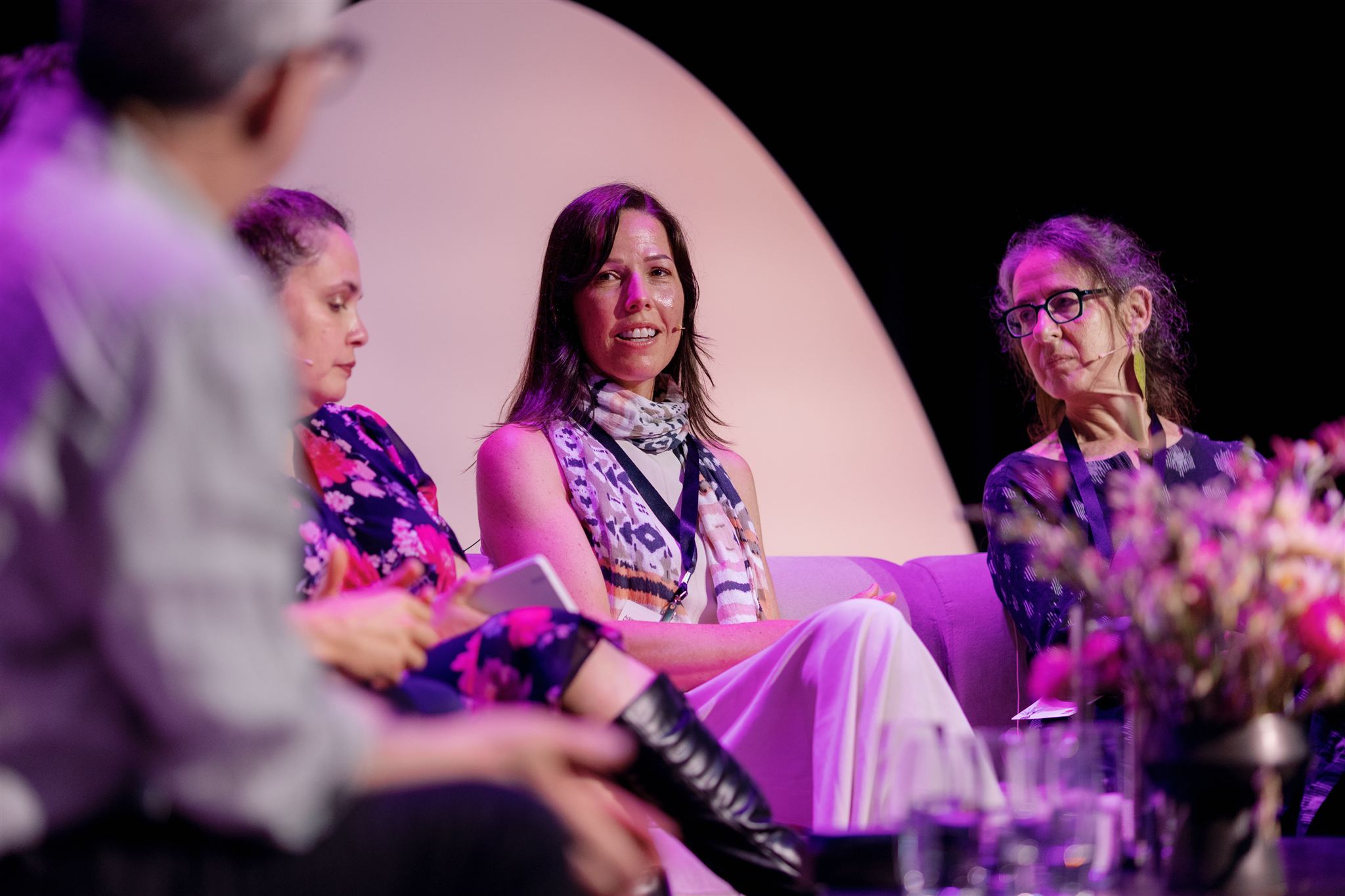
Linking environmental change, governance, and equity
Barnes engages directly with questions of equity and justice in climate adaptation, which are fundamental to SEI’s mission and the work of the CDA theme. Climate disasters disproportionately affect communities with limited access to resources, political influence, and decision-making power. At the same time, adaptation interventions — from infrastructure investments to ecosystem-based approaches — can produce uneven outcomes if social and ecological dynamics are not carefully considered.
Her work examines how governance arrangements and social structures shape who benefits from adaptation efforts, whose knowledge is recognised, and how trade-offs between environmental protection and social wellbeing are negotiated. By analysing social–ecological relationships — including how communities interact with and depend on ecosystems — her research contributes to understanding how adaptation strategies can support both ecological sustainability and social justice.
Barnes has led place-based studies in Australia, Hawaii, Kenya, the Philippines, Papua New Guinea, and elsewhere, working with coastal and rural communities, government agencies, and non-government organisations to examine how environmental change, governance, and social dynamics intersect in disaster and adaptation contexts. These projects emphasise the importance of grounding adaptation research in local ecological conditions while recognising broader institutional and political drivers.
From research to practice
Barnes is committed to impactful research that informs decision-making and supports real-world adaptation efforts. She prioritises co-producing knowledge with practitioners and communities to develop analytical approaches that can help decision-makers navigate uncertainty, complexity, and competing priorities.
By centring communities and integrating environmental and social data, her research aims to provide actionable insights that support more effective and equitable climate adaptation planning. In disaster contexts, this involves studying how coordination and information-sharing affect emergency response, how institutions learn from past events, and how social–ecological feedbacks shape recovery trajectories.
Looking ahead, her focus is on advancing multidisciplinary research that moves beyond short-term responses to discrete disasters, towards a deeper understanding of how social–ecological systems adapt and transform under climate pressure.
Climate Disaster and Adaptation theme leadership
As Theme Lead, Barnes aims to strengthen interdisciplinary collaboration across and beyond the University of Sydney, particularly by fostering stronger connections between environmental and life sciences, social sciences, and policy-relevant research on climate risk. Climate disaster and adaptation research spans environmental science, engineering, public health, social sciences, law, and the humanities; Barnes believes that bringing these perspectives together is essential for addressing the complexity of climate risk and designing responses that are environmentally sound and socially legitimate.
Barnes sees the Climate Disaster and Adaptation theme as a space that fosters collaboration, supports emerging research, and amplifies work that engages directly with communities and decision-makers. She looks forward to supporting the theme’s role in connecting researchers working on diverse aspects of adaptation – from nature-based solutions to disaster governance and community resilience – and advancing its work towards more just, inclusive, and effective responses to climate change.
Header image: A/Prof Barnes on the SEI panel at AdaptNSW 2025 (Elin Bandmann Photography)
Headshot: provided by A/Prof Barnes