


Market Update: We break down the business implications, market impact, and expert insights related to Market Update: The Emotional Economy Is Here And It’s Rewriting The Rules Of Value. Why Feelings Are Becoming Business Currency – Full Analysis.
The emotional economy marks a fundamental shift in how value is created and perceived. For decades, businesses competed on tangible advantages – price, performance, efficiency. Today, those advantages are increasingly short-lived, easily replicated, and often indistinguishable.
What remains difficult to copy, however, is how a product or service makes people feel.
At its core, the emotional economy is built on a simple but powerful idea: value is no longer defined by what companies produce, but by the emotional responses they evoke. Trust, reassurance, belonging, confidence – these are no longer abstract outcomes; they are strategic assets.
In this new framework, businesses are not just selling products or services. They are delivering emotional outcomes. A seamless app experience reduces anxiety. A well-designed product builds confidence. A brand story creates a sense of identity and connection. Each interaction carries emotional weight, and that weight increasingly determines loyalty, engagement, and long-term value.
What was once considered intangible is now measurable. Emotions are being tracked through user behaviour, sentiment analysis, and real-time feedback loops. They are being designed, tested, and optimised with the same precision once reserved for performance metrics.
This is not a soft evolution. It is a structural shift; one that signals a move away from an economy driven purely by efficiency, towards one shaped by human experience.
Why Emotion Has Become the New Currency
The rise of the emotional economy is not accidental; it is the result of a marketplace that has, in many ways, reached functional saturation.
In industry after industry, the gap between competing products has narrowed. Smartphones perform at similar speeds. Streaming platforms offer near-identical libraries. Electric vehicles are converging on comparable performance benchmarks. When everything works well, differentiation becomes harder to sustain.
In such an environment, rational decision-making gives way to emotional preference.
Consumers may compare features, but they choose based on how those features translate into experience. Does the product feel intuitive? Does the service inspire trust? Does the brand align with personal identity? These questions, often subconscious, now carry more weight than technical specifications.
Technology has accelerated this shift. As digital ecosystems reduce friction and increase access, they also raise expectations. Users are no longer satisfied with products that simply work; they expect interactions that feel effortless, reassuring, even enjoyable.
At the same time, the abundance of choice has made attention more fragile. In a crowded market, emotional resonance cuts through noise far more effectively than incremental improvements in performance.
The result is a new kind of competitive advantage – one rooted not in what a product does, but in how it is experienced. Emotion, once considered a byproduct of good design, has become the design itself.
And in doing so, it has quietly taken its place as the most powerful currency in modern business.
How Emotion Shapes Consumer Behaviour
Every interaction we have with a product carries an emotional imprint, whether we consciously recognise it or not. That imprint often determines whether we return, recommend, or walk away.
When a product feels confusing, slow, or unreliable, the response is immediate – frustration, doubt, even avoidance. On the other hand, when an experience feels seamless and intuitive, it creates a sense of ease and confidence. Over time, these repeated emotional cues form patterns, quietly shaping consumer behaviour.
This is where traditional assumptions begin to fall apart. Consumers do not make decisions based purely on logic; they use logic to justify decisions already influenced by emotion.
A user may compare prices or features, but what ultimately drives the choice is often less tangible. It is the comfort of familiarity, the reassurance of trust, or the subtle satisfaction of using something that simply “feels right.” Emotion acts as a compass – drawing people toward experiences that align with their expectations and pushing them away from those that don’t.
Crucially, these emotional responses are not fleeting. They compound. A single negative interaction may be forgiven, but repeated friction erodes trust quickly. Conversely, consistent positive experiences build what can only be described as emotional memory – an association that becomes far more powerful than any marketing message.
In this sense, consumer behaviour is no longer just a response to product quality; it is a response to emotional consistency. Businesses that understand this are not just designing products – they are shaping perception, loyalty, and long-term preference.

Inside the Design Revolution
If emotion is the outcome, design is the mechanism through which it is engineered.
This marks a quiet but profound shift in how products are conceived. Design is no longer limited to aesthetics or usability; it has become a strategic function that integrates psychology, empathy, and behavioural insight into the core of business decision-making.
At its best, emotionally intelligent design anticipates how users will feel at each stage of interaction. It reduces friction where anxiety might arise, introduces clarity where confusion could occur, and creates moments of delight where engagement can be strengthened. These are not incidental outcomes—they are deliberately constructed experiences.
Within teams, this shift is equally significant. When designers and product leaders actively consider emotional impact, the nature of problem-solving changes. Creativity becomes less about adding features and more about refining experience. Simplicity, clarity, and intuition begin to take precedence over complexity.
Positive emotional states – curiosity, confidence, even a sense of progress – play a direct role in shaping innovation. They open up space for experimentation and allow teams to approach challenges with greater flexibility. In contrast, environments driven purely by pressure or rigid efficiency often limit creative thinking.
What emerges from this approach is not just better design, but more meaningful products. Solutions that resonate not because they are technically superior, but because they align with how people think, feel, and behave.
In the emotional economy, design is no longer a supporting function. It is where value is created and where differentiation truly begins.
Industries Already Living the Emotional Economy
What was once a theoretical shift is now visible across industries. Businesses are no longer competing solely on function – they are competing on how their products are experienced.
Mobility: From Performance to Experience
Nowhere is this shift more evident than in mobility. For decades, vehicles were defined by engineering metrics – horsepower, torque, fuel efficiency. Today, while those factors still matter, they are no longer decisive.
What increasingly defines a vehicle is the experience it delivers. The quietness of the cabin, the intuitiveness of the interface, the responsiveness of driver assistance systems – each element contributes to a broader emotional state. Calm, control, confidence.
Thus, a car is no longer just a machine; it is an environment. And its value lies in how well it aligns with the driver’s state of mind.
Consumer Brands: Selling Identity, Not Just Products
In consumer markets, the shift is even more pronounced. Brands are no longer just competing for attention – they are competing for emotional relevance.
Take skincare and personal care. The appeal is no longer limited to results; it extends to ritual, self-care, and identity. The act of using a product becomes as important as the outcome itself.
Similarly, in premium consumer electronics, differentiation rarely comes from technical superiority alone. Design, texture, sound, and even silence are carefully crafted to create a sense of intimacy between the product and the user.
Consumers are not just buying functionality – they are buying how a product fits into their lives, and more importantly, how it reflects who they are.
Fintech: Turning Anxiety Into Confidence
Perhaps the most telling example comes from finance – an industry traditionally built on numbers, not emotion.
Yet modern fintech platforms have discovered that trust is not built through interest rates alone. It is built through experience. Real-time notifications, intuitive dashboards, clear language – these are small design choices, but they have a profound emotional impact.
They reduce uncertainty. They create a sense of control. They transform what was once a stressful interaction into a reassuring one.
In doing so, they redefine value – not as financial return alone, but as emotional clarity. Across these sectors, a clear pattern emerges. The products themselves may differ, but the underlying strategy is the same: design for emotion, not just function.
And in doing so, businesses are discovering that emotional engagement is not just a differentiator; it is a driver of long-term growth.
The Hard Economics of Emotion
For a long time, emotion in business was treated as intangible – important, but difficult to quantify. That perception is now changing.
Data is beginning to show that emotional engagement has direct, measurable economic impact.
Research indicates that customers who feel emotionally connected to a brand deliver significantly higher lifetime value than those who are merely satisfied. They stay longer, spend more, and are far more likely to recommend the brand to others. On the other hand, a lack of emotional connection increases the likelihood of churn – even when the product itself performs well.
These are not marginal differences. They represent a fundamental shift in how value is created and sustained.
The reason is simple. Functional satisfaction can be matched or exceeded by competitors. Emotional connection, however, is far harder to replicate. It creates a layer of resilience – customers are more forgiving of mistakes, more resistant to switching, and more willing to engage over time.
This introduces a new kind of metric – one that goes beyond acquisition and retention. Businesses are beginning to think in terms of emotional equity: the accumulated value of trust, familiarity, and positive association built over repeated interactions.
Unlike traditional metrics, emotional equity compounds. Each positive experience strengthens the relationship, making future engagement more likely and more valuable.
In this sense, emotion is no longer a byproduct of good business – it is a core driver of it.
And as companies begin to recognise this, the question is no longer whether emotion matters, but how effectively it can be designed, measured, and scaled.

From Transactions to Relationships: The Rise of Human-Centred Business
For years, businesses have categorised themselves in rigid terms – B2B or B2C. But these labels are beginning to lose relevance in an economy where the real interaction is not between entities, but between people.
At its core, every transaction is human.
This is where the shift toward a more human-centred approach becomes critical. Companies are no longer thinking purely in terms of markets or segments; they are thinking in terms of relationships. Not transactional exchanges, but ongoing interactions that carry emotional weight.
In this model, trust is not a byproduct – it is the foundation. And trust, unlike price or performance, cannot be built overnight. It is earned through consistency, transparency, and the ability to meet users not just functionally, but emotionally.
What emerges from this is something deeper than customer loyalty. It is what can be described as an emotional contract – an unspoken expectation that a product or service will respect a user’s time, reduce their uncertainty, and align with their needs without friction.
When that contract is honoured, the relationship strengthens. When it is broken, the fallout is immediate and often irreversible.
This is why businesses are beginning to prioritise emotional consistency across touchpoints. Every notification, every interface, every interaction contributes to the overall perception of reliability and care.
In this evolving framework, value is no longer exchanged at the point of purchase. It is built and tested continuously.
AI, Technology, and the Rise of Emotion-Aware Systems
As technology becomes more advanced, it is also becoming more human-aware.
Users are no longer evaluating systems solely on accuracy or speed. They are assessing them on trust.
Recent studies in human–AI interaction suggest that emotional signals play a critical role in this trust-building process. When a system communicates clearly, conveys confidence, and responds in a way that feels intuitive, users are more likely to rely on it. Conversely, when responses feel uncertain or misaligned, trust erodes quickly- even if the output is technically correct.
This introduces a new layer of complexity. It is no longer enough for systems to be intelligent; they must also feel reliable.
We are already seeing early examples of this shift. In mobility, vehicles are being equipped with systems that adjust lighting, sound, and interface behaviour based on driver mood. In navigation, routes are being optimised not just for speed, but for reduced stress and smoother journeys.
These developments point to a broader evolution—technology that does not just respond to commands, but adapts to emotional context.
In doing so, it reshapes the relationship between humans and machines. Interaction becomes less mechanical, more intuitive. Less transactional, more experiential.
And as this capability matures, it will further reinforce a central idea of the emotional economy: that the most valuable systems are not just those that work well, but those that feel right.
The Future: Measuring Emotion, Building Emotional ROI
If emotion is becoming central to value creation, the next logical step is clear—it must be measured.
What was once considered subjective is now being translated into data. Businesses are increasingly using tools such as sentiment analysis, behavioural tracking, and biometric feedback to understand how users feel at different stages of interaction.
This marks the beginning of a new metric framework—one where emotional response becomes as important as performance indicators.
Concepts like trust, satisfaction, and confidence are being broken down into measurable signals. How quickly does a user abandon a process? How often do they return? How do they respond to specific design changes? Each data point offers insight into emotional engagement.
From this emerges the idea of Emotional ROI – the relationship between how users feel and how they behave over time.
Early adopters are already linking positive emotional states to higher retention, stronger engagement, and increased lifetime value. A user who feels confident is more likely to transact. A user who feels understood is more likely to stay. A user who feels valued is more likely to advocate.
Over time, these effects compound.
Looking ahead, it is likely that emotional metrics will become embedded into standard business dashboards. Product performance will not just be evaluated on speed or efficiency, but on how effectively it reduces friction, builds trust, and enhances user experience.
This does not replace traditional metrics – it reframes them. Efficiency still matters, but it is no longer sufficient on its own.
Because in the emotional economy, success is not defined by what a product does. It is defined by how it is experienced and how that experience makes people feel.
The China Case: When Emotion Drives Consumption
If the emotional economy feels like a gradual shift elsewhere, in China it is unfolding with unusual clarity and at scale.
What was once seen as an intuitive aspect of consumer behaviour is now being openly acknowledged, measured, and even encouraged. The idea that people buy not just for need, but for emotional fulfilment, has moved from observation to strategy.
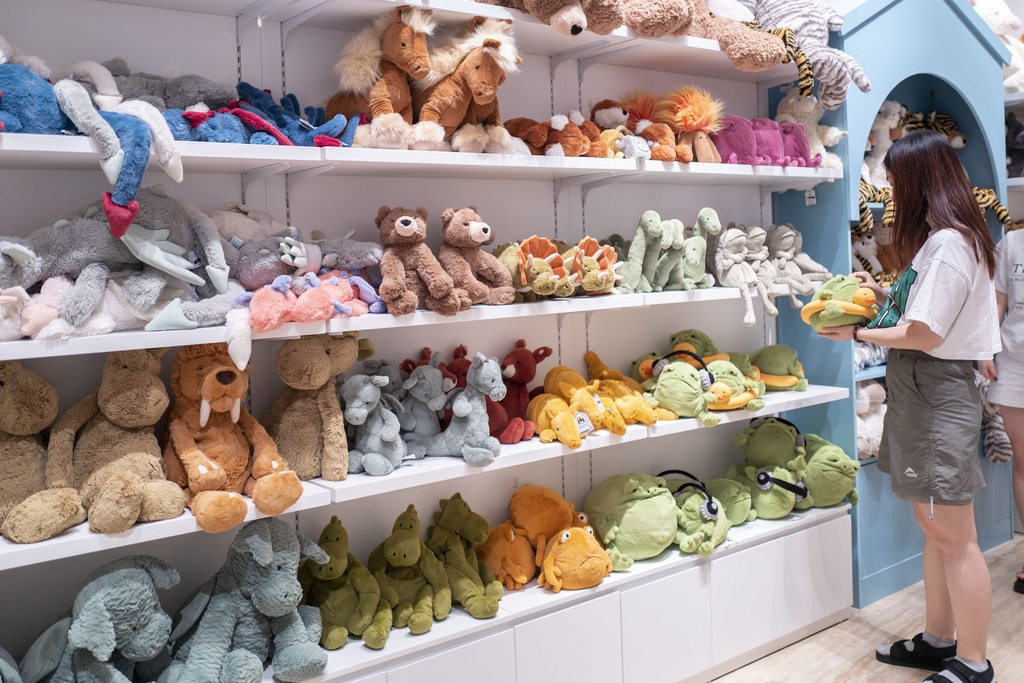
A defining moment came in 2024, when the surge in popularity of collectible toys signalled a deeper behavioural change. Consumers, particularly younger ones, were no longer anchored to purely practical spending. Instead, they were gravitating toward products that offered identity, comfort, and a sense of connection.
This shift has only intensified.
During recent festive periods, spending patterns revealed a clear departure from tradition. Where earlier consumption revolved around obligation – gifting staples, meeting social expectations – there is now a visible tilt toward discretionary, experience-driven purchases. Travel, cosmetics, niche collectibles – categories once considered secondary are taking precedence.
The underlying message is simple, but significant: people are no longer just buying goods; they are buying meaning.
What’s Driving This Shift?
The rise of emotion-driven consumption in China is not the result of a single factor – it is the convergence of economic pressure, social change, and generational transition.
On one hand, there is strain. Rising living costs, an uncertain housing market, and shifting life priorities have altered traditional definitions of stability and success. For many, the conventional milestones – home ownership, long-term financial security – are becoming harder to achieve.
In such an environment, smaller, emotionally rewarding purchases take on greater importance. They offer immediate satisfaction in contrast to increasingly distant long-term goals.
At the same time, there is also a degree of financial cushioning among younger consumers. The legacy of the one-child policy has, in many cases, concentrated family resources, giving individuals greater spending flexibility than previous generations.
This creates an interesting dual dynamic. A sense of pressure coexists with the ability to spend – fueling a form of consumption that is less about necessity and more about emotional relief, self-expression, and personal fulfilment.
Layer onto this the evolution of China’s manufacturing ecosystem. As the quality and durability of essential goods improve, replacement cycles lengthen. Consumers no longer need to upgrade frequently, freeing up disposable income for discretionary spending.
The result is a structural shift: spending is moving away from obligation and toward intention.
Growth Against the Tide
What makes China’s emotional economy particularly striking is the context in which it is growing.
Overall consumption growth has slowed in recent years. Large, high-value purchases have become more cautious, and traditional indicators of consumer confidence remain under pressure.
And yet, spending on experiences, entertainment, and emotionally resonant products continues to rise.
This divergence is critical.
It suggests that emotional spending is not simply a byproduct of economic optimism. In some cases, it is emerging despite economic uncertainty – perhaps even because of it.
Consumers may delay buying a home or a car, but they are increasingly willing to spend on things that provide immediate psychological value. Comfort, nostalgia, identity – these are becoming legitimate drivers of economic activity.
This is a powerful signal for businesses and policymakers alike. It indicates that future demand may not be driven solely by income growth or macroeconomic stability, but by how well products and services align with emotional needs.
A Global Pattern, With Local Differences
While China offers a particularly vivid example, the broader shift toward emotion-driven consumption is not confined to one market.
In the United States, for instance, spending on experiences – travel, entertainment, lifestyle services – has been steadily increasing alongside overall consumption. Here, emotional spending complements economic growth rather than diverging from it.
This contrast matters.
In China, emotional consumption is rising even as broader spending slows, suggesting a compensatory behaviour. In more stable economies, it appears as an extension of prosperity.
But the underlying pattern is consistent across both contexts: consumers are placing increasing value on how purchases make them feel.
For businesses, this presents both an opportunity and a challenge. Emotional drivers may be universal, but how they manifest is deeply influenced by cultural, economic, and social conditions.
Understanding those nuances will be critical. Because while the emotional economy may be global, its expression is anything but uniform.


The New Measure of Value
For decades, business success was measured in clear, tangible terms – faster, cheaper, more efficient. These metrics still matter, but they no longer tell the full story.
We are entering a phase where value is defined less by what a product does, and more by what it delivers beyond function.
A service that works flawlessly but feels frustrating will struggle to retain users. A product that is technically superior but emotionally distant will find it difficult to build loyalty. On the other hand, experiences that inspire trust, reduce anxiety, or create a sense of belonging tend to endure – even in highly competitive markets.
This is the quiet recalibration underway.
Businesses are beginning to recognise that efficiency is expected, not exceptional. The real differentiator lies in emotional impact – in the ability to consistently create experiences that feel intuitive, reassuring, and aligned with human expectations.
This shift also changes how success is evaluated. Metrics like retention, engagement, and lifetime value are increasingly tied to emotional experience.
Growth is no longer just about acquisition; it is about connection. And connection, unlike function, cannot be easily replicated.
The Last Bit, From What It Does to How It Feels