


Explained: This article explains the political background, key decisions, and possible outcomes related to Explained : There’s one thing that India can learn from the British after all… and Its Impact and why it matters right now.
Edwin Lutyens is not merely another British name from India’s long colonial history. A renowned Victorian architect who planned much of New Delhi and built its most enduring landmarks – the domed Old Parliament House, Rashtrapati Bhavan (the president’s official residence, formerly known as the Viceroy’s House), and the India Gate war memorial – he remains synonymous with the city. The centre, with its grand avenues, is still referred to locally as the “Lutyens zone”.
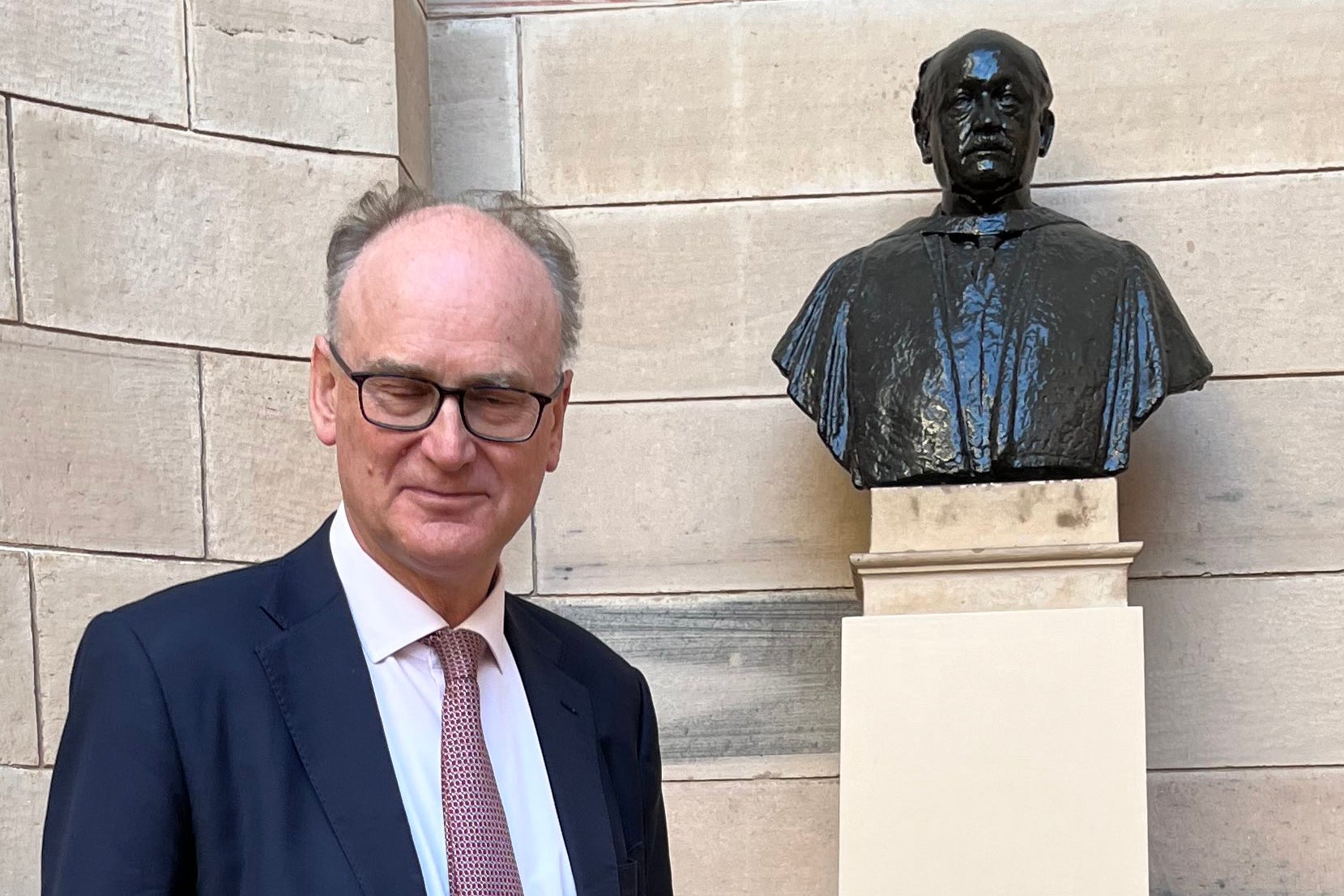
Yet the bust of the man who designed Delhi, which has stood for decades at the presidential residence, has now been replaced by one of Chakravarti Rajagopalachari, a folk hero better known as Rajaji, who became the first Indian governor general of independent India.
The replacement has triggered a storm on social media. Among those who were disappointed was the architect’s great-grandson, Matt Ridley, who expressed sadness over the removal of his great-grandfather’s bust from the very building he designed. Some supporters have gone further, reminding the Indian government that a statue of Mahatma Gandhi stands in London’s Parliament Square. They suggested, perhaps rhetorically, that if India chooses to disown the contribution of Lutyens, the United Kingdom could respond in kind.
Whether likely a threat or not, the remark is a reminder of how sensitive diplomatic relations can become when issues of history and national memory are involved.
In politics, symbolism is seldom accidental. With Tamil Nadu heading toward elections, the timing of Rajaji’s bust installation inevitably raises questions. Narendra Modi’s ruling Bharatiya Janata Party (BJP) has long sought to expand its footprint in Tamil Nadu, a state where it has historically struggled. It has left no stone unturned through cultural symbolism, alliances and identity politics.
Rajaji occupies a unique place in Tamil political memory as a freedom fighter, statesman, intellectual and the last governor general of India. Installing his bust at a prominent national site shortly before Tamil Nadu’s electoral season may therefore serve not only as a historical correction, but also as a political signal.
If the BJP’s intention is genuine decolonisation, questions of consistency arise. Delhi still has roads and landmarks bearing colonial names – Minto Road, Chelmsford Road, Hailey Road, and other avenues originally named after British viceroys and administrators.
Signboards across the capital continue to carry traces of imperial memory. Why do these not evoke similar urgency? Why does selective remembrance become the chosen path? Such selectivity risks appearing less like principled decolonisation and more like retributive politics.
A glance at Britain reveals a different approach to history. The English Heritage “blue plaque” scheme marks houses associated with significant figures – among them, Gandhi; Jawaharlal Nehru, India’s first prime minister after independence; and Tagore, one of the most influential figures in Indian literature and the first Asian to win a Nobel prize. The plaques do not endorse every aspect of these personalities; rather, they acknowledge that history is layered and complex. The British state has not erased these reminders of empire and anti-empire alike. Instead, it preserves them as part of a continuous historical narrative.
This brings us to a larger question: why does the ruling establishment appear uneasy with certain chapters of the past? Architectural heritage, whether colonial or indigenous, tells the story of a civilisation’s evolution. To dismantle symbols without a coherent framework risks reducing history to a political tool.
The replacement of the Lutyens bust with Rajaji’s is therefore more than a curatorial decision. It reflects the intersection of memory, identity and electoral strategy. As Tamil Nadu approaches the ballot, the gesture resonates beyond the walls of Rashtrapati Bhavan. Whether it will translate into political dividends remains to be seen.
History, as the saying goes, is a double-edged sword. When handled with care, it shapes national confidence. When wielded selectively, it can deepen divisions. The question is not whether Rajaji deserves honour – he undoubtedly does – but whether honouring one legacy requires erasing another. This is an issue that demands serious reflection.
In the case of Rajaji’s bust, it seems history itself has been enlisted as a political instrument, reminding us that in the run-up to Tamil Nadu elections, even monuments are not spared from the calculation of power.
Sayed Rashad Ikmal is a writer based in Delhi, and has contributed to India Today and The Wire