


Health Update: Health Update: Longevity Fitness Is Going Viral Amid Wellness Content Boom – What Experts Say– What Experts Say.
A new analysis reveals why sustainable, longevity-first routines are outperforming traditional fitness content across short-form social media platforms
If social media trends reflect what consumers are buying into, fitness and wellness content is sending a different signal this year. In a crowded digital world, where attention is hard to capture, digestible data points matter as much as the content drawing viewers in.
New data from Virlo.ai, a short-form video trend-spotting platform, shows that the health content gaining traction across TikTok, Instagram and YouTube Shorts shares a clear thread: it prioritizes longevity-focused, sustainable routines that viewers believe they can actually replicate.
The findings are drawn from Virlo’s analysis of 1,100 health and fitness videos between December 2025 and January 2026, which collectively generated 69.6 million views across short-form platforms. On average, each video drew roughly 65,900 views, with engagement driven largely by structured, protocol-based formats.
Based on the data, Virlo identified five trends shaping what goes viral in health content right now:
Aging Well Becomes Aspirational
One of the clearest signals in Virlo’s data is the rise of longevity-first content, where videos featuring creators aged 60 and older demonstrating strength and mobility (including pull-ups) are generating meaningful engagement.
The popularity of age-defiant demonstrations of fitness suggests that audiences are responding to evidence that fitness is not limited by age, and that long-term health can be achieved without extremes.
The trend has also been reflected in high-profile moments, such as Robert F. Kennedy Jr., the U.S. secretary of health and human services, showing off his pull-up game in an airport, and Sylvester Stallone, 79, sharing a recent video highlighting his fit physique.
Short, Structured & Simple Wins
Training methods like 12-3-30 treadmill walking and Japanese interval walking are consistently outperforming traditional gym clips, according to Virlo, undercutting longer, more intense workout videos. It could be because such routines are time-efficient and can easily be integrated into a fitness consumer’s daily routine without a complete overhaul.
Notably, Japanese interval walking increased nearly 3,000% in 2025, joined by another emerging contender: walking yoga, with searches increasing 2,414% last year, according to data from PureGym’s annual fitness report.
Mobility & Function Matters
Another trend emerging from Virlo’s analysis is the growing dominance of mobility-first and functional movement content, demonstrating that viewers are interested in learning how to move through life more comfortably. This content isn’t just resonating with older viewers; Virlo found that this category shows strong engagement from Gen Z and Millennials.
Specifically, videos teaching scapular control, hip mobility and posture-focused drills are resonating strongly, particularly with audiences managing desk-related stiffness or chronic discomfort.
Measurable Transformation
While authenticity and realistic goals are increasingly valued in everything from marketing to fitness influencers, transformation content continues to perform, but with a caveat. According to Virlo, the strongest-performing videos offer measurable outcomes tied to defined routines. Examples include clearly documented weight loss, visible waist changes or performance improvements linked to repeatable methods.
Virlo’s findings align with recent research that suggests audiences are growing wary of hyper-polished fitness ideals, with studies showing that overly “perfect” influencers can actually see lower engagement as viewers gravitate toward creators they find more relatable.
At-Home Fitness Becomes a Daily Practice
Rounding out the trends is strong engagement with cozy, science-backed home cardio sessions, treadmill workouts paired with entertainment and recovery-focused content linked to brain health and longevity research. Pairing treadmill time with reading has become a popular format, with TikTok users sharing clips of themselves walking while reading on Kindles.
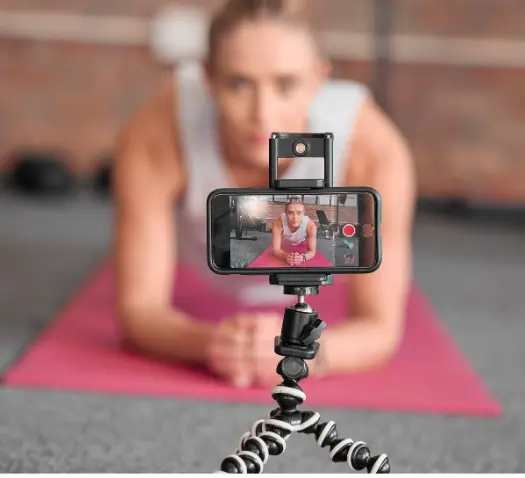
Ultimately, Virlo’s analysis indicates a shift away from intensity-driven, appearance-led fitness content as the primary drivers of engagement. It also sheds light on when health content travels farthest, with engagement peaking during early mornings between 6 and 8 a.m., a midday spike around noon and evenings from 5 to 9 p.m.
“2026 is proving that health content isn’t about perfection, it’s about possibility,” Virlo.ai co-founder Nicolas Mauro said. “Audiences are drawn to fitness they can replicate, routines that respect their time and bodies and proof that age is never a limitation. The viral videos leading the feed aren’t showing extreme gym culture, they’re showing longevity in action, and that’s reshaping what it means to be fit online.”
The growing interest in fitness and wellness content hasn’t gone unnoticed by Spotify. Long associated with music and podcasts, the platform is now investing more deliberately in fitness-related video as guided-workout creators begin uploading content to the app, according to a recent Bloomberg report.